General Discussion
In reply to the discussion: Gordon Parks' Never-Before-Seen Photos Of 1950s Segregation [View all]
sheshe2
(97,682 posts)Here is Gordon Parks.
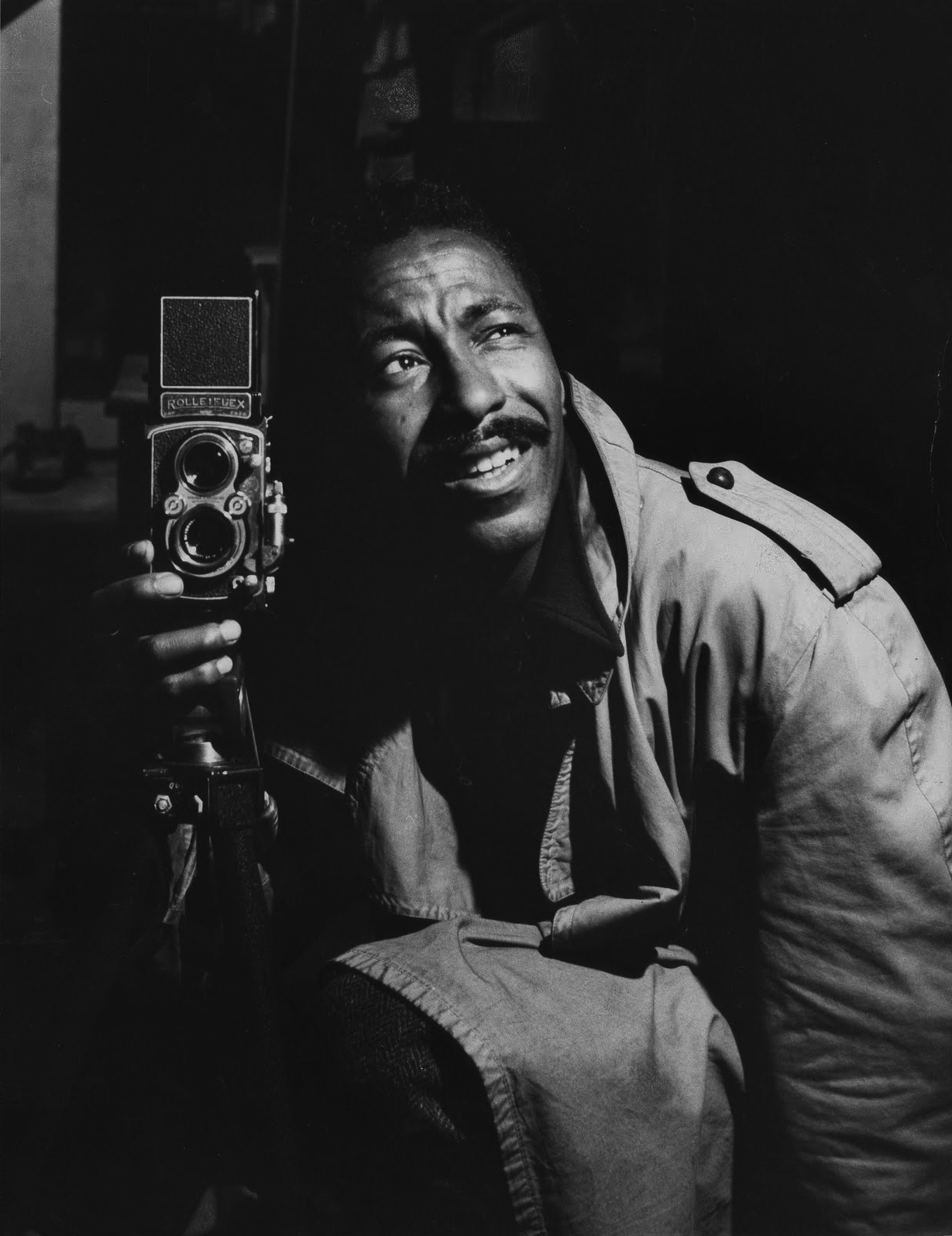
Photography career
At the age of twenty-five, Parks was struck by photographs of migrant workers in a magazine and bought his first camera, a Voigtländer Brillant, for $12.50 at a Seattle, Washington, pawnshop.[11] The photography clerks who developed Parks' first roll of film, applauded his work and prompted him to seek a fashion assignment at a women's clothing store in St. Paul, Minnesota, that was owned by Frank Murphy. Those photographs caught the eye of Marva Louis, the elegant wife of heavyweight boxing champion Joe Louis. She encouraged Parks to move to Chicago in 1940,[12] where he began a portrait business and specialized in photographs of society women.
Over the next few years, Parks moved from job to job, developing a freelance portrait and fashion photographer sideline. He began to chronicle the city's South Side black ghetto and, in 1941, an exhibition of those photographs won Parks a photography fellowship with the Farm Security Administration (FSA).
Working as a trainee under Roy Stryker, Parks created one of his best-known photographs, American Gothic, Washington, D.C.,[13] named after the iconic Grant Wood painting, American Gothic. The photograph shows a black woman, Ella Watson, who worked on the cleaning crew of the FSA building, standing stiffly in front of an American flag hanging on the wall, a broom in one hand and a mop in the background. Parks had been inspired to create the image after encountering racism repeatedly in restaurants and shops in the segregated capital city.
A later photograph in the FSA series by Parks shows Ella Watson and her family
Upon viewing the photograph, Stryker said that it was an indictment of America, and that it could get all of his photographers fired.[14] He urged Parks to keep working with Watson, however, which led to a series of photographs of her daily life. Parks said later that his first image was overdone and not subtle; other commentators have argued that it drew strength from its polemical nature and its duality of victim and survivor, and so has affected far more people than his subsequent pictures of Mrs. Watson.[15]
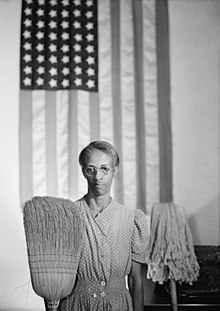
http://en.wikipedia.org/wiki/Gordon_Parks
Thank you Cha. 
Edit history
Recommendations
0 members have recommended this reply (displayed in chronological order): = new reply since forum marked as read
Highlight:
NoneDon't highlight anything
5 newestHighlight 5 most recent replies
RecommendedHighlight replies with 5 or more recommendations
= new reply since forum marked as read
Highlight:
NoneDon't highlight anything
5 newestHighlight 5 most recent replies
RecommendedHighlight replies with 5 or more recommendations