General Discussion
Showing Original Post only (View all)The American West, Part III - The Grand Tetons [View all]
After breaking camp at Yellowstone, as recounted here, Crystal Dancer and I headed for Jackson, Wyoming to visit Grand Tetons National Park. As the south road out of Yellowstone still hadn't been opened, we exited the park to the west, then went south through Montana and Idaho, then back east into Jackson. This turned a two-hour trip into a four-hour trip, but we didn't mind, mostly. The downside was a maniac, who passed us and two other cars, crossing the double-yellow on a blind hill to do so. I was holding my breath when he got back in the right lane, not 30 yards from the crest of the hill. Fortunately, there was no oncoming traffic.
The upside was getting a look at the Grand Tetons from the Idaho side ...
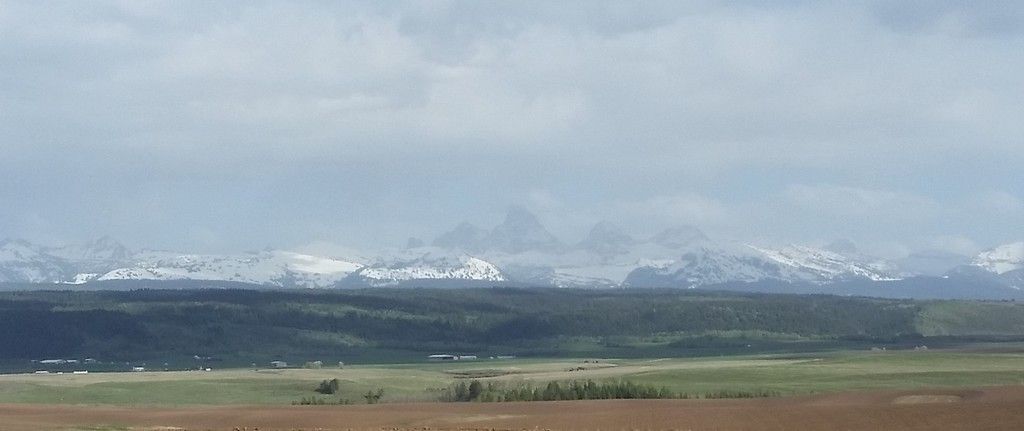
These are spectacular mountains, the youngest range in the Rocky Mountains. As such they are marked by steep inclines, knife-sharp ridges and the absence of foothills.
The Teton fault extends 40 miles along the base of the Teton Range. About ten million years ago, this region began to stretch and the Earth's crust cracked forming faults. Each time the crust broke; an earthquake up to magnitude 7.5 shook the land tilting the mountains skyward and dropping the valley floor. These sporadic bursts of energy created the abrupt front of the Teton Range as it towers above Jackson Hole. At 13,770 feet, the summit of the Grand Teton rises 7,000 feet above the valley floor. Total vertical displacement across this fault may be up to 30,000 feet. The floor of Jackson Hole may have dropped over 20,000 feet, roughly three times as much as the mountains rose. The jagged skyline, vertical relief and lack of foothills make the Teton Range a sight to behold.
Beginning two million years ago, glaciers repeatedly scoured and sculpted the Teton landscape. Large masses of ice flowed from the topographic high of the Yellowstone Plateau down across the valley of Jackson Hole numerous times leveling the valley floor. At the same time, alpine glaciers flowed down from the high peaks carving U-shaped canyons and gouging out valley lakes. Grand Teton National Park contains many features created during the ice age such as piedmont lakes, U-shaped canyons, knife-like ridges, kettles, and moraines.
Source
Our first day was overcast and we were prepared to be disappointed, but ended up with some fantastic views of the mountains.
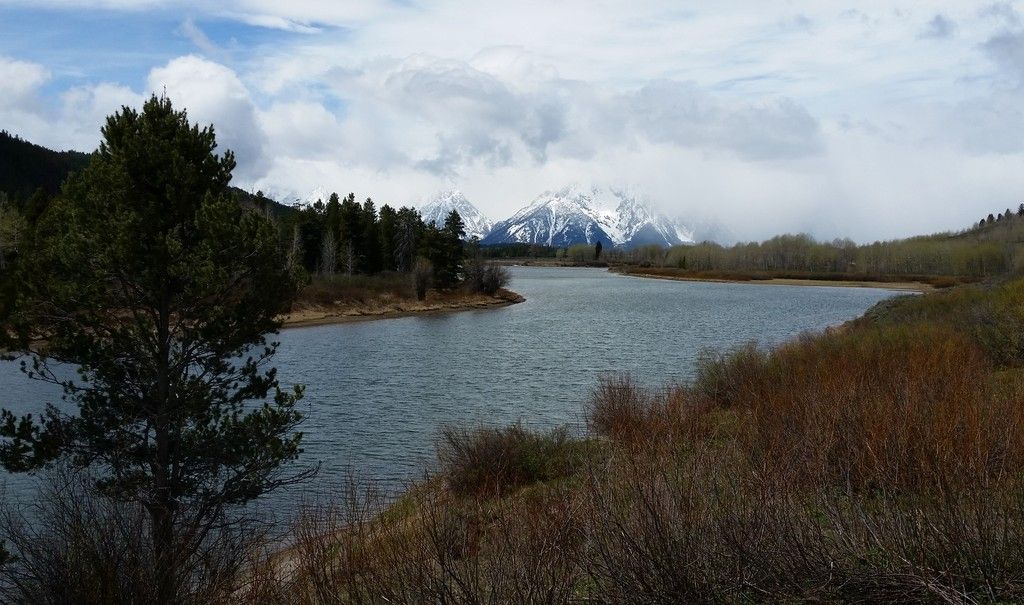

As seen from the Snake River overlook, where Ansel Adams took a better picture ...
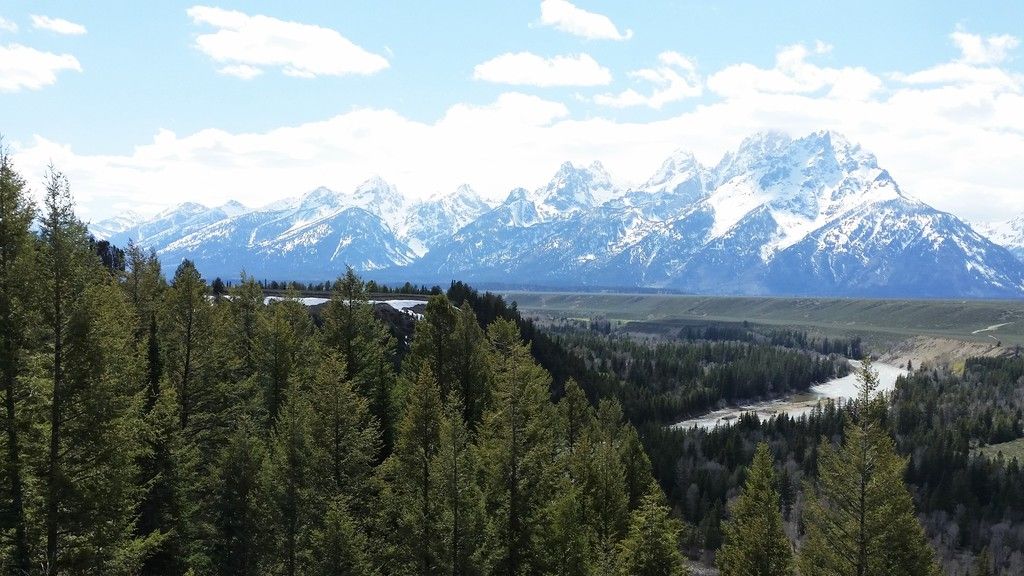
By the time we got to Jackson Lake, the mountains were cloaked in clouds and a snowstorm was brewing.
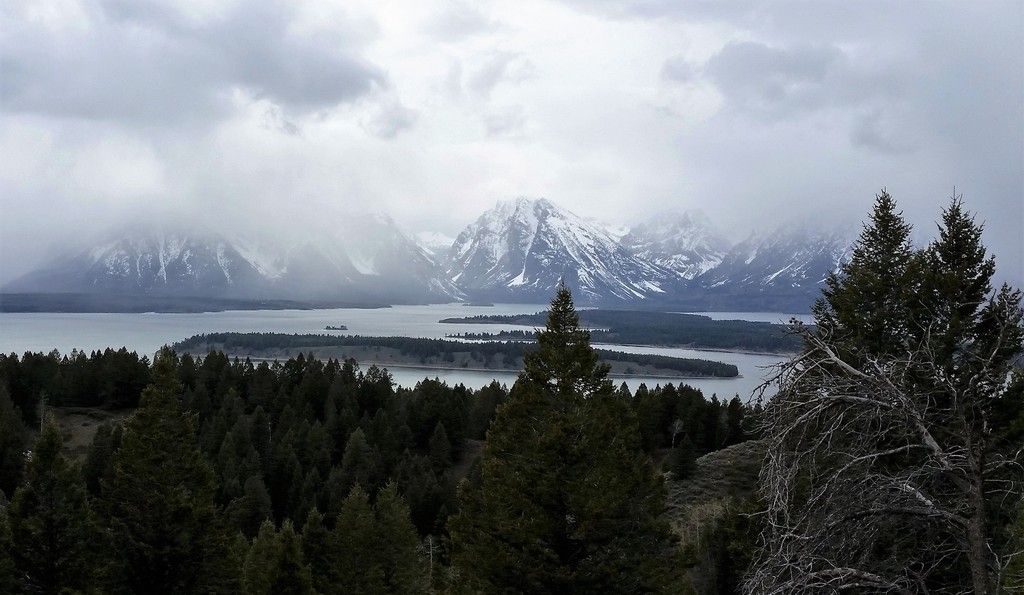
We watched it roll down the valley, confined by the steep walls ...
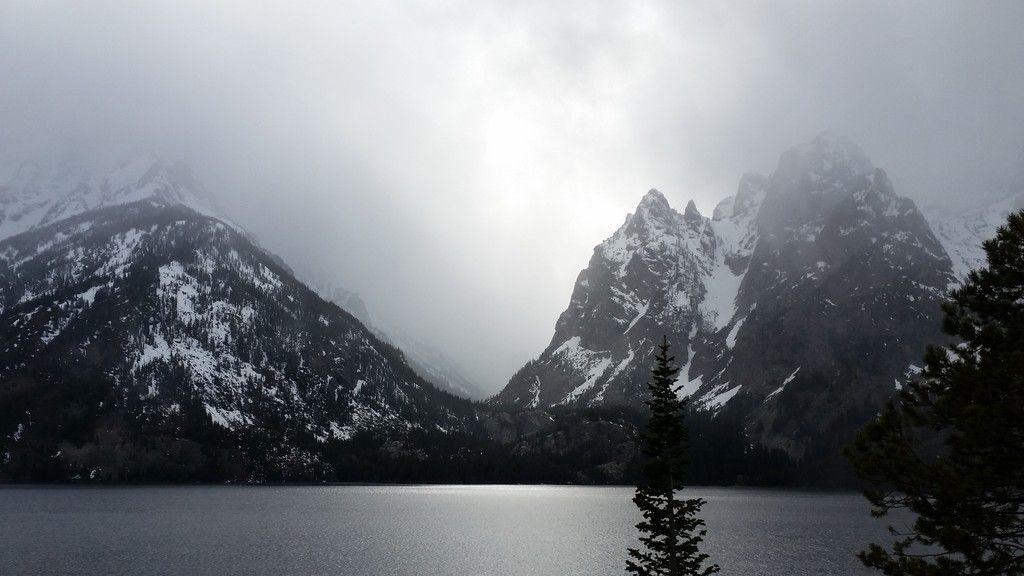
...then head towards us across the lake.
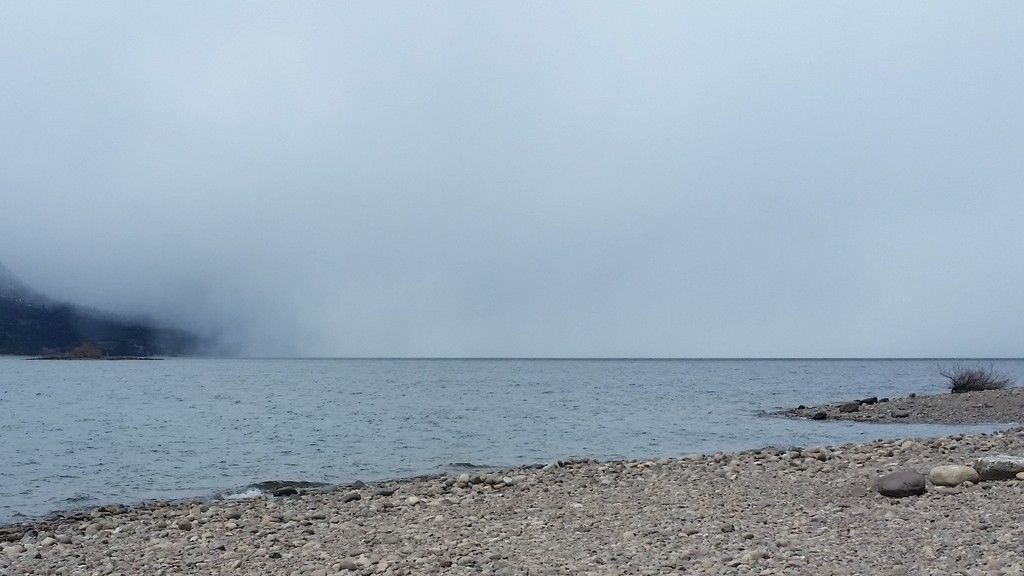
That night we had dinner in Jackson, then went to the Wort Hotel for some live music. That place was rocking!
The next day we awoke to mostly clear skies, and another fantastic day for sightseeing and photography ...
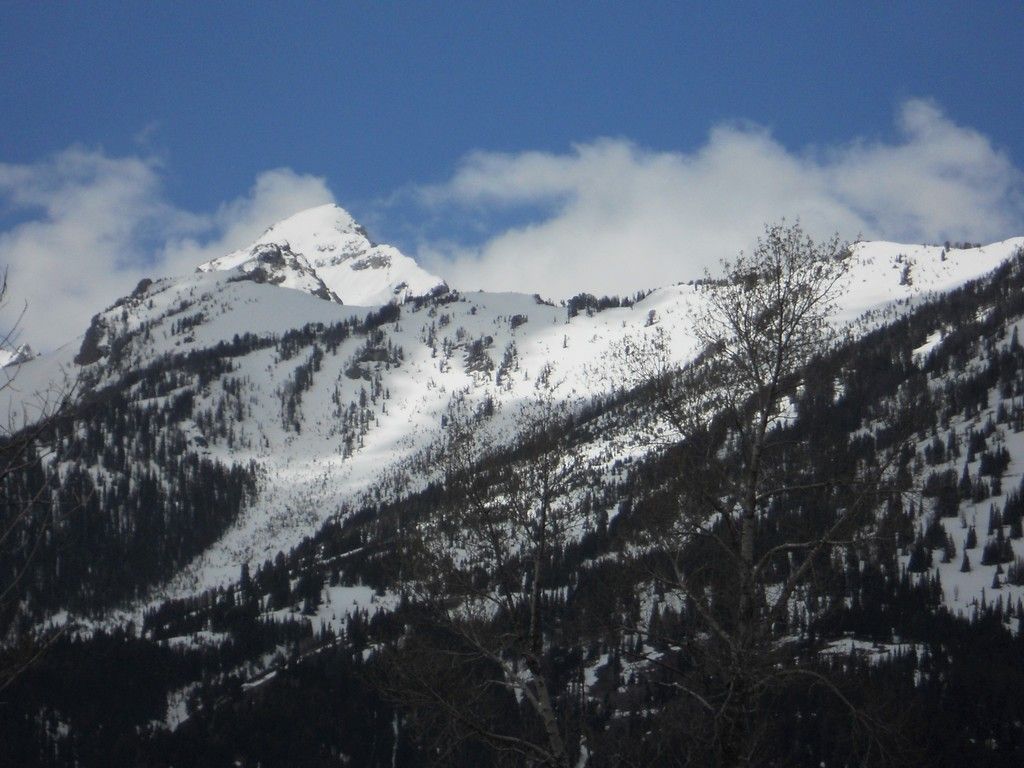
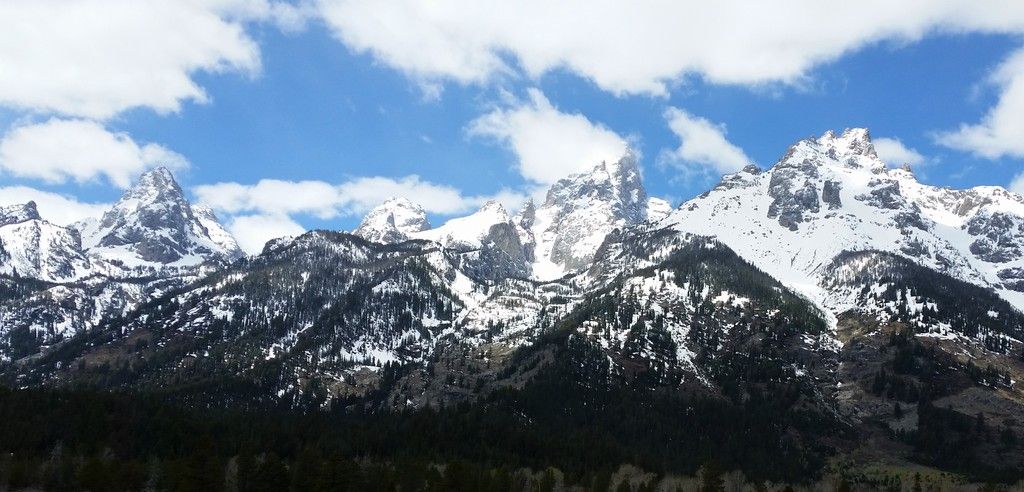
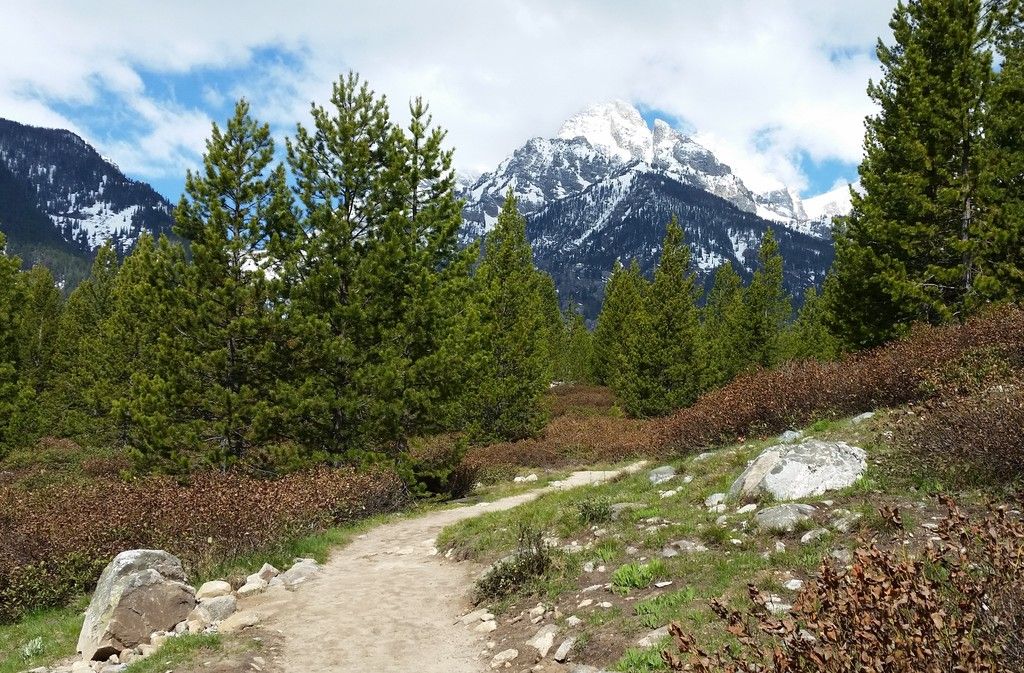
There are over 230 miles of hiking trails in Grand Tetons National Park. We chose a 4-mile round trip hike with a modest 400 feet of elevation change (at nearly 7,000 feet already, us 60-somethings have to pace ourselves).
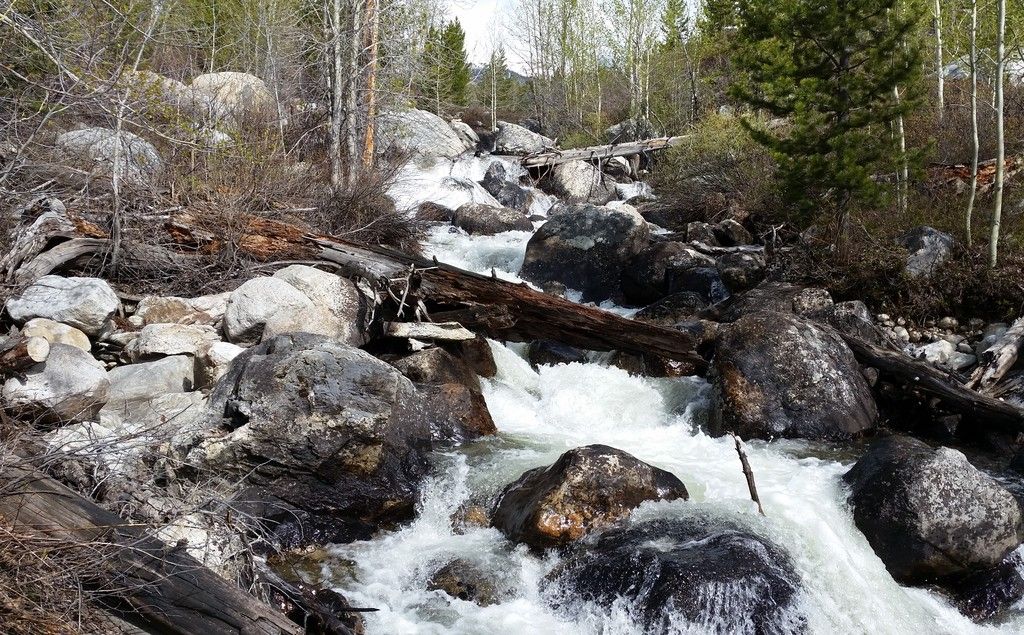
The trail crosses, then parallels this mountain stream, rushing with snowmelt at the time of our visit ...
This led us to beautiful Taggart Lake ...

A fantastic place, with fantastic views of fantastic mountains. Truly breathtaking and wondrous. Go see them if you can.
 = new reply since forum marked as read
Highlight:
NoneDon't highlight anything
5 newestHighlight 5 most recent replies
= new reply since forum marked as read
Highlight:
NoneDon't highlight anything
5 newestHighlight 5 most recent replies