Nearing its end, Cassini delights again [View all]
Carolyn Porco @carolynporco
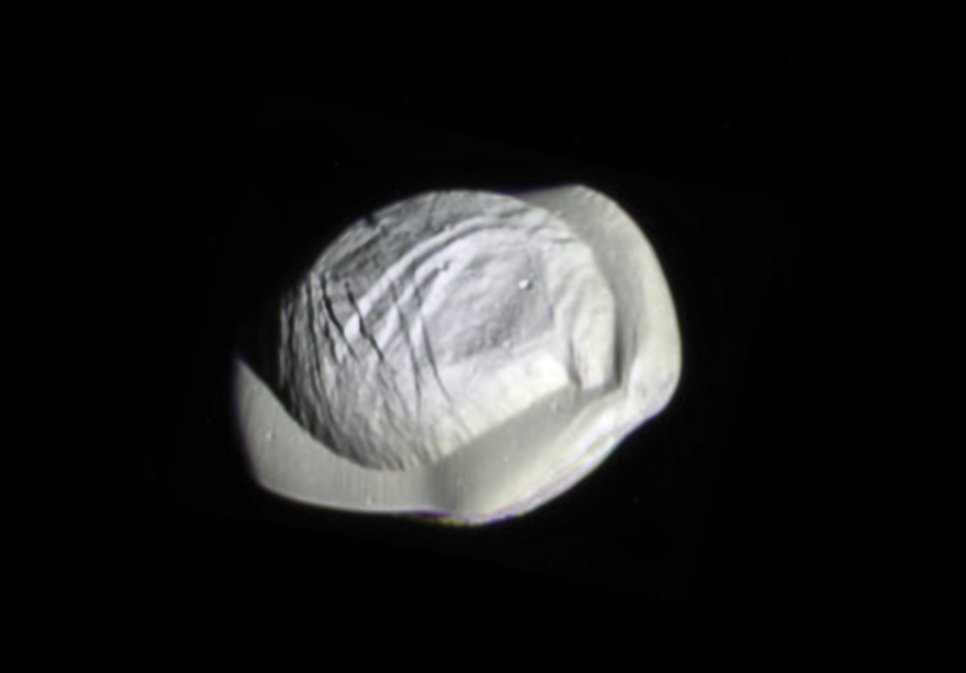
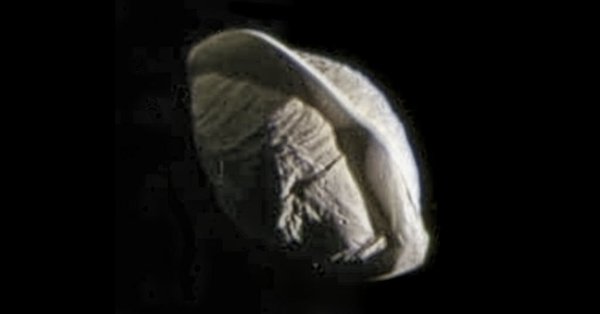
Nearing its end, Cassini delights again. Here is 35-km Pan in mind-blowing detail with its unmistakable accretionary equatorial bulge.
 Jonathan Aguilar
 @AggleDetector 3h
@carolynporco
accretionary bulge? could you elaborate?
Jonathan Aguilar @AggleDetector 2h2 hours ago
@carolynporco nm
i see that you have already https://ui.adsabs.harvard.edu/#abs/2006LPI....37.2289P/abstract …
Saturn’s Small Inner Satellites: Clues to Their Origins
Cassini images of Saturn’s small inner satellites (radii of less than ~100 kilometers) have yielded their sizes, shapes, and in some cases, topographies and mean densities. This information and numerical N-body simulations of accretionary growth have provided clues to their internal structures and origins. The innermost ring-region satellites have likely grown to the maximum sizes possible by accreting material around a dense core about one-third to one-half the present size of the moon. The other small satellites outside the ring region either may be close to monolithic collisional shards, modified to varying degrees by accretion, or may have grown by accretion without the aid of a core. We derived viscosity values of 87 and 20 square centimeters per second, respectively, for the ring material surrounding ring-embedded Pan and Daphnis. These moons almost certainly opened their respective gaps and then grew to their present size early on, when the local ring environment was thicker than it is today.
https://ui.adsabs.harvard.edu/#abs/2007Sci...318.1602P/abstract …

 = new reply since forum marked as read