Welcome to DU!
The truly grassroots left-of-center political community where regular people, not algorithms, drive the discussions and set the standards.
Join the community:
Create a free account
Support DU (and get rid of ads!):
Become a Star Member
Latest Breaking News
Editorials & Other Articles
General Discussion
The DU Lounge
All Forums
Issue Forums
Culture Forums
Alliance Forums
Region Forums
Support Forums
Help & Search
Latest Breaking News
In reply to the discussion: Germany: Burka ban to be proposed in security clampdown [View all]womanofthehills
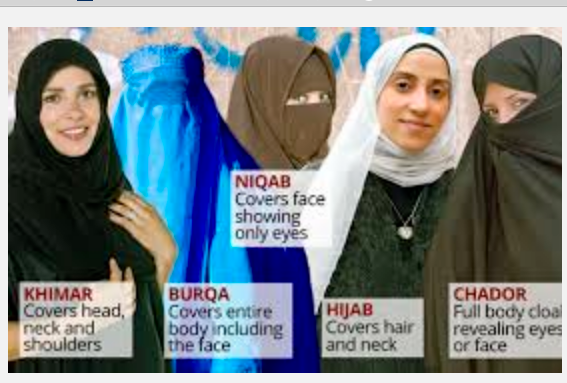
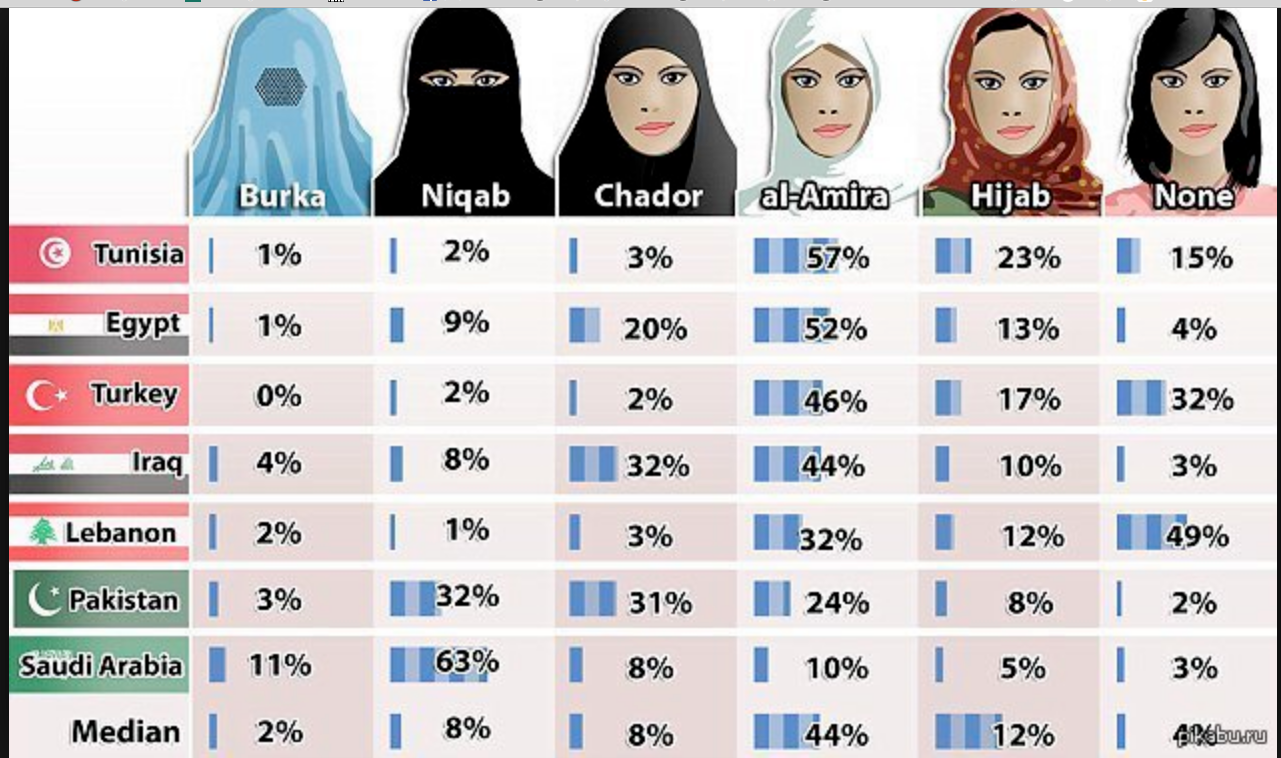
(11,040 posts)130. In France, the women only wear the niqab - no burqas - (not much difference)
The Burqa Ban: An Unreasonable Limitation on Religious Freedom or a Justifiable Restriction?
In the spring of 2011, France enacted a law banning the concealment of the face in public spaces (the “burqa ban”). The burqa ban creates two new punishable offenses in France. 1 First, wearing clothing designed to conceal one’s face in a public space is punishable by either a maximum of a €150 fine or by being required to take a class on the meaning of citizenship, or both. 2 Second, forcing a woman to wear a face-covering veil is punishable by one year of imprisonment or a €30,000 fine. 3 The burqa ban, which was first introduced by the French National Assembly 4 and passed “overwhelmingly” through both houses of the French Parliament, 5 went into effect in France on April 11, 2011. 6
In France, approximately 1,900 women wear the niqab and no women wear the burqa, according to a study prepared in 2009 and cited by the January 26, 2010 Parliamentary Commission’s report (“Parliamentary Commission’s Report”). 43 Half of the women who wear the niqab are under thirty years old, and ninety percent of the women are under forty years old. 44 Further, two-thirds of these women are of French nationality, and one-fourth of them are converts to Islam. 45 A statistic that was not ascertained, however, is how many of these women wear the niqab because they choose to (based on religious conviction, fear of harassment in public spaces, or cultural pride) and how many of these women are pressured to wear the niqab by their husbands, fathers, or Muslim religious official.
The compatibility of wearing the veil and gender equality is a contentious issue. To many, the veil represents an oppressive instrument that signifies women’s second-class status in Islam, rather than the fulfillment of a religious obligation for the women who wear them. 46 The Quran instructs men to ensure that women under their care or responsibility are “covered” when they go out in public, 47 and, accordingly, some women who wear any of the forms of veils see them as “sign[s] of male domination over women’s bodies and lives.”
48 Those who believe that the veil is a symbol of oppression regard regulations like the burqa ban as protection for women who would otherwise be forced to wear veils. They view the ban as addressing “[o]ne of the most salient concerns” for women who wear religioious
garb—that they do not choose to wear veils, but rather are required to wear them “by their family, their community, and their religion.”
http://law.emory.edu/eilr/content/volume-25/issue-3/comments/burqa-ban-limitation-religious-freedom-restriction.
In the spring of 2011, France enacted a law banning the concealment of the face in public spaces (the “burqa ban”). The burqa ban creates two new punishable offenses in France. 1 First, wearing clothing designed to conceal one’s face in a public space is punishable by either a maximum of a €150 fine or by being required to take a class on the meaning of citizenship, or both. 2 Second, forcing a woman to wear a face-covering veil is punishable by one year of imprisonment or a €30,000 fine. 3 The burqa ban, which was first introduced by the French National Assembly 4 and passed “overwhelmingly” through both houses of the French Parliament, 5 went into effect in France on April 11, 2011. 6
In France, approximately 1,900 women wear the niqab and no women wear the burqa, according to a study prepared in 2009 and cited by the January 26, 2010 Parliamentary Commission’s report (“Parliamentary Commission’s Report”). 43 Half of the women who wear the niqab are under thirty years old, and ninety percent of the women are under forty years old. 44 Further, two-thirds of these women are of French nationality, and one-fourth of them are converts to Islam. 45 A statistic that was not ascertained, however, is how many of these women wear the niqab because they choose to (based on religious conviction, fear of harassment in public spaces, or cultural pride) and how many of these women are pressured to wear the niqab by their husbands, fathers, or Muslim religious official.
The compatibility of wearing the veil and gender equality is a contentious issue. To many, the veil represents an oppressive instrument that signifies women’s second-class status in Islam, rather than the fulfillment of a religious obligation for the women who wear them. 46 The Quran instructs men to ensure that women under their care or responsibility are “covered” when they go out in public, 47 and, accordingly, some women who wear any of the forms of veils see them as “sign[s] of male domination over women’s bodies and lives.”
48 Those who believe that the veil is a symbol of oppression regard regulations like the burqa ban as protection for women who would otherwise be forced to wear veils. They view the ban as addressing “[o]ne of the most salient concerns” for women who wear religioious
garb—that they do not choose to wear veils, but rather are required to wear them “by their family, their community, and their religion.”
http://law.emory.edu/eilr/content/volume-25/issue-3/comments/burqa-ban-limitation-religious-freedom-restriction.
Edit history
Please sign in to view edit histories.
Recommendations
0 members have recommended this reply (displayed in chronological order):
152 replies
 = new reply since forum marked as read
Highlight:
NoneDon't highlight anything
5 newestHighlight 5 most recent replies
RecommendedHighlight replies with 5 or more recommendations
= new reply since forum marked as read
Highlight:
NoneDon't highlight anything
5 newestHighlight 5 most recent replies
RecommendedHighlight replies with 5 or more recommendations
= new reply since forum marked as read
Highlight:
NoneDon't highlight anything
5 newestHighlight 5 most recent replies
RecommendedHighlight replies with 5 or more recommendations
I agree with most of what you are saying, except, Dubai is surprisingly modern, I hear.
Quantess
Aug 2016
#89
Agreed. Enforced dress codes in the West are valid reciprocity for codes enforced anywhere else.
ancianita
Aug 2016
#122
In France, the women only wear the niqab - no burqas - (not much difference)
womanofthehills
Aug 2016
#130
The problem isn't the burqua. It's radicalization in the face of a psycholigical crisis:
DetlefK
Aug 2016
#5
The burqa has nothing to do with the Islamic religion. It isn't required by the religion.
Squinch
Aug 2016
#6
That particular cultural characteristic, the burqa, has no role in civilized society.
Squinch
Aug 2016
#32
+1. Personally I think head scarves/hijabs are cool but anything more is creepy. n/t
uhnope
Aug 2016
#92
I don't know anyone who feels as I do about burqas who has any problem with scarves/hijabs.
Squinch
Aug 2016
#114
Wrong. It is religiously based. The dress code is not consistant among all Islam. The same way a
Akicita
Aug 2016
#43
Male priests are not required in most of Christianity. In Catholicism it is required.
Akicita
Aug 2016
#52
If you go to those countries and ask people why they are required to wear burqas the answer will not
Akicita
Aug 2016
#59
Are you sure you mean the face-covering burqa, and not the hair-covering niqab?
Quantess
Aug 2016
#90
If you talk to some white supremacists, and you ask them why they hate people of
Squinch
Aug 2016
#119
But you can distinguish it from culture. Just as we can, do and should distinguish the white
Squinch
Aug 2016
#127
I find it hard to believe too. But you never know. People are willing to put up with a lot of
Akicita
Aug 2016
#82
Making women disappear from public view seems to be part of many sects of many religions.
pennylane100
Aug 2016
#26
When a man asks that a woman be moved away from him on an airplane, the woman is able to say
Squinch
Aug 2016
#33
Germany has the right to defend herself. Live in Germany? Follow the rules. Simple.
GOLGO 13
Aug 2016
#98
Few nuns wear habits anymore. And when they did, for at least the last century, it was generally
Squinch
Aug 2016
#120
good, it is the clothing of a slave... who cares the rationale.. BAN that shit
Grey Lemercier
Aug 2016
#132