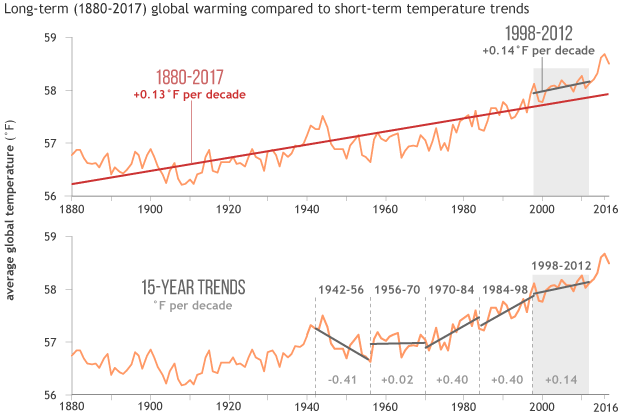
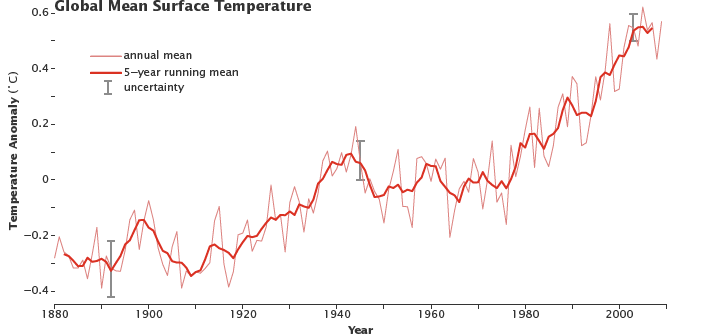
but I think it's looking at the graphs and when you start to see steeper incline to the point of a near-doubling of the rate of warming - and that was only recently (past 40 - 50 years) -
For example (from NOAA) -
And (from NASA) -
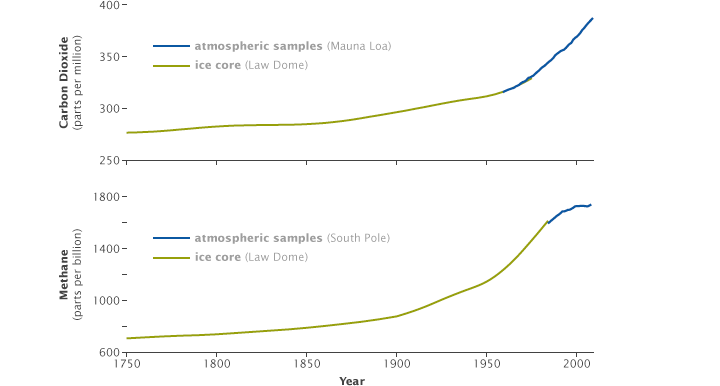
And (from Climate Central - I have read a couple of their recent reports including one on "Heat Islands" ) -

The late '70s sparked China's "discovery" of "western-style capitalism", which sent them embarking on some type of "hybrid" economic model, leading to a rapid expansion of manufacturing by permitting some "private" entities to operate (and also shipping their workers to other countries for construction). They eventually surpassed Japan in terms of GDP.
Meanwhile, the U.S. has essentially been lumbering along for decades while pointing to other countries with better infrastructure and higher tech. I.e., those going from "zero" to "cell towers" or from "mules" to "bullet trains", whereas we went through the long, arduous, and drawn-out process of putting in railways (since the 1800s), water/sewer/dam systems and highways (1900s), as well as stringing hundreds of thousands or more of electric poles and telephone poles (with old style POTS lines during the 1900s). By the 2000s, we had already started shipping much of our manufacturing overseas.
And during our "industrial revolution" to date, we sortof "leveled out" - with more population and fossil-fuel burning vehicles, but then finally implementing some mitigation (e.g., the "clean air standards" put into place in the '70s and the advent of "energy efficient" appliances and construction designs, as well as a reduction of of aerosol products including HFCs). But that was more than offset and blanked out by the shift of manufacturing to the other side of the planet, as well as the continued clear-cutting of forests to meet construction demands.
I think India's issue is different as they are not at the same level of heavy construction and manufacturing as China. However their largest (fossil-fuel using) industry is probably textiles, even with their being a pharmaceutical (generic) and IT services leader.


 = new reply since forum marked as read