Welcome to DU!
The truly grassroots left-of-center political community where regular people, not algorithms, drive the discussions and set the standards.
Join the community:
Create a free account
Support DU (and get rid of ads!):
Become a Star Member
Latest Breaking News
Editorials & Other Articles
General Discussion
The DU Lounge
All Forums
Issue Forums
Culture Forums
Alliance Forums
Region Forums
Support Forums
Help & Search
Latest Breaking News
In reply to the discussion: House passes CROWN Act banning discrimination against Black hairstyles [View all]
BumRushDaShow
(172,251 posts)13. "The specific examples and styles detailed only cover black hairstyles but does limit it to blacks"
It's not "limiting to" anyone. In your excerpt it has this (see bolded part) -
a) In general.—No person in the United States shall be subjected to a practice prohibited under section 1977 of the Revised Statutes (42 U.S.C. 1981), based on the person’s hair texture or hairstyle, if that hair texture or that hairstyle is commonly associated with a particular race or national origin (including a hairstyle in which hair is tightly coiled or tightly curled, locs, cornrows, twists, braids, Bantu knots, and Afros).
The key term "including" gives examples but there is nothing there limiting it to just that. One of the issues that the attempt was to do was to emphasize "texture" and specific types of "named" hair styles that are "popularly known about".
So as an example, one of my sister's neighbors are Sikhs and their young son is about a year or two older than my nephew (so I think he is about 9 or 10) and he wears his long hair on top of his head in a tightly coiled bun, usually with a rumāl as a covering over the top knot.
I.e., something like these -

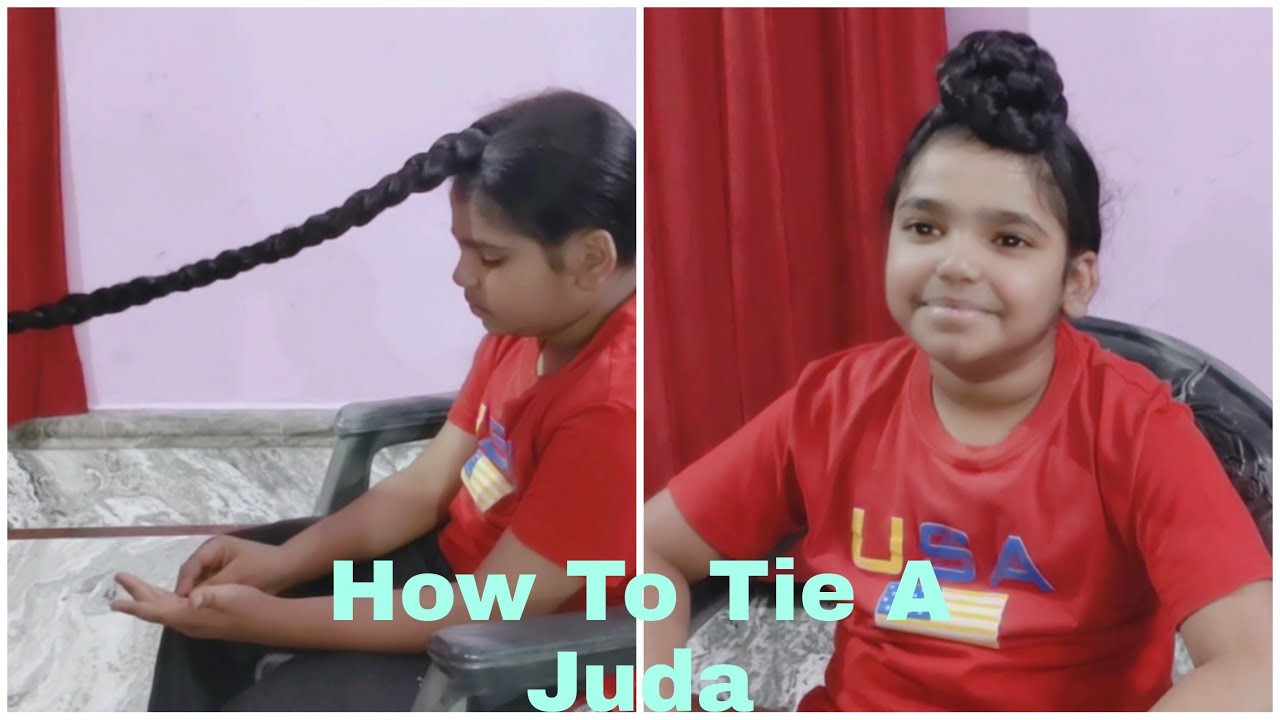
"Braids" are used by a number of other ethnicities including Indigenous peoples and South Asians.
You have racist fuck teachers who enjoy cutting off the hair of POC when it suits them.
This kind of bullshit "hair" obsession has been going on for well over a century -
The Infamous Government Order Mandating Forced Haircuts for Native Americans
By Rebecca Onion
Aug 20, 2013 12:15 PM
Commissioner of Indian Affairs William Atkinson Jones sent this letter to superintendents of all federal reservations and agencies in January 1902. The notorious missive soon became known as the “haircut order.” Jones observed that many Native Americans continued to wear their hair long, to “paint,” and to participate in tribal dances. The commissioner objected to these traditions on a number of grounds, arguing that dancing and feasting were “simply subterfuges to cover degrading acts and to disguise immoral purposes,” that painting caused people to go blind, and that long hair simply was not “in keeping with the advancement they are making … in civilization.”
Jones suggested that superintendents could induce compliance by holding back rations and required a report on the progress of these efforts by June 30, 1902. News of the letter and its contents made national news, with many observers outraged at the order. In the Harper’s Weekly’s edition of Feb. 8, 1902, the anonymous editors wrote a paragraph that was supportive of the Native Americans’ practices, if grossly condescending:
Rather than being forced to submit to “government shears,” the editors argued, the young Native American should be “educated along the line of his natural aptitudes, teach him to adapt to new conditions step by step.”This type of outcry, coupled with even worse publicity after a few supervisors used harsh methods to enforce Jones’ order, caused the Bureau of Indian Affairs to back down. New directives advised agents that they should use persuasion and example, rather than force, to get Native Americans to dress like “citizens.” The bureau tried for decades to eliminate ceremonial dances. By the 1920s, however, more and more tribes held annual gatherings based on these traditions, which survived despite the BIA’s disapproval.
https://slate.com/human-interest/2013/08/haircut-order-commissioner-jones-letter-demanding-that-supervisors-force-native-americans-to-cut-their-hair.html
By Rebecca Onion
Aug 20, 2013 12:15 PM
Commissioner of Indian Affairs William Atkinson Jones sent this letter to superintendents of all federal reservations and agencies in January 1902. The notorious missive soon became known as the “haircut order.” Jones observed that many Native Americans continued to wear their hair long, to “paint,” and to participate in tribal dances. The commissioner objected to these traditions on a number of grounds, arguing that dancing and feasting were “simply subterfuges to cover degrading acts and to disguise immoral purposes,” that painting caused people to go blind, and that long hair simply was not “in keeping with the advancement they are making … in civilization.”
Jones suggested that superintendents could induce compliance by holding back rations and required a report on the progress of these efforts by June 30, 1902. News of the letter and its contents made national news, with many observers outraged at the order. In the Harper’s Weekly’s edition of Feb. 8, 1902, the anonymous editors wrote a paragraph that was supportive of the Native Americans’ practices, if grossly condescending:
The red man has neither newspapers, letters, books, nor games to break the monotony of his life. He loves company. He gets all his news, all his pleasures, in daily contact with his fellows. He has always lived in a village.
Rather than being forced to submit to “government shears,” the editors argued, the young Native American should be “educated along the line of his natural aptitudes, teach him to adapt to new conditions step by step.”This type of outcry, coupled with even worse publicity after a few supervisors used harsh methods to enforce Jones’ order, caused the Bureau of Indian Affairs to back down. New directives advised agents that they should use persuasion and example, rather than force, to get Native Americans to dress like “citizens.” The bureau tried for decades to eliminate ceremonial dances. By the 1920s, however, more and more tribes held annual gatherings based on these traditions, which survived despite the BIA’s disapproval.
https://slate.com/human-interest/2013/08/haircut-order-commissioner-jones-letter-demanding-that-supervisors-force-native-americans-to-cut-their-hair.html
Sorry to rant in a reply to you but it is so far past time for this kind of nonsense to be addressed and I would have doubts that the Senate would even bother as something like this would require cloture and you have 50 GOP racist asses there
 (unless someone can "sneak it in" for a "unanimous consent" ).
Edit history
Please sign in to view edit histories.
Recommendations
0 members have recommended this reply (displayed in chronological order):
24 replies
 = new reply since forum marked as read
Highlight:
NoneDon't highlight anything
5 newestHighlight 5 most recent replies
RecommendedHighlight replies with 5 or more recommendations
= new reply since forum marked as read
Highlight:
NoneDon't highlight anything
5 newestHighlight 5 most recent replies
RecommendedHighlight replies with 5 or more recommendations
= new reply since forum marked as read
Highlight:
NoneDon't highlight anything
5 newestHighlight 5 most recent replies
RecommendedHighlight replies with 5 or more recommendations
House passes CROWN Act banning discrimination against Black hairstyles [View all]
AZProgressive
Mar 2022
OP
In fairness, this should apply to all hairstyles of all people of whatever race.
Ligyron
Mar 2022
#4
The specific examples and styles detailed only cover black hairstyles but does limit it to blacks
csziggy
Mar 2022
#10
"The specific examples and styles detailed only cover black hairstyles but does limit it to blacks"
BumRushDaShow
Mar 2022
#13
Off the top of my head, men can not have any hair at or below the earlobes or collar
Polybius
Mar 2022
#22