Welcome to DU!
The truly grassroots left-of-center political community where regular people, not algorithms, drive the discussions and set the standards.
Join the community:
Create a free account
Support DU (and get rid of ads!):
Become a Star Member
Latest Breaking News
Editorials & Other Articles
General Discussion
The DU Lounge
All Forums
Issue Forums
Culture Forums
Alliance Forums
Region Forums
Support Forums
Help & Search
Latest Breaking News
In reply to the discussion: Two Earthquakes Widely-Felt Across DFW Tuesday [View all]happyslug
(14,779 posts)30. The key is what ground is below you (sand, clay, rock) and mostly what is between you and hard rock.
http://en.wikipedia.org/wiki/River_bank_failure#Tectonic_failure
There mention River bank failure was chartistic of the New Madrid Earthquakes of 1811-1812.
http://onlinelibrary.wiley.com/doi/10.1029/00EO00337/pdf
More on the New Madrid Earthquakes:
http://www.memphis.edu/ceri/compendium/enigma.pdf
Liquefaction during an earthquake is a problem where buildings are built on sediment NOT rock, which was the case with the Mexico City Earthquake of 1985:
More on Soil liquefaction:
Liquefaction can cause other problems for example in Southern California you had this situation, do to ground level slowly falling do to removal of underground water, the fire hydrant stayed at the same height it was installed at, but the surrounding land fell:
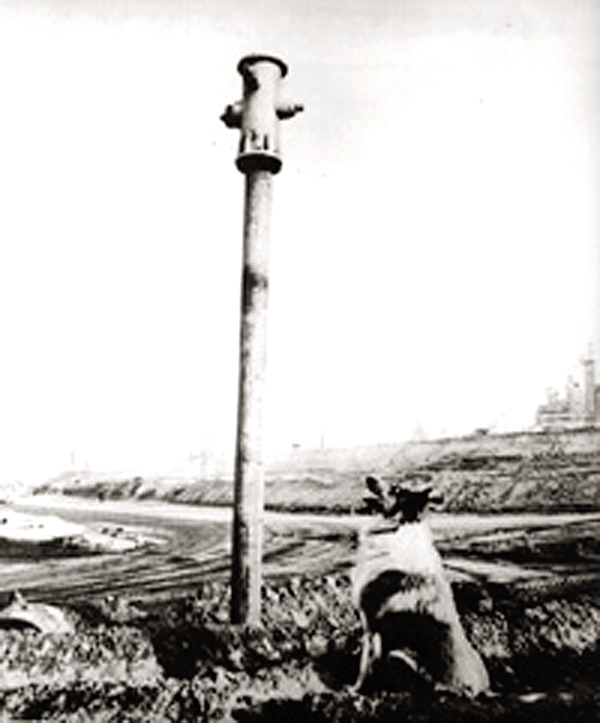
http://vizionstudios.blogspot.com/2010/08/i-have-not-blogged-enough-recently.html
If the ground under your home is more solid you do NOT see such a drop in ground level and the effect of any earthquake is less. On the other hand if the ground is loose, it shakes like a piece of jello increasing the level of damages (This is what happened in Mexico City in 1985).
Many river bank communities are built on "fill" either naturel (done by the river itself) or man made (as the result of dredging). For this reason tend to be susceptible to earthquake damage then land that stands on solid rock.
There mention River bank failure was chartistic of the New Madrid Earthquakes of 1811-1812.
http://onlinelibrary.wiley.com/doi/10.1029/00EO00337/pdf
More on the New Madrid Earthquakes:
http://www.memphis.edu/ceri/compendium/enigma.pdf
Liquefaction during an earthquake is a problem where buildings are built on sediment NOT rock, which was the case with the Mexico City Earthquake of 1985:
On the bed of the historic lake, the prevailing silt and volcanic clay sediments amplify seismic shaking. Damage to structures is worsened by soil liquefaction which causes the loss of foundation support and contributes to dramatic settlement of large buildings.Mexico City's downtown area mostly lies on the silt and volcanic clay sediments of the bed of the historic Lake Texcoco, which are between seven and thirty-seven meters deep and have a high water content. Above this is a layer of sand and above this is a layer of sand and rock. The western and northwestern parts of the city are outside the old lakeshores and are located on sands from eroding volcanic cones that surround the Valley of Mexico. The southern part of the city rests on hardened basalt lava flows. The old lakebed, with its high water content, is easily moved or compressed. The old lakeshore area also has a fairly high water content, allowing movement, though not as much as the lakebed. The old lava flows have little water content or movement in comparison and are therefore stable.
http://en.wikipedia.org/wiki/1985_Mexico_City_earthquake
http://en.wikipedia.org/wiki/1985_Mexico_City_earthquake
More on Soil liquefaction:
http://en.wikipedia.org/wiki/Soil_liquefaction
The phenomenon is most often observed in saturated, loose (low density or uncompacted), sandy soils. This is because a loose sand has a tendency to compress when a load is applied; dense sands by contrast tend to expand in volume or 'dilate'. If the soil is saturated by water, a condition that often exists when the soil is below the ground water table or sea level, then water fills the gaps between soil grains ('pore spaces'). In response to the soil compressing, this water increases in pressure and attempts to flow out from the soil to zones of low pressure (usually upward towards the ground surface). However, if the loading is rapidly applied and large enough, or is repeated many times (e.g. earthquake shaking, storm wave loading) such that it does not flow out in time before the next cycle of load is applied, the water pressures may build to an extent where they exceed the contact stresses between the grains of soil that keep them in contact with each other. These contacts between grains are the means by which the weight from buildings and overlying soil layers are transferred from the ground surface to layers of soil or rock at greater depths. This loss of soil structure causes it to lose all of its strength (the ability to transfer shear stress) and it may be observed to flow like a liquid (hence 'liquefaction').
The phenomenon is most often observed in saturated, loose (low density or uncompacted), sandy soils. This is because a loose sand has a tendency to compress when a load is applied; dense sands by contrast tend to expand in volume or 'dilate'. If the soil is saturated by water, a condition that often exists when the soil is below the ground water table or sea level, then water fills the gaps between soil grains ('pore spaces'). In response to the soil compressing, this water increases in pressure and attempts to flow out from the soil to zones of low pressure (usually upward towards the ground surface). However, if the loading is rapidly applied and large enough, or is repeated many times (e.g. earthquake shaking, storm wave loading) such that it does not flow out in time before the next cycle of load is applied, the water pressures may build to an extent where they exceed the contact stresses between the grains of soil that keep them in contact with each other. These contacts between grains are the means by which the weight from buildings and overlying soil layers are transferred from the ground surface to layers of soil or rock at greater depths. This loss of soil structure causes it to lose all of its strength (the ability to transfer shear stress) and it may be observed to flow like a liquid (hence 'liquefaction').
Liquefaction can cause other problems for example in Southern California you had this situation, do to ground level slowly falling do to removal of underground water, the fire hydrant stayed at the same height it was installed at, but the surrounding land fell:
http://vizionstudios.blogspot.com/2010/08/i-have-not-blogged-enough-recently.html
If the ground under your home is more solid you do NOT see such a drop in ground level and the effect of any earthquake is less. On the other hand if the ground is loose, it shakes like a piece of jello increasing the level of damages (This is what happened in Mexico City in 1985).
Many river bank communities are built on "fill" either naturel (done by the river itself) or man made (as the result of dredging). For this reason tend to be susceptible to earthquake damage then land that stands on solid rock.
Edit history
Please sign in to view edit histories.
Recommendations
0 members have recommended this reply (displayed in chronological order):
33 replies
 = new reply since forum marked as read
Highlight:
NoneDon't highlight anything
5 newestHighlight 5 most recent replies
RecommendedHighlight replies with 5 or more recommendations
= new reply since forum marked as read
Highlight:
NoneDon't highlight anything
5 newestHighlight 5 most recent replies
RecommendedHighlight replies with 5 or more recommendations
= new reply since forum marked as read
Highlight:
NoneDon't highlight anything
5 newestHighlight 5 most recent replies
RecommendedHighlight replies with 5 or more recommendations
The key is what ground is below you (sand, clay, rock) and mostly what is between you and hard rock.
happyslug
Jan 2015
#30
Corporations OWN the politicos in BOTH Parties. We have NO voice in DC!
blkmusclmachine
Jan 2015
#19
Like clockwork, that particular lawsuit was filed the very day Denton passed the resolution.
LanternWaste
Jan 2015
#27
Frack under Dallas, have it fall into a crater and they'd claim it was God's punishment for teh gay.
Spitfire of ATJ
Jan 2015
#20
not just the fracking, the drought settles the land & ruins the permeability of the deep land.
Sunlei
Jan 2015
#23
The Richter Scale is a classification system, but most people do NOT understand it.
happyslug
Jan 2015
#31
I was standing in line at Love Field for a Soutwest flight when the first one hit.
displacedtexan
Jan 2015
#32