Welcome to DU!
The truly grassroots left-of-center political community where regular people, not algorithms, drive the discussions and set the standards.
Join the community:
Create a free account
Support DU (and get rid of ads!):
Become a Star Member
Latest Breaking News
Editorials & Other Articles
General Discussion
The DU Lounge
All Forums
Issue Forums
Culture Forums
Alliance Forums
Region Forums
Support Forums
Help & Search
Editorials & Other Articles
Showing Original Post only (View all)
Warning: COVID- Fueled Mental Health Crisis Will Be A Costly Second Pandemic [View all]
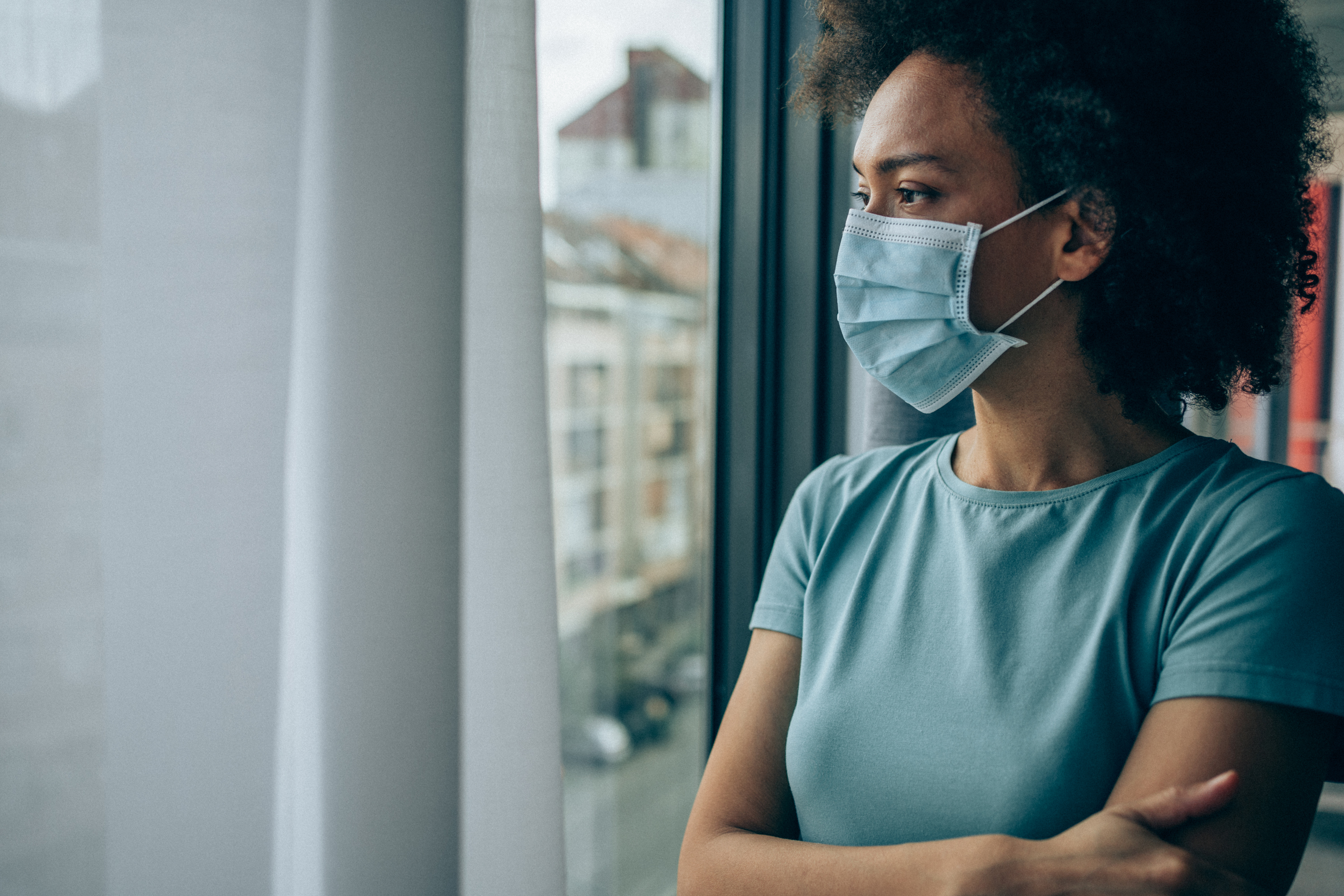
- Institute for New Economic Thinking, By Lynn Parramore, Health, Nov. 30, 2021. - Excerpts, Ed.
It’s time to prioritize mental well-being to avoid far-reaching economic and social consequences. Devastating conditions like major depression, bipolar disorder, schizophrenia, and obsessive-compulsive disorder are among the leading causes of disability in established market economies, according to Johns Hopkins Medicine. In the U.S., more than one in four adults was suffering from a diagnosable mental disorder even before the pandemic. For too long, cost and access barriers to mental health care have caused incalculable suffering. - Covid has now blown the lid off a crisis building for decades. - So why isn’t there a plan to deal with it? *A Runaway Train Accelerating: The Lancet reports that cases of mental disorders have skyrocketed during the pandemic, including 53 million new cases of major depressive disorder and 76 million new cases of anxiety disorders.
In the U.S., since spring of 2020, the National Center for Health Statistics has partnered with the Census Bureau on a new, rapid-turnaround data system to monitor depression and anxiety, finding that just over half of adults between the ages of 18 and 44 surveyed have reported symptoms, as have 38% of adults living with children. Researchers find that younger adults, racial and ethnic minorities, essential workers, and unpaid adult caregivers (most of them women), have been especially hard-hit by mental distress and increased substance use. Growing alcohol use is particularly worrisome among stretched-to-the-breaking-point young women juggling children under the age of five and work responsibilities. Feedback loops within families mean that distressed parents transfer their anxiety and depression to children and vice versa.
Three top U.S. organizations specializing in child & adolescent mental health, including the American Academy of Pediatrics, recently declared a state of emergency for the country’s youth, noting that Covid-19 & the ongoing struggle for racial justice have compounded trends of declining mental health among kids observed prior to 2020. Many people find themselves in so much pain, they think about dying. Suicide attempts by young girls are notably on the rise. Young people unable to obtain mental health care are being sent to hospital emergency rooms, where staff are under their own intense stress due to private equity takeovers of health care & the spillovers of an inadequate care system. - We can’t go on like this. Yet as alarming as it all sounds, signs indicate the crisis may only intensify.
Covid-19 case rates may be falling in some areas, but the stresses associated with the pandemic are far from over – particularly as new variants spread, causing further disruption.
In the U.S., those needing help face a serious shortage of mental health specialists (themselves often suffering from burnout & stress), a reduced number of psychiatric hospital beds, and a loss of job-based health insurance. Even for those who have insurance, a lack of in-network counselors & therapists means that care is frequently out of reach. *And if you don’t live in a city, you may be out of luck: In some states, 80% of the population lives in an area where mental health professionals are scarce. The upshot is that millions are going without the treatment they require. People are unable to sleep, gaining weight, & turning to potentially harmful strategies as they struggle to cope with grief, loss, isolation, family & workplace stress, & economic woes, including the latest worries about inflation... research has shown that those recently diagnosed with a mental disorder were significantly more likely to contract Covid- and they tended to have worse outcomes than people infected who don’t have a mental disorder...
Viruses have long been linked to mental illness, though just how they relate is not well-understood. As early as 1732, clinicians noted that the flu often came with symptoms like hysteria, mental prostration, and insanity.
When Covid hit, researchers looked back at the impact of the Spanish flu and other pandemics on mental health...
- Continued,
https://www.ineteconomics.org/perspectives/blog/warning-covid-fueled-mental-health-crisis-will-be-a-costly-second-pandemic
5 replies
 = new reply since forum marked as read
Highlight:
NoneDon't highlight anything
5 newestHighlight 5 most recent replies
= new reply since forum marked as read
Highlight:
NoneDon't highlight anything
5 newestHighlight 5 most recent replies
= new reply since forum marked as read
Highlight:
NoneDon't highlight anything
5 newestHighlight 5 most recent replies
Warning: COVID- Fueled Mental Health Crisis Will Be A Costly Second Pandemic [View all]
appalachiablue
Dec 2021
OP