Latin America
In reply to the discussion: What Fidel Taught Hugo [View all]
Judi Lynn
(164,137 posts)as a reeking anti-Chavez propagandist even too smelly for the New York Times to try to pass off as a normal "journalist" any longer. U.S. readers have known about him for years.
The New York Times also have used the services of two OTHER anti-Chavist scrawlers, as well, Simon Romero, and Juan Forero, both truly smelly, on their own.
Amazing.
[center]~ ~ ~ ~ ~[/center]
NY Times Reporter Quits Over Conflict of Interest
Venezuela Misdeeds Adding Up on 43rd Street
By Al Giordano
Special to The Narco News Bulletin
January 14, 2003
The New York Times’ Venezuela problem continued to snowball yesterday as its Caracas correspondent Francisco Toro resigned.
Toro acknowledged, in a letter to Times editor Patrick J. Lyons, “conflicts of interest concerns” regarding his participation in protest marches and his “lifestyle bound up with opposition activism.”
Toro’s obsessive anti-Chavez position in Venezuela was publicly known after last April’s coup when he began sending emails to Narco News and other journalists who he placed on his own mailing list attacking Venezuelan President Hugo Chávez. That the Times hired him in the first place was a violation of the Times’ own claims to objective and disinterested reporting. But regarding Venezuela, it was not the first.
Toro’s resignation – the text of his letter sent to the Times management last night appears below – is the latest in a long series of missteps and misdeeds by the New York Times and its reporters regarding the New York newspaper’s one-sided and inaccurate Venezuela coverage....
http://www.narconews.com/Issue27/article584.html
[center]~ ~ ~ ~ ~[/center]
Financial Times Reporter "Can't Possibly Be Neutral"
6/6/03
In January, New York Times Venezuela correspondent Francisco Toro resigned his post after acknowledging that he "can't possibly be neutral" about the political situation in that country (Narco News Bulletin, 1/14/03). Now the same reporter is covering Venezuela for another prestigious paper, the Financial Times, contributing reports on May 29 and June 3.
The Financial Times is a London-based, business-oriented daily; most of its circulation is outside of Britain, with a quarter of its sales in the United States.
Toro is a fierce partisan in Venezuela's heated political environment, a participant in anti-government protests who posts name-calling attacks on President Hugo Chavez on his website. He describes himself as a "Venezuelan journalist opposed to Hugo Chavez" (Mother Jones, 3/1/03), and has written frankly about what he perceives as his own inability to impartially report the news from Venezuela.
While all journalists have political opinions, Toro described himself as unable to put aside his strong feelings about Chavez and cover the Venezuelan controversy without prejudice. After a Times editor indicated that his anti-government weblog was unacceptable, Toro responded: "I've decided I can't continue reporting for the New York Times.... I realize it would take much more than just pulling down my blog to address your conflict-of-interests concerns. Too much of my lifestyle is bound up with opposition activism at the moment, from participating in several NGOs, to organizing events and attending protest marches. But even if I gave all of that up, I don't think I could muster the level of emotional detachment from the story that the New York Times demands.... My country's democracy is in peril now, and I can’t possibly be neutral about that."
More:
http://www.fair.org/index.php?page=1624
New York Times v. Hugo Chavez
By Stephen Lendman
OpEdNews Op Eds 3/12/2013 at 01:41:00
NYT is America's leading propaganda vehicle,
The Paper of Record's history is longstanding and unprincipled. It supports corporate and imperial interests. It deplores populist ones. It features managed news misinformation. It betrays its readers doing so.
When America goes to war or plans one, it marches in lockstep. It's comfortable with neoliberal harshness. It abhors progressive politics. It supports wrong over right.
It suppresses "All the News That's Fit to Print." It ignores America's march to tyranny. It endorses policies demanding condemnation. It's typical Times.
It vilified Chavez throughout his tenure. It did so unfairly. It shamed itself doing so. It matters what it says. It's America's leading voice. It prioritizes propaganda. It has global clout. It lies for power.
More:
http://www.opednews.com/articles/New-York-Times-v-Hugo-Cha-by-Stephen-Lendman-130312-398.html
[center]~ ~ ~ ~ ~[/center]
Anti-Hugo Chavez bias
Louis Proyect Tue, 29 Jan 2013 07:29:05 -0800
~snip~
I was shocked to discover that a certain Francisco Toro blogs at
http://latitude.blogs.nytimes.com/. He can best be described as having
the same relationship to Venezuela that someone like the Miami
expatriate community has to Cuba: frothing-at-the-mouth hostility. I
suppose that the paper might excuse itself for offering him a blog to
spout his propaganda if it didn’t have such a terrible record in its
Venezuela reportage.
In doing a bit of digging on Mr. Toro, who received an MSc from the
London School of Economics, I discovered that he resigned his from his
reporting job in January 2003. Frankly, he should have never been hired
in the first place. This is the letter he sent to his editor Patrick J.
Lyons:
“After much careful consideration, I’ve decided I can’t continue
reporting for the New York Times. As I examine the problem, I realize it
would take much more than just pulling down my blog to address your
conflict of interests concerns. Too much of my lifestyle is bound up
with opposition activism at the moment, from participating in several
NGOs, to organizing events and attending protest marches. But even if I
gave all of that up, I don’t think I could muster the level of emotional
detachment from the story that the New York Times demands. For better or
for worse, my country’s democracy is in peril now, and I can’t possibly
be neutral about that.”
I don’t know. It seems to me that any newspaper trying to persuade the
world that it is impartial would have questioned Mr. Toro’s credentials
from the get-go. But then again, hiring him was not the first instance
of assigning someone to cover Venezuela with a clear animus toward Hugo
Chavez.
http://www.mail-archive.com/pen-l@lists.csuchico.edu/msg30662.html
[center]~ ~ ~ ~ ~[/center]
Weekend Edition July 3-5, 2004
Venezuela's Media Tycoons
The Anti-Chavez Echo Chamber
by JUSTIN DELACOUR
More than a year ago, I received an angry message from an opponent of Venezuelan President Hugo Chavez regarding an article that I wrote for Narco News criticizing the political partiality and methodological problems of Venezuela’s two most cited pollsters ("Can You Believe Venezuela’s Pollsters?", January 22, 2003). A number of anti-Chavez critiques of my article, including one by Francisco Toro, were pasted below the message.
For those who are not familiar with Toro, he is a well-known anti-Chavez activist based in Caracas whom the New York Times once hired as a reporter, in violation of the Times’ own claims to objective and disinterested reporting. Toro runs an anti-Chavez weblog called the Caracas Chronicles.
At the time that I received this angry message, I was preoccupied with other issues, so, if I recall correctly, I did not read the critique by Toro that followed the message. However, the recent agreement in Venezuela to move ahead with a recall referendum on Chavez’s government, as well as the Venezuelan President’s recent citations of my article on Radio Nacional de Venezuela, have re-sparked interest in the topic of the pollsters. Thus, I have decided to revisit one of Toro’s criticisms in order to show just how vacuous the Venezuelan opposition’s defense of their pollsters is. I will address Toro’s other "main" criticisms in future entries.
Toro writes:
The main reply to the writer… is that he’s arguing by innuendo. These guys [the pollsters] are personally anti-Chavez (indubitable) therefore they’re cheating on their polls (highly questionable). He never argues the link between the two, other than to suggest that anyone who is anti-Chavez is by definition such a nasty rat that he can’t possibly be honest in reporting poll results.
Actually, I never once put forth an argument that, since Venezuelan pollsters Alfredo Keller and Jose Antonio Gil Yepes were "personally anti-Chavez," they must have therefore been "cheating on their polls." First of all, Keller and Gil Yepes are not just "personally anti-Chavez"; they are publicly anti-Chavez, and virulently so, to the point that one was even quoted by the L.A. Times as calling for Chavez’s assassination, while the other sanctified the April 11 coup –on Peruvian radio– as a "de facto referendum." I made it abundantly clear in my original report that the pollsters had increasingly become identified publicly with the opposition and that they had made little effort to avoid this public perception. If it were only a matter of the pollsters’ "personal" beliefs –not one of public declarations– it would not be an issue. However, once the public comes to associate a pollster with a political side, the pollster’s public associations become problematic in and of themselves because they are likely to bias the responses of the population sample being polled.
More:
http://www.counterpunch.org/2004/07/03/the-anti-chavez-echo-chamber/
[center]~ ~ ~ ~ ~[/center]
[center]


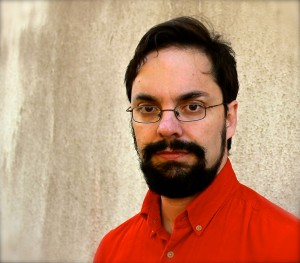
Francisco Toro
The "journalist" [/center]
Edit history
Recommendations
0 members have recommended this reply (displayed in chronological order): = new reply since forum marked as read
Highlight:
NoneDon't highlight anything
5 newestHighlight 5 most recent replies
RecommendedHighlight replies with 5 or more recommendations
= new reply since forum marked as read
Highlight:
NoneDon't highlight anything
5 newestHighlight 5 most recent replies
RecommendedHighlight replies with 5 or more recommendations