Latin America
In reply to the discussion: Che Guevara Murderer Attending Summit of the Americas [View all]
Judi Lynn
(164,157 posts)Who Killed Che?
How the CIA Got Away With Murder
by James D. Cockcroft
Ratner and Smith have done it again! Who Killed Che? How the CIA Got Away With Murder is their second bombshell book dealing with Che Guevara and the U.S. government’s frequent use of illegal and criminal political assassinations and routine whopper lies in its foreign policy, all in the name of “defending freedom” (their first bombshell was Che Guevara and the FBI). In their new Che book these two prominent civil liberties lawyers present forty-four previously classified documents released under the Freedom of Information Act to show—quite meticulously and colorfully, as if in a courtroom drama—how the CIA, in concert with the White House, masterminded the murder of Che and then tried to cover it up.
For some readers this may seem like an old story, since the U.S. government now openly proclaims the legitimacy of assassinating foreign leaders and even U.S. citizens during its hypocritical “war on terrorism.” In today’s climate of Presidential and CIA boasts about the political assassinations they have ordered—such as that of U.S. citizen Anwar al-Awlaki in the fall of 2011, and then two weeks later his sixteen-year-old son—the murder of Che in captivity, a major war crime, may seem a bit dated. But as Che himself once said in words that Libya’s murdered leader Muammar Qaddafi might have done well to heed, “You cannot trust imperialism, not even a little bit, not in anything.” And there, indeed, is the rub.
The kind of duplicity around Che’s murder so brilliantly revealed in this book helps us understand how we are being lied to today—and losing even our own rights, as U.S. citizens, not to be jailed forever merely on “suspicion” without due process or even—yes—the right not to be assassinated. Actually, the frequent cover-up of the truth for reasons of “national security” practiced in the days of Che and the Vietnam War still characterizes the inner circles of the world’s biggest practitioner of terrorism. “National security” was the U.S. government’s excuse for not providing any details about the murders of al-Awlaki and his son.
That is why the research presented here by Ratner and Smith is so important and explosive. The authors cite CIA and U.S. government documents to blow the cover off the daily lies emanating from Washington. They explain that:
◦Claims of a split between Fidel and Che were unfounded.
◦The CIA had tried to follow Che ever since 1954, and in 1962, with the help of Chicago mobster Johnny Rosselli, it tried to poison Che in Cuba (more than 600 botched CIA attempts on Fidel Castro’s life also took place in those years and afterwards).
◦The CIA, with the U.S. military, vowed to track down Che and to “eliminate the guerrillas” operating under Che’s command in Bolivia in 1966–67 in an operation supervised by sixteen Green Berets (U.S. Special Forces) charged with training the 2nd Ranger Battalion-Bolivian Army, the unit that captured Che.
◦Twenty of the top twenty-three Bolivian military men heading Bolivia’s dictatorship at the time were trained at the U.S. School of the Americas, as were 1,200 other officers and men in the Bolivian Armed Forces and countless military dictators of Latin America.
◦The CIA country chief in Bolivia, by his own admission, had an understanding with Bolivia’s president, General René Barrientos, that Che must be killed if captured, and Barrientos gave his word that Che would indeed be executed.
◦The head of the Bolivian Interior Ministry was on the CIA’s payroll, and the U.S. “military attaché” in La Paz was a CIA agent.
◦Two CIA operatives, both ultra-rightist Cuban Americans, disguised themselves as Bolivian soldiers, and one of them, Felix Rodríguez, would later claim to be the highest-ranking military officer at the scene of Che’s murder.
◦The fingerprints from Che’s cut-off hands were promptly matched in Washington with prior copies of Che’s fingerprints.
More:
http://monthlyreview.org/2012/05/01/who-killed-che/
Amazon review of the book:
In compelling detail two leading U.S. civil rights attorneys recount the extraordinary life and deliberate killing of the world's most storied revolutionary: Ernesto Che Guevara. Michael Ratner and Michael Steven Smith survey the extraordinary trajectory of Che's career, from an early politicization recounted in the Motorcycle Diaries, through meetings with his compañero Fidel Castro in Mexico, his vital role in the Cuban revolution, and his expeditions abroad to Africa and Latin America. But their focus is on Che's final days in Bolivia where, after months of struggle to spread the revolution begun in Havana, Che is wounded, captured and, soon after, executed. Bound and helpless, Che's last words to his killer, a soldier in the Bolivian Army, are "Remember, you are killing a man." Referencing internal U.S. government documentation, much of it never before published, Ratner and Smith bring their forensic skills as attorneys to analyze the evidence and present an irrefutable case that the CIA not only knew of and approved the execution, but was instrumental in making it happen. Cables from the agency disavowing any U.S. role in the murder were merely attempts to provide plausible deniability for the Johnson administration. The spirit of Che Guevara, as an icon and an inspiration, is as vibrant today as it ever was. News photographs of democracy protestors in the Middle East carrying his image have circulated the world in recent months. For anyone drawn to his remarkable life and its violent, unlawful end, Who Killed Che ? will engage, anger and educate.
[center]

Rodriguez stands on the left side of the photo, behind El Che.
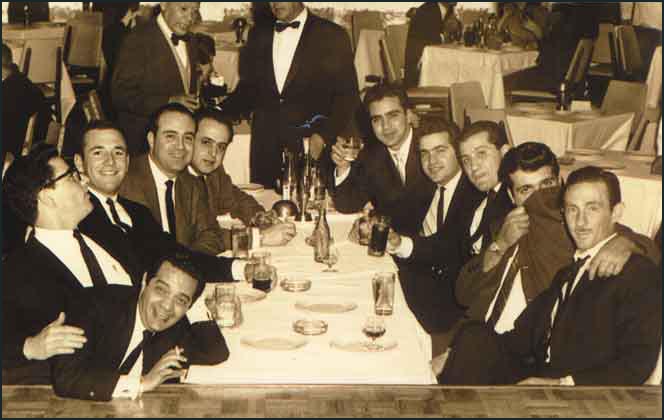
Rodriguez, the drunk lying on the stage, left side of the photo,
as he and his CIA pals whoop it up at a nightclub in Mexico City.

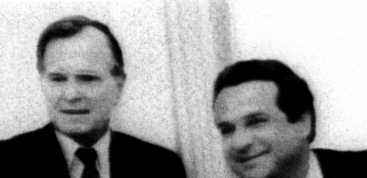
Rodriguez having speaks with his guardian, George H W Bush, former CIA head.[/center]
Edit history
Recommendations
0 members have recommended this reply (displayed in chronological order): = new reply since forum marked as read
Highlight:
NoneDon't highlight anything
5 newestHighlight 5 most recent replies
RecommendedHighlight replies with 5 or more recommendations
= new reply since forum marked as read
Highlight:
NoneDon't highlight anything
5 newestHighlight 5 most recent replies
RecommendedHighlight replies with 5 or more recommendations