Demonstrators in Peru March 180 Miles to Protest Lead Poisoning in Children [View all]
Translation posted 28 October 2015 16:29 GMT
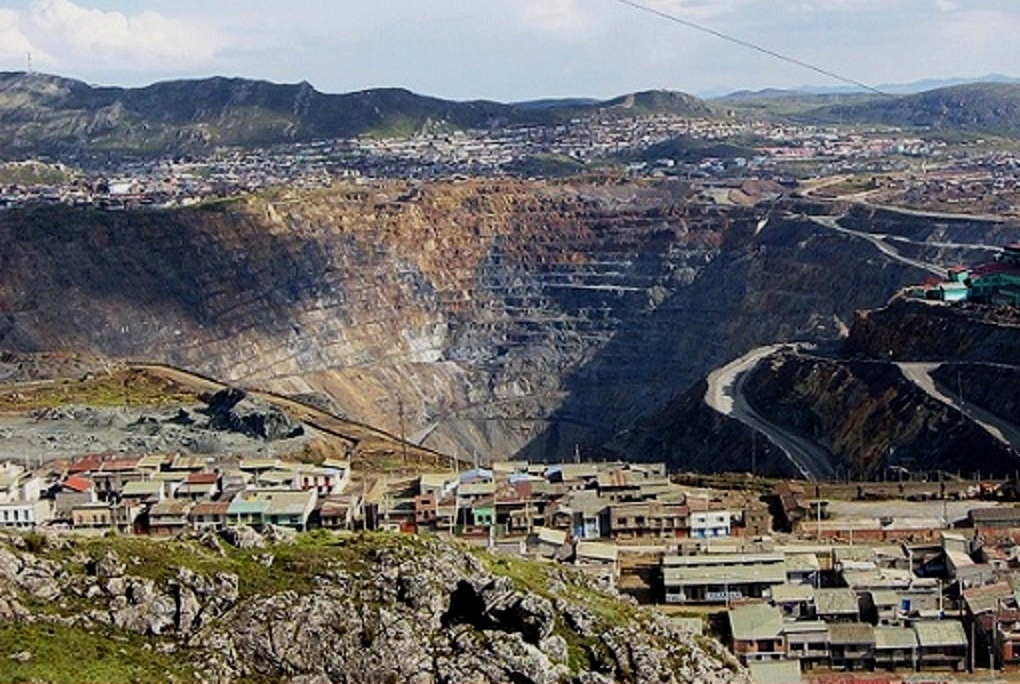
Cerro de Pasco, the city and the open pit mine. Image from La Última Reina (The Last Queen)'s Facebook page.
Post originally published in the blog Globalizado by Juan Arellano.
The region of
Cerro de Pasco, in the central Andes of Peru, has traditionally been a mining area. This area is rich in mineral deposits that have been exploited since the 16th century, beginning in the colonial era. This is also where there are currently
14 mining sites operating at high production levels. Nevertheless, the wealth extracted from Pasco's land and its natural resources are not enjoyed by the majority of the region's inhabitants. In fact,
statistics from last year show that between 2013 and 2014, Cerro de Pasco was the region that saw the sharpest rise in poverty in all of Peru.
Moreover, mining activities have apparently enjoyed little oversight, and for years have been contaminating the
rivers and the
land, creating a variety of
environmental liabilities in the Pasco region. In the specific case of the city of Cerro de Pasco, the mining industry has both
contaminated the local environment and created an
open pit mine in the city center—one that continues to grow and
engulf the city.
It's in this context that the population and authorities of the district of
Simón Bolívar, in the city of Cerro de Pasco,
approved a motion on September 5 to hold a “march of sacrifice” to the capital city, Lima, a distance of 296 kilometers, on September 17. The goal is to protest the central government's neglect of the 2,000
children poisoned with high levels of lead in their blood—a case that has gone on unresolved for four years.
One of the key points agreed upon was that the Ministry of Health will medically examine the children affected by high levels of lead in their blood. Also, the Peruvian government will carry out a technical site survey of the location
to build a clinic for heavy metals detoxification and a modern toxicology lab. In addition, a healthcare center will be constructed in the Paragsha neighborhood of Cerro de Pasco, and other project plans to build health care centers in more towns will be evaluated. On the environmental side, the government agreed to monitor the closure of areas with strip mining, tailings, and toxic pools that still await shutdown, and to neutralize water sources that have become acidic, oversee all relevant audits.
To view the video with English subtitles, click
here.
Finally, César Sáenz Suárez
writes in his blog about the perhaps-little-known aspects of the Pasqueño issues, such as how the population has less access to water rights than the mining industry and the levels of contamination produced by the negligent mining production, among other concerns:
Full article:
https://globalvoices.org/2015/10/28/demonstrators-in-peru-march-180-miles-to-protest-lead-poisoning-in-children/

 = new reply since forum marked as read