Extremely massive exoplanet discovered in the Milky Way's bulge [View all]
November 6, 2017 by Tomasz Nowakowski
(Phys.org)—As a result of NASA's Spitzer Space Telescope observations of a microlensing event, astronomers have found an extremely massive alien world circling a star located in the Milky Way's bulge. The newly discovered planet, designated OGLE-2016-BLG-1190Lb, is the first Spitzer microlensing exoworld residing in the galactic bulge. The finding was presented October 27 in a paper published on arXiv.org.
Microlensing is very useful technique for detecting alien worlds in the inner galactic disk and bulge, where it is difficult to search for planets with other methods. It facilitates the discovery of distant objects by using background stars as flashlights. If a star moves in front of an another star, the light from the distant star is bent by the gravitational pull of the nearer star and the more distant star is magnified. Microlensing does not rely on the light from the host stars; thus, it can detect planets, even when the host stars cannot be detected.
OGLE-2016-BLG-1190 was discovered in June 2016 as a microlensing event by the Optical Gravitational Lensing Experiment (OGLE) collaboration. OGLE is a Polish astronomical project based at the University of Warsaw, searching for dark matter and extrasolar planets. It utilizes the 1.3 meter Warsaw telescope mounted at the Las Campanas observatory in Chile.
Spitzer observed this microlensing event a few days after its discovery. An international team of researchers led by Yoon-Hyun Ryu of the Korea Astronomy and Space Science Institute in Daejon, South Korea, reports that these Spitzer observations detected a new, massive planet orbiting a dwarf star.
Read more at:
https://phys.org/news/2017-11-extremely-massive-exoplanet-milky-bulge.html#jCp
Science:
https://www.democraticunderground.com/122854258
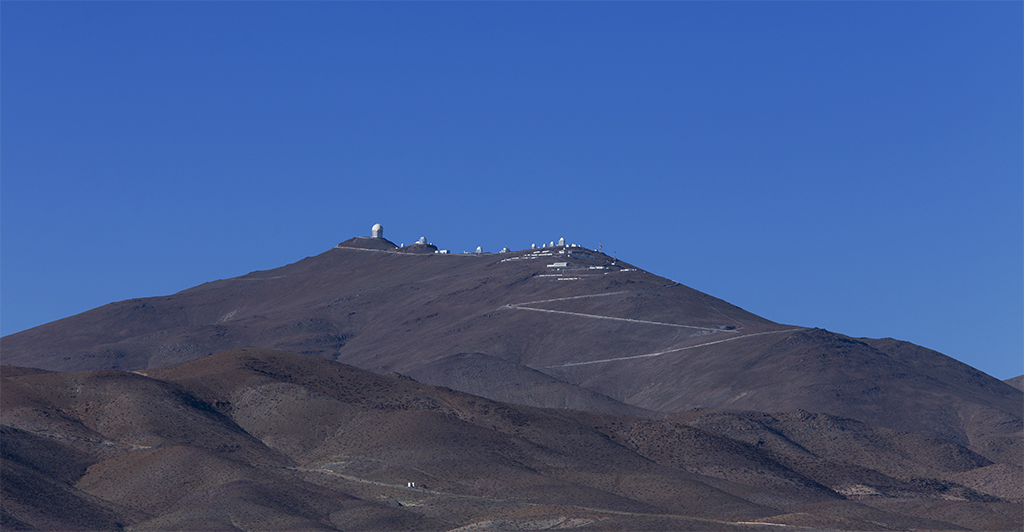

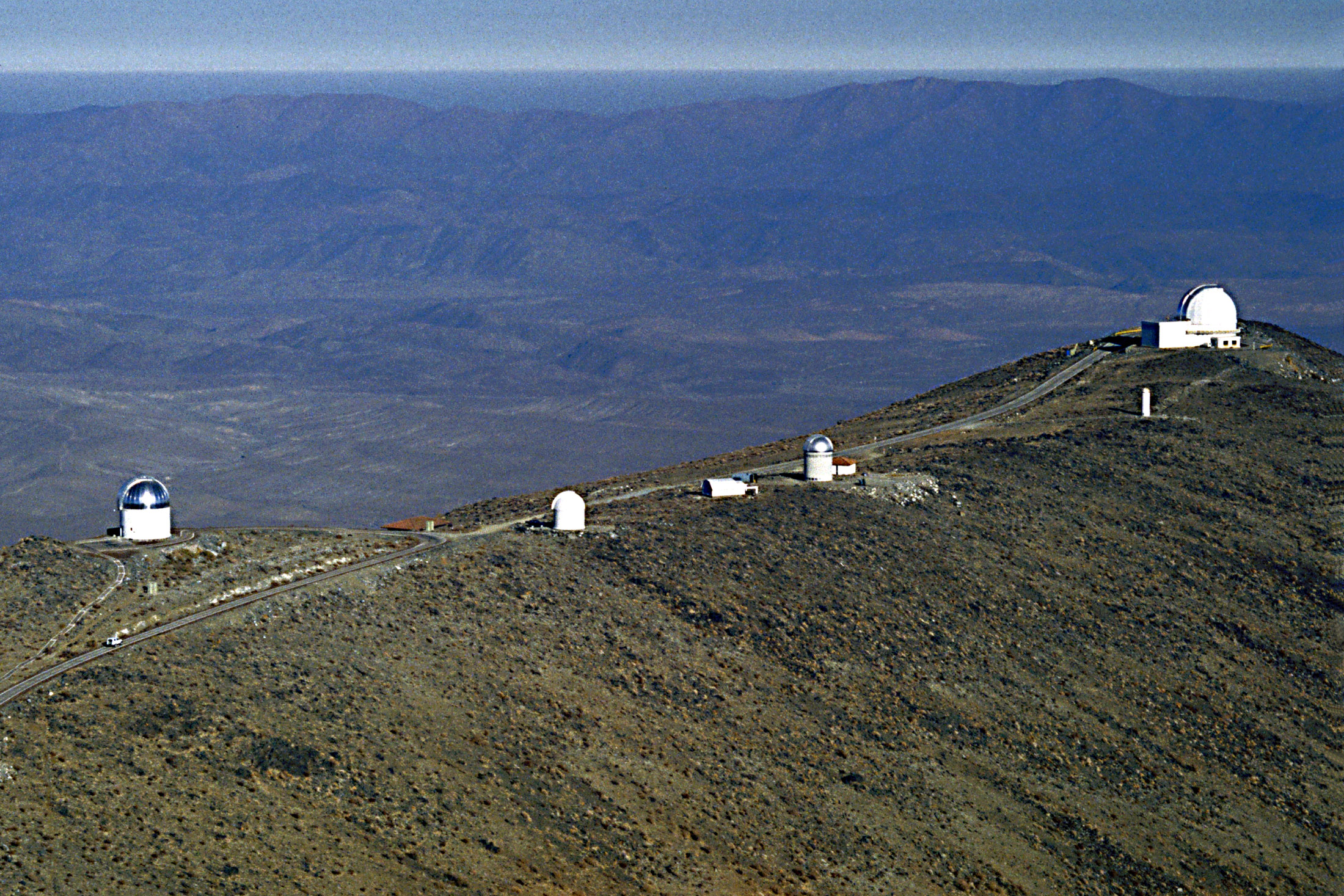
Many images of Las Campanas observatory in Chile:
https://images.search.yahoo.com/search/images;_ylt=AwrB8pMENwZaEygAuE.LuLkF;_ylc=X1MDOTYwNTc0ODMEX3IDMgRiY2sDZWFlcjdmOWNnbDI5ZyUyNmIlM0Q0JTI2ZCUzRGZFVE9PSzFyWUgzS3VfNWJGaWk4THF3a19jX3JYc19ya1E2azM1dGQ0N2NwM1EtLSUyNnMlM0RkayUyNmklM0RWTThOS1NVNUsxM2NNMnBVVDVBbwRmcgMEZ3ByaWQDQnFRcDBleVRTc2lHMDIzOUdNTllkQQRtdGVzdGlkA251bGwEbl9zdWdnAzEEb3JpZ2luA2ltYWdlcy5zZWFyY2gueWFob28uY29tBHBvcwMwBHBxc3RyAwRwcXN0cmwDBHFzdHJsAzMzBHF1ZXJ5A0xhcyBDYW1wYW5hcyBvYnNlcnZhdG9yeSBpbiBDaGlsZQR0X3N0bXADMTUxMDM1Njc0NgR2dGVzdGlkA0I0MjYx?gprid=BqQp0eyTSsiG0239GMNYdA&pvid=oLzo.TEwLjHlO2d6WQqJMAI7MjYwMgAAAABVA.3P&fr2=sb-top-images.search.yahoo.com&p=Las+Campanas+observatory+in+Chile&ei=UTF-8&iscqry=&fr=sfp

 = new reply since forum marked as read