A STUDY OF THE CENOTE BENEATH THE KUKULCÁN PYRAMID, ALSO KNOWN AS EL TEMPLO, SUGGESTS THAT THERE MAY BE INTERCONNECTIONS WITH OTHER CENOTES THROUGH THE GREAT MAYAN AQUIFER.
The Kukulkan Pyramid is a Mesoamerican step-pyramid that dominates the centre of the Chichen Itza archaeological site, located in the Tinúm Municipality of the Mexican state of Yucatán.
The pyramid was constructed over several phases between the 8th and 12th centuries AD in dedication to the deity Kukulcán, the Yucatec Maya Feathered Serpent god.
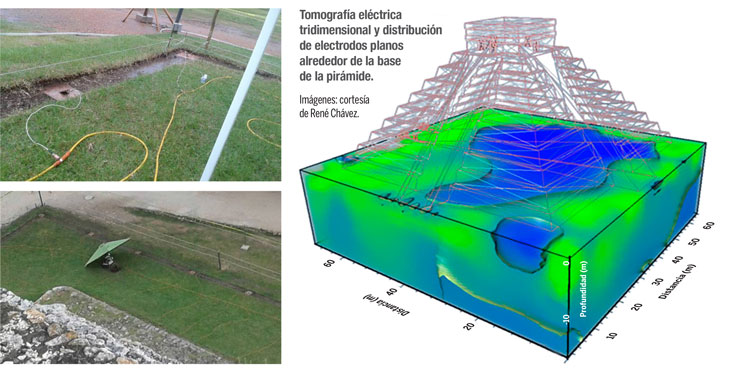
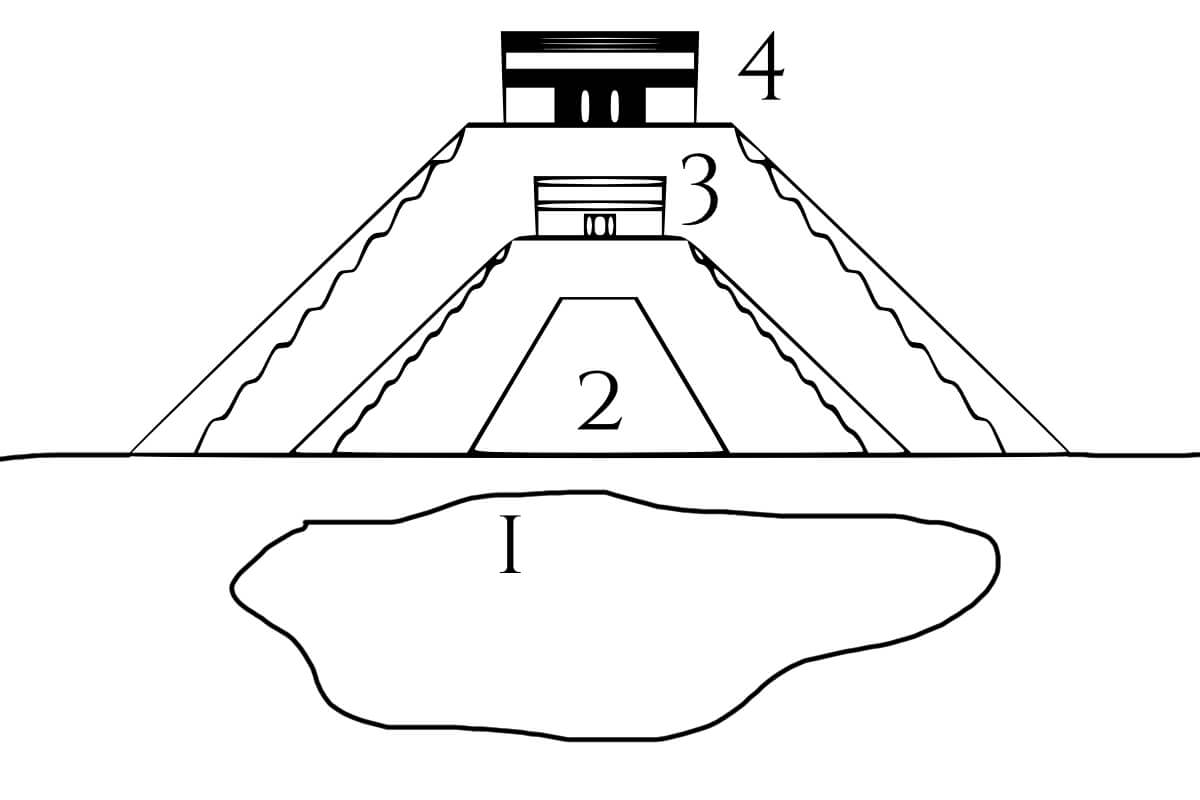
An investigation conducted in 2015 using an electrical resistance survey, revealed a large cenote directly beneath the Kukulcán Pyramid formed by the dissolution of limestone bedrock that created a subsurface void.
The results of the 2015 study found that the subterranean sink hole measures 82 feet (25 metres) by 114 feet (35 metres) at a depth of 65 feet deep (20 metres).
More:
https://www.heritagedaily.com/2023/03/great-mayan-aquifer-may-form-interconnections-with-maya-cenotes/146532

Kukulkan Pyramid in Chichen Itza
The Kukulkan Pyramid, also commonly known as El Castillo (The Castle), is the most impressive building in the Archeological Site of Chichen Itza, and one of the highest of all Mayan architecture.
Kukulkan comes from the words “snake-quetzal” in Yucatec Mayan. The Quetzal is a long-tailed bird found in the region, so Kukulkan can be interpreted as “Feathered Serpent”.
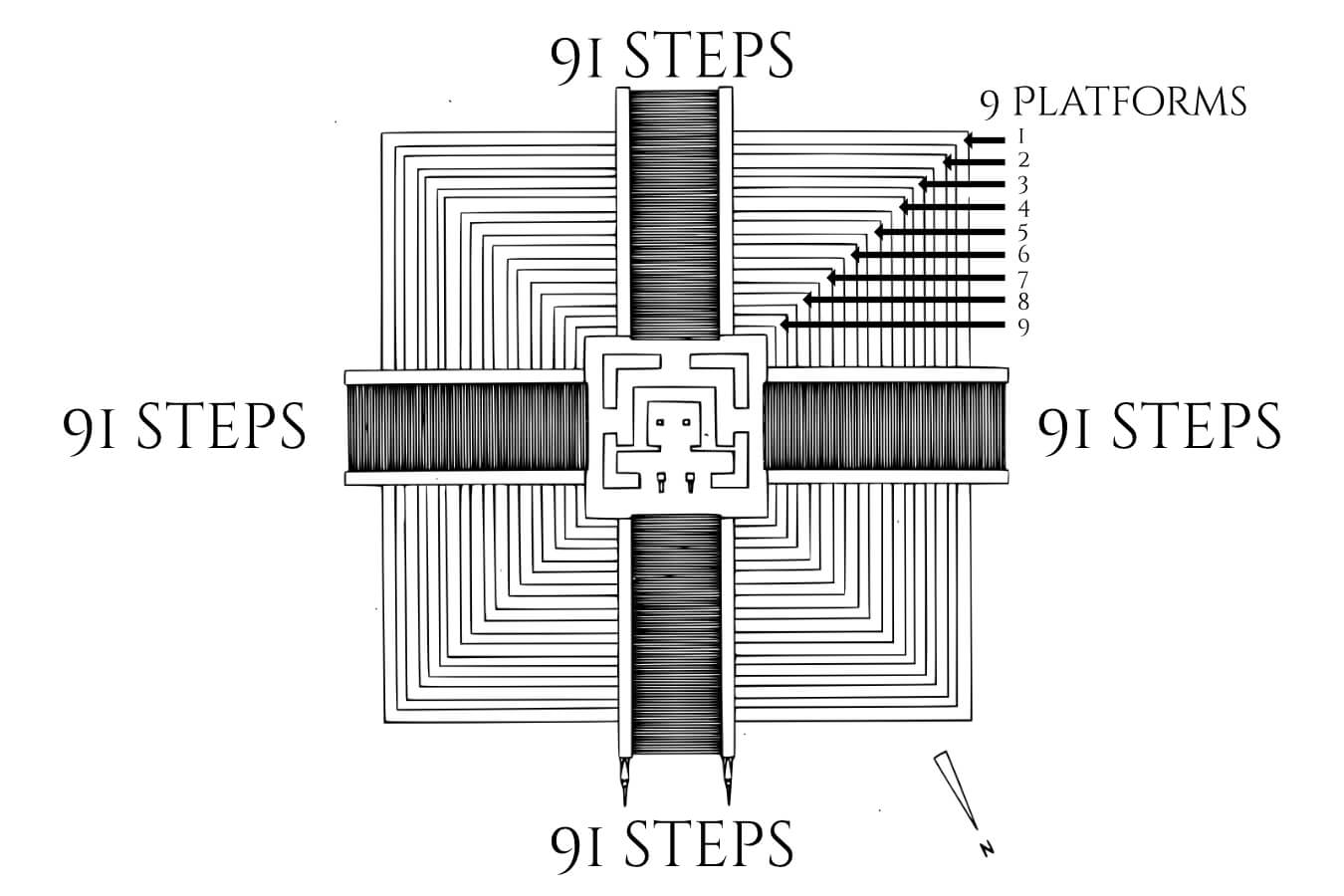
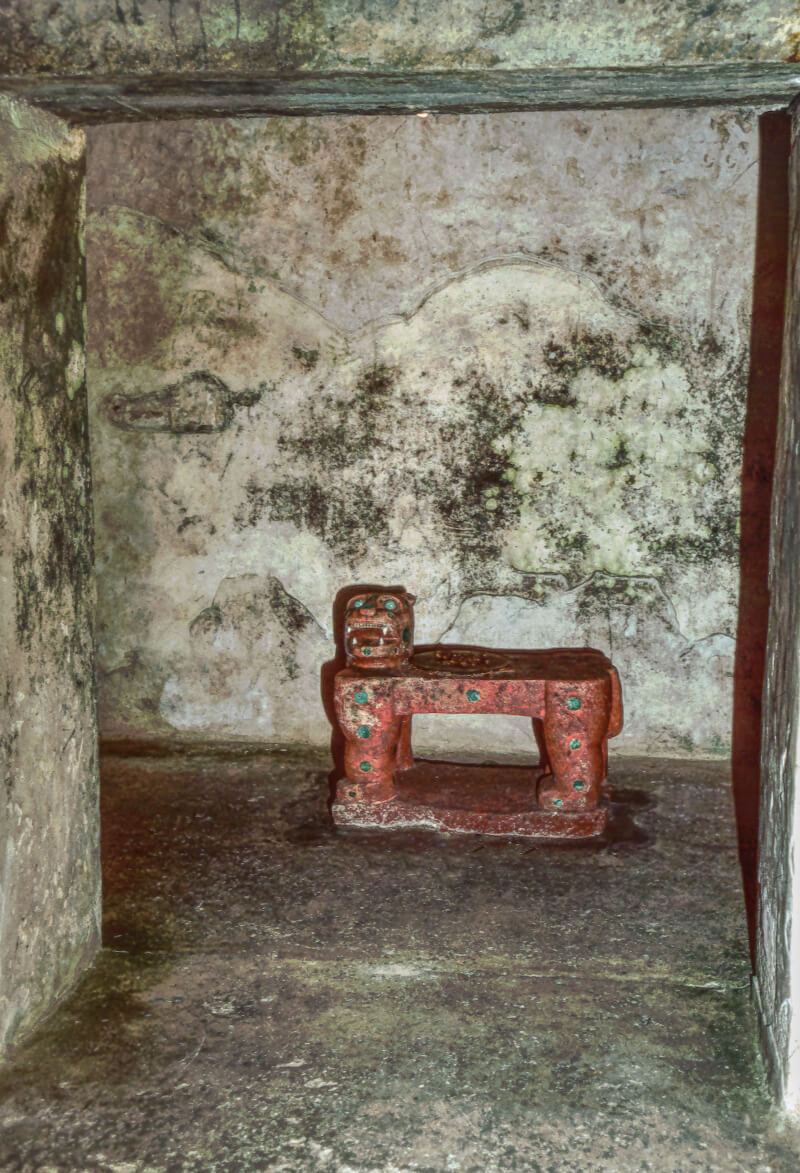
This monumental building is a pyramid of nine staggered bodies 24 meters high, with a staircase on each side and a temple at the top. The decorative motifs of the facade are snakes and jaguars of Toltec influence, which confirms that the construction of the building corresponds to the stage of greatest flourishing of the Itza culture.
Calendar Building of the Kukulkan Pyramid
The Kukulkán Pyramid in Chichen Itza demonstrates the deep knowledge of mathematics, geometry, acoustics, and astronomy that the Maya possessed. Being an initially agricultural society, the Mayans observed carefully the behavior of the stations, the variations of the trajectories of the Sun and the stars, and combining their knowledge, they managed to register them in the construction of the temple dedicated to their god Kukulkan.
Calendar representation of the Kukulkán Pyramid
It’s thought that this pyramid is the representation of the Mayan Calendar: each step is a day of the year, and since each side has 91 steps, multiplied by four sides totaling 364, plus one that represents the platform, we get 365 days of the solar year, so it is thought that the monument was erected in honor of the sun god. Also, if you see the pyramid on one side, the corners of its overlapping platforms add up to 18, which are the months of 20 days of the Mayan Haab Calendar.
. . .
Jade Jaguar in Chichen Itza
More:
https://mayanpeninsula.com/en/kukulkan-pyramid/

 = new reply since forum marked as read