Latin America
In reply to the discussion: BREAKING: Abortion has been safe and free in Cuba for over half a century (and still is) [View all]
Judi Lynn
(164,122 posts)throwing it all out in the streets, setting it on fire!
Havana had been known as the Bleephouse of the Caribbean for far too long, even having served as a R & R stop for the US Navy for years, as ships pulled up and stopped there and sailors staggered all over the city on shore leave. So close to home, too, but totally unlike "home," for sure.
One can only imagine how tired citizens had to be to be associated with such a cheap, vulgar image.
Here's a quick reference I just found:
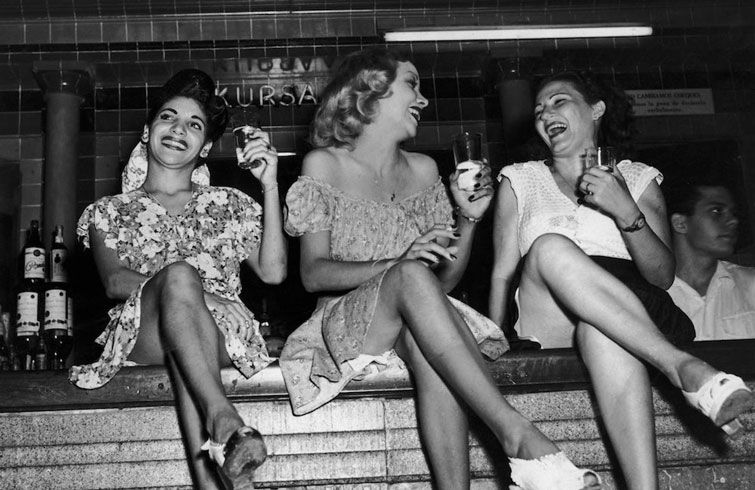
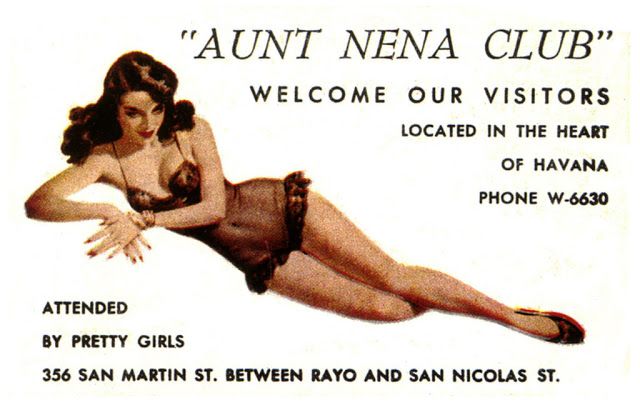
Havana was also Havana for its uncontained sensuality, but with its own history which that erotic avalanche could only react to, despite the social conventions and the dictates of tradition. Nightlife, with its increasing cabarets, casinos and nightclubs, in fact functioned as a powerful rein for a looser and more distended relation between the sexes in the midst of that equally sensual music that comprised the city’s sound, made up among other genres by the mambo, cha-cha and the feeling.
. . .
But there was another type of life, also associated to those changes, and markedly red. According to several sources, referred to by Louis A. Pérez, in 1912 there were some 4,000 sex workers in Havana, a figure that rose to 7,400 in 1931 and reached 11,500 in the late 1950s, a 55 percent increase in a bit over two decades.
Around that same time, the city also had an entire infrastructure for the oldest trade of the world: some 270 brothels were operating. Their location in certain barrios did not prevent the existence of self-employed “ladies of the night,” like the ebony goddess which the young Guillermo Cabrera Infante bumped into in the surrounding areas of the Manzana de Gómez, with whom he went to forge steel for the first time for one peso, plus the same price for the hotel room, an entire institution of Cuban sex culture that today is extinct, at least as it was known until then.
A metaphor was popularly used to name the women like those of the Manzana de Gómez, and also of the Monte and Cienfuegos streets: “fleteras” (charters), which according to Manuel Moreno Fraginals comes from a word from the military and maritime Havana of the colony. “Fletero or fletante,” Moreno affirms, “is the person who chartered a ship or part of it to transport persons or merchandise” in a township of San Cristóbal that offered a plurality of services to a population of soldiers, sailors and gamblers, and also had the so-called slaves paid by the day or “earners,” many of whom prostituted themselves to pay their masters for their freedom.
Obviously, the Americans did not introduce prostitution or gambling in Cuba. But they contributed to raising their profile in a scenario of domestic crisis, through a wide-ranging network of services and officiants when the mafia stormed Havana and a tourism of hundreds of weekly flights started coming from Miami, Tampa, New York, Chicago…, together with the visitors who came by sea from Key West or other points of the continental geography like West Palm Beach and New Orleans.
In 1950, 194,000 U.S. travelers had landed; seven years later, in 1957, they already were 356,000. They came from all classes and social groups, in keeping with a moment in which tourism had been democratized with the low prices for transportation and accommodations due to the changes in the economy and specific market strategies and competition.
All this was occurring in the context of that erotic-sensual emergence in fashion, publicity and films, in which they left at home the restrictions and taboos proper of the puritan morale. The visitors came, of course, to the rooms of those recently built shining hotels, and to gamble their money in casinos and game rooms. But they also came for “romance” with the other, no matter what their sexual orientation was, and, of course, to enjoy the rumba, the rum and cigars.
Havana, Cuba, was definitively a place where “conscience went on holidays.” The Camelot of the libido.
https://oncubanews.com/en/cuba-usa/the-camelot-of-the-libido/
~ ~ ~
Here's an article with a couple of photos showing inside a casino or two which ended up out on the street, on fire, during the revolution:
The Havana high life before Castro and the Revolution, 1920-1950
https://rarehistoricalphotos.com/havana-before-castro-1920-1950/
Edit history
Recommendations
0 members have recommended this reply (displayed in chronological order): = new reply since forum marked as read
Highlight:
NoneDon't highlight anything
5 newestHighlight 5 most recent replies
RecommendedHighlight replies with 5 or more recommendations
= new reply since forum marked as read
Highlight:
NoneDon't highlight anything
5 newestHighlight 5 most recent replies
RecommendedHighlight replies with 5 or more recommendations