Economy
In reply to the discussion: Weekend Economists Go Eat Worms March 27-29, 2015 [View all]Demeter
(85,373 posts)Posted on March 17, 2014
http://www.nakedcapitalism.com/2014/03/neo-liberalism-expressed-simple-rules.html
Neoliberalism (a.k.a. The Washington Consensus) is the dominant ideology of the political class in Washington D.C., shared by both legacy parties. In fact, it’s not clear there is another ideology, which is why we get seemingly weird policymaking processes like RomneyCare morphing into ObamaCare, even as proponents of each version of the same plan hate each other, “narcissism of small differences”-style. Of course, in neo-liberalism’s house are many mansions, many factions, and many funding sources, so it’s natural, or not, that an immense quantity of obfuscation and expert opinion has accumulated over time, making fine distinctions between various shades of neo-liberalism. In this brief post, I hope to clear the ground by proposing two simple rules to which neo-liberalism can be reduced. They are:
#1 Because markets.
#2 Go die!
Of course, these rules can’t be applied, willy-nilly, inartfully, in just any context:
Rule #1 — and here we owe an immense debt of gratitude to the work of Outis Philalithopoulos on academic choice theory — doesn’t apply to (let’s label it)
Context #1: The world of the neo-liberal practitioners themselves the academic guilds, media outlets{1}, and think tanks to which they adhere, Flexian style, are distinctly not market-driven; just look at Thomas Friedman.
It follows that Rule #2 does not apply to neo-liberal practitioners either, because of their social position just described in Context #1: “wingnut welfare” and its equivalent in the “progressive” nomenklatura; they will have — to strike a blow at random — corporate health insurance.
In addition, we have Context #2: The world of the 0.01%. Neither Rule #1 nor Rule #2 rule applies to them, because no rules do.{2} These asymmetries will become more interesting shortly.
So (reviewing), to Rule #1: “Because markets” uses that stupid “because” meme:
Let’s start with the dull stuff, because pragmatism. … Linguists are calling the “prepositional-because.” Or the “because-noun.” {For example:} "But Iowa still wants to sell eggs to California, because money." It’s a usage, in other words, that is exceptionally bloggy and aggressively casual and implicitly ironic. And also highly adaptable. … it also conveys a certain universality. When I say, for example, “The talks broke down because politics,” I’m not just describing a circumstance. I’m also describing a category. I’m making grand and yet ironized claims, announcing a situation and commenting on that situation at the same time. I’m offering an explanation and rolling my eyes—and I’m able to do it with one little word. Because variety. Because Internet. Because language.
Because neo-liberalism. Because I like the idea, a lot, of catching the Mount Pelerin Society, Pinochet, Diane Rehm, the Friedmans, Joe Biden, Rush Limbaugh, and the people who drafted the Democratic platform in one big net, and then deep-sixing the entire squirming and gesticulating political class with language that’s “exceptionally bloggy and aggressively casual and implicitly ironic.” And this tactic really is fair. Trap a neo-liberal in conversation next to a whiteboard, or hand them a napkin, and you can probably coax them to “educate” you by drawing the famous “Because Markets” diagram, which looks like this:
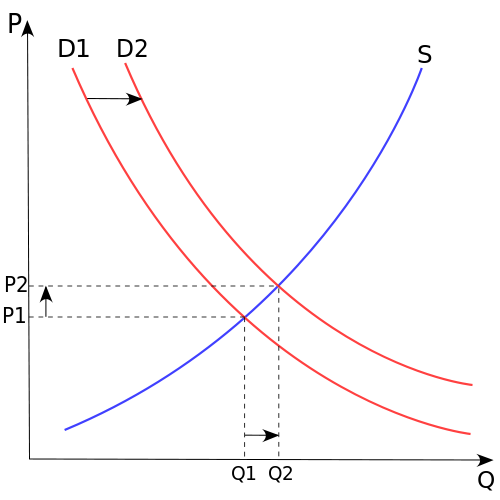
Figure 1: “Because Markets” Supply-and-demand
And when your targeted neo-liberal is done sketching, they will express the idea, with varying degrees of quasi-religious fervor, that the price set by the intersection of the downward-sloping demand curve and the upward-sloping supply curve is the right price...Except the supply and demand curve ain’t necessarily so. The other day, I saw an elegant hi-so lady eating a Krispy Kreme in Bangkok’s Siam Paragon. With a fork! That donut cost her 27 baht — 84¢, 5¢ more than the US, in a city with half the cost-of-living of New York! So, what’s going on? To her, Krispy Kreme donuts are a luxury good. How does she know that? Exactly because they have a high price! Therefore — Thorstein Veblen would be proud — those donuts have an upward sloping demand curve! (Yves, who is actually qualified to talk about this stuff, goes over these issues in more detail than I can, in ECONned.) So, empirically, seeking truth from facts, as they say, Figure 1 is by no means universal. And that’s before we get to the idea that “Because markets” isn’t appropriate for vast swaths of human endeavor; Common Pool Resources, for example, are not best managed as a form of private property.
But by “right,” your neo-liberal interlocutor will not mean right mechanically or arithmetically, but right morally; that is, the best of all possible worlds will be created when there are no pesky artificial factors interfering with the frictionless operation of the sacred curves. Note, however, that by the asymmetry of Context #1, Figure 1 does not apply to the neo-liberal practitioner themselves, nor, by the asymmetry of Context #2, to the class of people who own the markets in which the prices are set. So, if unions raise the price of human rental, that’s not just an ordinary bargaining process, it’s wrong, even evil: It’s a defilement of the sacred curves. But if a squillionaire uses their power to bust that same union, that’s not merely no problem, it’s not even part of the problem (by Context #2). Hence, we have the pleasant and realistic outcome that the price of a Walmart worker’s time isn’t enough to live on, the price of the (no doubt credentialled) neo-liberal practititioner’s time is somewhere in, er, the “middle,” and the price of a squillionaire’s time is so high they buy grotesquely expensive homes and forget they own them. Because markets.
So, to Rule #2 (reviewing): “Go die!.” Note that, unlike Rule #1, Rule #2 is cast in the imperative. However, just as in Rule #1, Contexts #1 and #2 apply. The imperative is not for everyone! That is, the 0.01% are not sent the message, along every possible channel, to “Go die!” No no. They are told — at least by themselves — to “Go to Mars!” (Which I wish they would do, and leave us alone.) Take ObamaCare. Please.
Wendell Potter, who used to do PR for the health insurance industry, explains how “Because Markets” works in that context. (I mean, they call it a “Marketplace” for a reason, right?)
http://www.huffingtonpost.com/wendell-potter/does-obamacare-offer-too_b_4890222.html
And I also know that insurers benefit from the marketplace confusion that “choice and competition” can create. I can assure you that some insurers are counting on you becoming overwhelmed by all the choices and picking a plan that might appear at first glance to be a bargain. But beware: if you’re not careful and pick a plan without really kicking the tires, you very possibly will be buying something that could wind up costing you much more than you ever imagined if you get sick or injured.
That happened to my friend Donna Smith, who as executive director of the Health Care for All Colorado Foundation, knows more about health insurance than most of us. She spent quite a bit of time last fall on the Colorado exchange trying to figure out which plan would offer the best value for her and her husband. If she had to do it over again, she would have taken the additional step of calling the insurance companies directly after reviewing the plans they were offering on the exchange, just to be certain of what her out-of-pocket obligations would be if she had to be hospitalized during the year.
A cancer survivor, Donna knew there would be a chance she might get sick again and need expensive care (Rule #2). It never occurred to her, though, that picking a gold or platinum level plan with a higher premium would likely have been better deal than the silver Kaiser Permanente plan she opted for and that seemed to be more affordable.
To make shopping for coverage even more challenging, Kaiser and most other insurers offer several silver plans on the Colorado exchange, so Donna had to spend time trying to figure out which silver plan would be the best deal.
Donna told me the she took the time to compare the monthly premiums, co-pays and annual deductibles of each of the silver plans before making her decision. “I felt that the one I chose offered the most coverage I could afford with my premium buying dollar,” she said.
Sure enough, within days after the plan went into effect on January 1, Donna got sick and was hospitalized for a week.
To her shock, she later found out some limitations of her coverage that made her overall financial responsibility much higher.
You can see that Smith really was making a life-and-death choice when she purchased insurance in the “Marketplace” designed by insurance companies. And if you multiply Smith’s story by millions nationwide, you’ll see that those are not good at manipulating the market to their ends, or don’t have the hours to spend that Donna does, are more likely to have lethal outcomes from their choices — choices they are mandated to make only so that parasitical health insurance rent extractors can make a buck — than those who have better skills, or have the hours to spend, or who have their insurance purchased for them by trusted agents. Statistically, and actuaries no doubt can calculate this sort of thing, a percentage of the insured will not make the choices that will get them the care they need, and, again statistically, a certain percentage of those will lose their lives. Because markets.
All of brings me to a strong story by Annie Lowrey in the Times, which was the impetus behind this post. In fact, it ticked me off so much I can hardly think straight:
Income Gap, Meet the Longevity Gap
Fairfax County, Va., and McDowell County, W.Va., are separated by 350 miles, about a half-day’s drive. Traveling west from Fairfax County, the gated communities and bland architecture of military contractors give way to exurbs, then to farmland and eventually to McDowell’s coal mines and the forested slopes of the Appalachians. Perhaps the greatest distance between the two counties is this: Fairfax is a place of the haves {Contexts #1 and #2}, and McDowell of the have-nots. Just outside of Washington, fat government contracts{[that is, through policy choice} and a growing technology sector buoy the median [!!] household income in Fairfax County up to $107,000, one of the highest in the nation. McDowell, with the decline of coal, has little in the way of industry. Unemployment is high. Drug abuse is rampant. Median household income is about one-fifth that of Fairfax.
One of the starkest consequences of that divide is seen in the life expectancies of the people there. Residents of Fairfax County are among the longest-lived in the country: Men have an average life expectancy of 82 years and women, 85, about the same as in Sweden. In McDowell, the averages are 64 and 73, about the same as in Iraq….
Since the 1980s, “socioeconomic status (class) has become an even more important indicator of life expectancy.” That was the finding of a 2008 report by the Congressional Budget Office. But dollars in a bank account have never added a day to anyone’s life, researchers stress. Instead, those dollars are at work in a thousand daily-life decisions (like Donna Smith’s)— about jobs, medical care, housing, food and exercise — with a cumulative effect on longevity.
“Why might income have an effect on morbidity or mortality?” said David Kindig, an emeritus professor at the University of Wisconsin School of Medicine and an expert in longevity issues. “We have these causal pathways, through better jobs, better health insurance, better choice of behaviors, he added. On top of that, “there’s the stress effects of poverty and low educational status.” …
The contrast between McDowell and Fairfax shows just how deeply entrenched these trends are, with consequences reaching all the way from people’s pocketbooks to their graves.
Because markets. Go die!{4}
NOTES
- The social experiment of the moment, squillionaires with big ideas, has yet to play out in the media. Too soon to tell!
- Until it’s too late, but that is a theme for another day.
- Via a podcast from sadly decayed New Yorker. It’s quite a treat to hear Herzberg and Remnick gradually allow themselves to dimly understand that they know literally nothing of the experience of the average person buying Obamacare because they have never had to buy their own insurance since they get it corporately (see Context #1).
- Again from Lowrey, a fine example of Rule #2:
“These things are not nearly as clear as they seem, or as clear as epidemiologists seem to think,” said Angus Deaton, an economist at Princeton.
Just doing his job….
**************************************************************
UPDATE Adding, I’m not claiming that I’ve synthesized the neo-liberal literature. My claim is that if you engage a neo-liberal in conversation on policy (“at the whiteboard”), at some point you will be able to reduce what they say to rule #1 as a premise and rule #2 as an injunction, given the asymmetrical contexts #1 and #2. It’s rather like the famous headline “Ford to City: Drop Dead,” but on a society-wide scale, and with the 0.01% in the place of Ford.
Edit history
Recommendations
0 members have recommended this reply (displayed in chronological order): = new reply since forum marked as read
Highlight:
NoneDon't highlight anything
5 newestHighlight 5 most recent replies
RecommendedHighlight replies with 5 or more recommendations
= new reply since forum marked as read
Highlight:
NoneDon't highlight anything
5 newestHighlight 5 most recent replies
RecommendedHighlight replies with 5 or more recommendations