
The Weekend Economists travel the Yellow Brick Road, November 14-15. [View all]
Well, I was going to try to tie this weekends WEE into events yesterday in France, but realized it might take me hours to get up to speed. So, on to the regularly planned Weekend Economists!
==========
Think back to your school years. Remember being assigned a book to read. Now, maybe you actually tried and finished reading that book (good for you), or maybe you just skimmed it, or maybe you just read the Cliff Notes. So now you go into class, knowing that you know this stuff. The teacher starts discussing the assigned book, and you're left pondering, "just what book is he/she talking about? There was nothing like that in the book I read." Yeah, we've all been there.
Fast forward a decade or a dozen (years, not decades), and you become aware on you own that there are certain books, movies, TV shows, even music, that have a hidden meaning beyond that which is obvious. This is the path we are taking today. I, for one, will focus on one book, The Wizard of Oz, mostly because I'm doing this WEE on short notice. But there are certainly numerous other examples. Feel free to join the main discussion, or add your own somewhere down the line.
==========
The Wizard of Oz. Just a children's book, correct? A storm displaces a girl far far away from home, and all she wants is to go home. But there have been several other reinterpretations of this book, the most famous of which follows.
Do remember that this following discussion is about the book. A few things were changed or eliminated in the movie.
==========
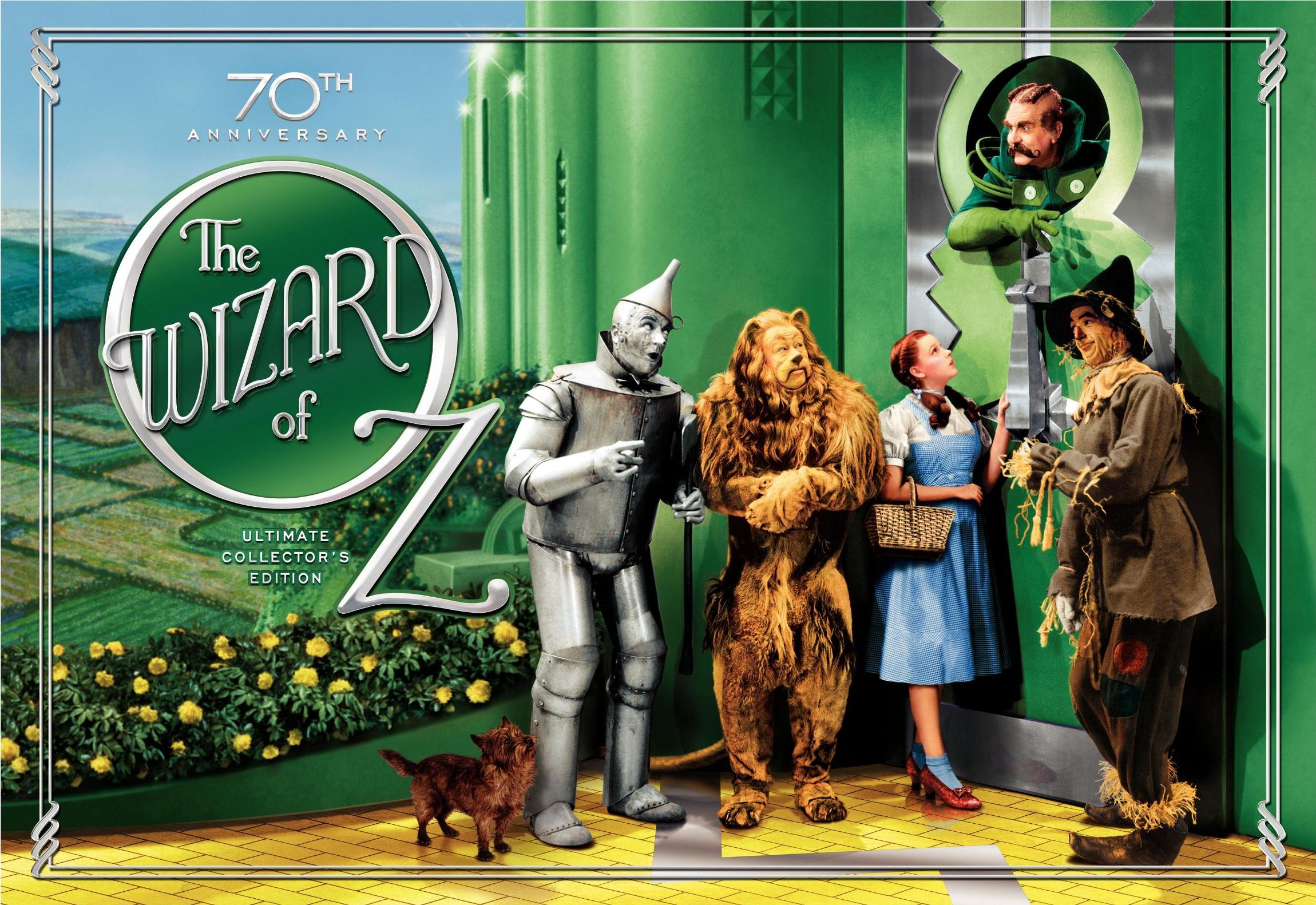
The Wizard of Oz as a satirical allegory of money and politics in 1900
Dorothy (and Toto) of Kansas
Dorothy, the protagonist of the story, represents an individualized ideal of the American people. She is each of us at our best-kind but self-respecting, guileless but levelheaded, wholesome but plucky. She is akin to Everyman, or, in modern parlance, "the girl next door." Dorothy lives in Kansas, where virtually everything-the treeless prairie, the sun-beaten grass, the paint-stripped house -- even Aunt Em and Uncle Henry -- is a dull, drab, lifeless gray. This grim depiction reflects the forlorn condition of Kansas in the late 1880s and early 1890s, when a combination of scorching droughts, severe winters, and an invasion of grasshoppers reduced the prairie to an uninhabitable wasteland. The result for farmers and all who depended on agriculture for their livelihood was devastating. Many ascribed their misfortune to the natural elements, called it quits, and moved on. Others blamed the hard times on bankers, the railroads, and various middlemen who seemed to profit at the farmers' expense. Angry victims of the Kansas calamity also took aim at the politicians, who often appeared indifferent to their plight. Around these economic and political grievances, the Populist movement coalesced.
In the late 1880s and early 1890s, Populism spread rapidly throughout the Midwest and into the South, but Kansas was always the site of its most popular and radical elements. In 1890, Populist candidates began winning seats in state legislatures and Congress, and two years later Populists in Kansas gained control of the lower house of the state assembly, elected a Populist governor, and sent a Populist to the U.S. Senate. The twister that carries Dorothy to Oz symbolizes the Populist cyclone that swept across Kansas in the early 1890s. Baum was not the first to use the metaphor. Mary E. Lease, a fire-breathing Populist orator, was often referred to as the "Kansas Cyclone," and the free-silver movement was often likened to a political whirlwind that had taken the nation by storm. Although Dorothy does not stand for Lease, Baum did give her (in the stage version) the last name "Gale"-a further pun on the cyclone metaphor.
The name of Dorothy's canine companion, Toto, is also a pun, a play on teetotaler. Prohibitionists were among the Populists' most faithful allies, and the Populist hope William Jennings Bryan was himself a "dry." As Dorothy embarks on the Yellow Brick Road, Toto trots "soberly" behind her, just as the Prohibitionists soberly followed the Populists.
.....
The Three Amigos
In the hope that the Wizard will help her return to Kansas, Dorothy embarks on the Yellow Brick Road to Emerald City. After traveling several miles, she encounters the Scarecrow, who does not "know anything" because he has "no brains at all." The brainless Scarecrow represents the midwestern farmers, whose years of hardship and subjection to ridicule had created a sense of inferiority and self-doubt. Populist leaders such as William Peffer and "Sockless" Jerry Simpson were often portrayed as deluded simpletons who failed to understand the true causes of their economic plight. The Populists' "stupidity" was also attested to by their apocalyptic rhetoric, conspiracy theories, and radical agenda, which included nationalization of the railroads, a graduated income tax, and the unlimited coinage of silver. Critics scoffed at their overblown rants, mocked their paranoid style, and dismissed their simplistic nostrums as the distempered ravings of "socialist hayseeds."
The picture of the Scarecrow is not so one-sided. His conduct on the journey through Oz is marked by common sense, resilience, and rectitude. He is not so dumb after all. As we learn near the end of the story, the Scarecrow-cum-farmer had brains all along-perhaps brains enough to grasp the true causes of his misery and the basics of monetary policy.
.....
Proceeding down the road, the duo encounter the Tin Woodman. Once healthy and productive, the Woodman was cursed by the wicked Witch of the East, lost his dexterity, and accidentally hacked off his limbs. Each lost appendage was replaced with tin until the Woodman was made entirely of metal. In essence, the Witch of the East (big business) reduced the Woodman to a machine, a dehumanized worker who no longer feels, who has no heart. As such, the Tin Man represents the nation's workers, in particular the industrial workers with whom the Populists hoped to make common cause. His rusted condition parallels the prostrated condition of labor during the depression of 1890s; like many workers of that period, the Tin Man is unemployed. Yet, with a few drops of oil, he is able to resume his customary labors-a remedy akin to the "pump-priming" measures that Populists advocated.
.....
Having liberated the Tin Man, the trio proceeds through the forest, only to be accosted by a roaring lion. He is none other than William Jennings Bryan, the Nebraska representative in Congress and later the Democratic presidential candidate in 1896 and 1900. Bryan (which rhymes with "lion," a near homonym of "lying" was known for his "roaring" rhetoric and was occasionally portrayed in the press as a lion, as was the Populist Party itself. Bryan adopted the free-silver mantra and won the Populists' support in his first race against McKinley. Like the Lion of Oz, Bryan was the last to "join" the party. His defeat in the general election was largely owing to his failure to win the support of eastern workers, just as the Lion's claws "could make no impression" on the Tin Man.
Although Bryan's supporters considered him courageous, his critics thought him "cowardly" for opposing war with Spain in 1898 and the subsequent annexation of the Philippines. Yet, for anti-imperialists, who counted many Populists among their ranks, Bryan's unpopular stand was courageous indeed. Less courageous, however, were his final decision to vote for annexation (albeit as a tactical move) and his failure to fight vigorously for free silver in the election of 1900, both of which disappointed Populists.
.....
Oz, Emerald City, and the Wacky Wizard
The Land of Oz, with its varied landscape and diverse inhabitants, is a microcosm of America, and Emerald City, its center and seat of government, represents Washington, D.C. In an effort to be made whole, Dorothy and her band travel to the capital to see the Wizard, who presumably has the power to grant them their wishes. The journey to Emerald City corresponds to the Populist effort to acquire power in Washington, and the travelers recall the "industrial armies" who marched on the capital during the depression of 1893-97. The most famous of these, "Coxey's Army," was led by a successful businessman who urged the government to fund public-works programs (most notably a "good roads bill" to alleviate unemployment. Coxey, who hoped to meet with President Cleveland, was arrested for trespassing, and his proposals were ignored. Dorothy and company also face hazards on the road to Emerald City and are turned away by the Wizard, who shows little sympathy for their plight.
The Wizard, who "can take on any form he wishes," represents the protean politicians of the era, especially the presidents of the Gilded Age. Given the even division of Democrats and Republicans, and the razor-thin majorities of most presidential elections, candidates rarely took clear stands on the issues. As a result, voters often had difficulty in determining what the candidates stood for. The Wizard fits this description, for "who the real Oz is," Dorothy is informed, "no living person can tell." Indeed, when the foursome enter the throne room, the Wizard appears to each in a different form. Like many politicians, he is unwillingly to help them without a quid pro quo: "I never grant favors without some return."
Politicians are also infamous for failing to keep promises, and the great Oz is no different. When Dorothy's party returns after killing the Witch of the West, the Wizard keeps them waiting, then puts them off. By accident, the all-powerful Wizard is exposed and his true identity revealed. Far from a mighty magician, "Oz, the Terrible" is merely a "humbug," a wizened old man whose "power" is achieved through elaborate acts of deception. The Wizard is simply a manipulative politician who appears to the people in one form, but works behind the scenes to achieve his true ends. Such figures are terrified at being exposed; the Wizard cautions Dorothy to lower her voice lest he be discovered and "ruined."
.....
Much much more at the link.....
-----> http://www.usagold.com/gildedopinion/oz.html
==========
So now, tell me. Aren't thing today much like things back then? The eastern bankers oppressing everyday people. Candidates that rarely took clear stands of issues, or today, a candidate that takes every stand on every issue. Workers reduced to machines. A brainless mass of people. People and politicians with no courage at all. It goes on and on.
 = new reply since forum marked as read
Highlight:
NoneDon't highlight anything
5 newestHighlight 5 most recent replies
= new reply since forum marked as read
Highlight:
NoneDon't highlight anything
5 newestHighlight 5 most recent replies