The 'Great Dying' Nearly Erased Life On Earth. Scientists See Similarities To Today [View all]
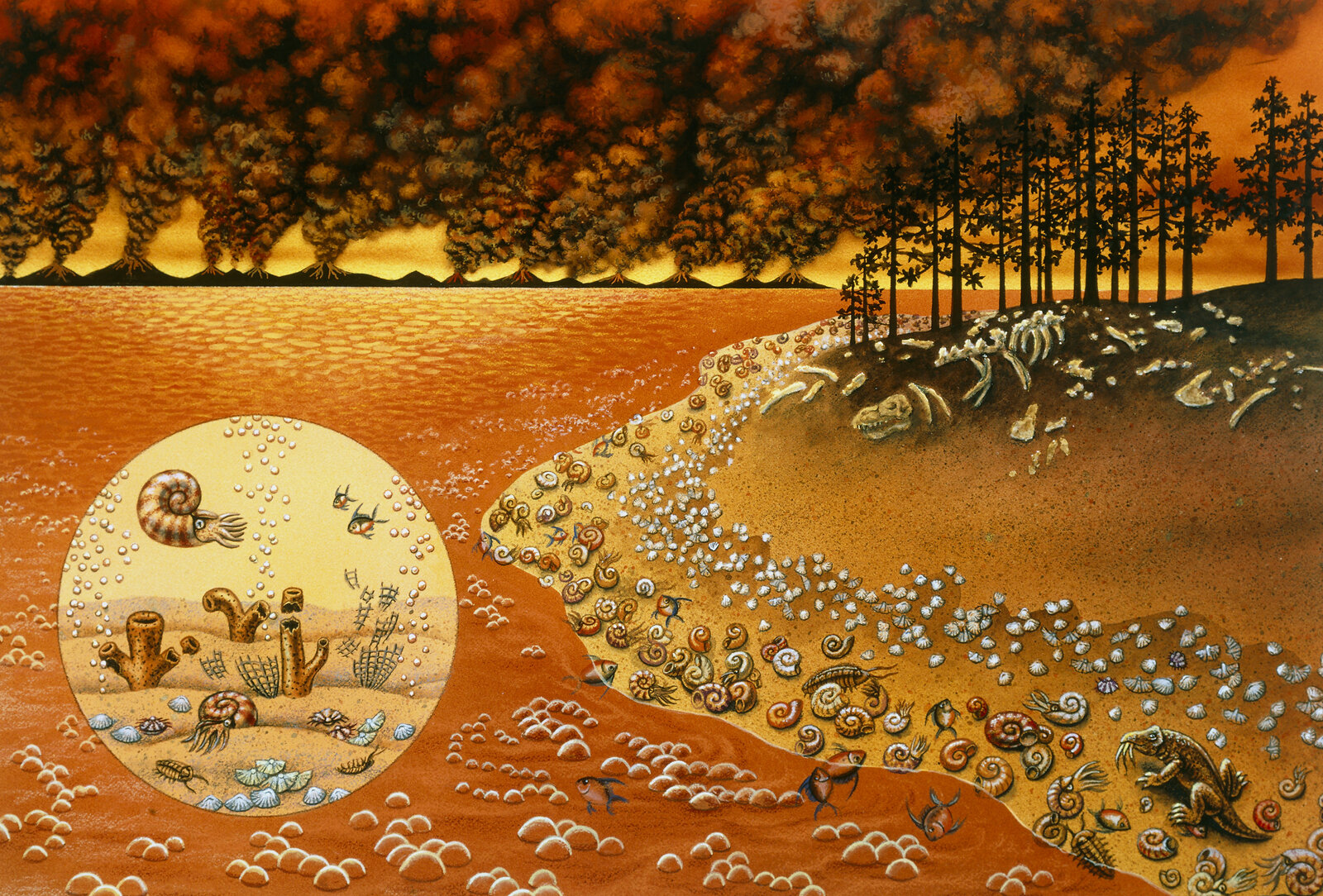
There was a time when life on Earth almost blinked out. The "Great Dying," the biggest extinction the planet has ever seen, happened some 250 million years ago and was largely caused by greenhouse gases in the atmosphere. Now scientists are beginning to see alarming similarities between the Great Dying and what's currently happening to our atmosphere.
It's explained in the exhibit's section on the Great Dying. About 250 million years ago or so, an enormous volcanic field erupted in what is now Siberia. It spewed lava that burned though limestone and coal beds and filled the atmosphere with carbon dioxide and pollution, possibly for millions of years. That in turn warmed the planet, made the oceans acidic and robbed them of oxygen. More than 90% of species in the oceans died out as did two-thirds of those on land.
There have been other mass extinctions, like the one that wiped out the dinosaurs about 65 million years ago, but this one, at the end of the Permian Period, was mostly caused by too much carbon dioxide rising into the atmosphere. And the Smithsonian notes often in its exhibit that the current warming of the planet is déjà vu all over again.
"We can learn from studying the past," Wing says. "They're also the processes that are being observed by Earth scientists today."
https://www.npr.org/2019/06/04/729341362/the-great-dying-nearly-erased-life-on-earth-scientists-see-similarities-to-today?utm_term=nprnews&utm_source=facebook.com&utm_medium=social&utm_campaign=npr&fbclid=IwAR1_aEIGm5sPotrnLaTnALp404IDdNwbiQoAAxAJ667ROkl96n_gAOB63xQ

 = new reply since forum marked as read