'Not just weeds': how rebel botanists are using graffiti to name forgotten flora [View all]
Pavement chalking to draw attention to wild flowers and plants in urban areas has gone viral across Europe – but UK chalkers could face legal action
Arising international force of rebel botanists armed with chalk has taken up street graffiti to highlight the names and importance of the diverse but downtrodden flora growing in the cracks of paths and walls in towns and cities across Europe.
The idea of naming wild plants wherever they go – which began in France – has gone viral, with people chalking and sharing their images on social media. More than 127,000 people have liked a photo of chalked-up tree names in a London suburb, while a video of botanist Boris Presseq of Toulouse Museum of Natural History chalking up names to highlight street flowers in the French city has had 7m views.
Presseq told the Guardian: “I wanted to raise awareness of the presence, knowledge and respect of these wild plants on sidewalks. People who had never taken the time to observe these plants now tell me their view has changed. Schools have contacted me since to work with students on nature in the city.”
France banned pesticide use in parks, streets and other public spaces in 2017 and in gardens from 2019, leading to a surge in awareness of urban wild flowers in the country.
French botanist and campaigner Sophie Leguil, who lives in London, set up the More Than Weeds campaign to change perceptions of urban plants in the UK after helping to spread the Sauvages de ma rue (“wild things of my street”) chalking campaign in France led by Tela Botanica. She has won permission to chalk up Hackney’s highways and make chalk trails to highlight the forgotten flora at our feet and is asking other councils to allow the same.
Read more:
https://www.theguardian.com/environment/2020/may/01/not-just-weeds-how-rebel-botanists-are-using-graffiti-to-name-forgotten-flora-aoe
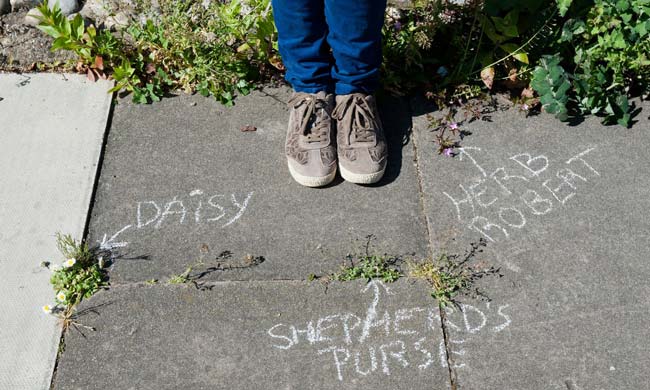 Sophie Leguil, founder of More Than Weeds, stands over chalk names of plants on the pavement.
 Photograph: Jill Mead/The Guardian

 = new reply since forum marked as read