Ancient solar storm smashed Earth at the wrong part of the sun's cycle [View all]
— and scientists are concerned.
By Brandon Specktor published 1 day ago
The 9,200-year-old storm left researchers with a stark conclusion: We are not ready for the next one.
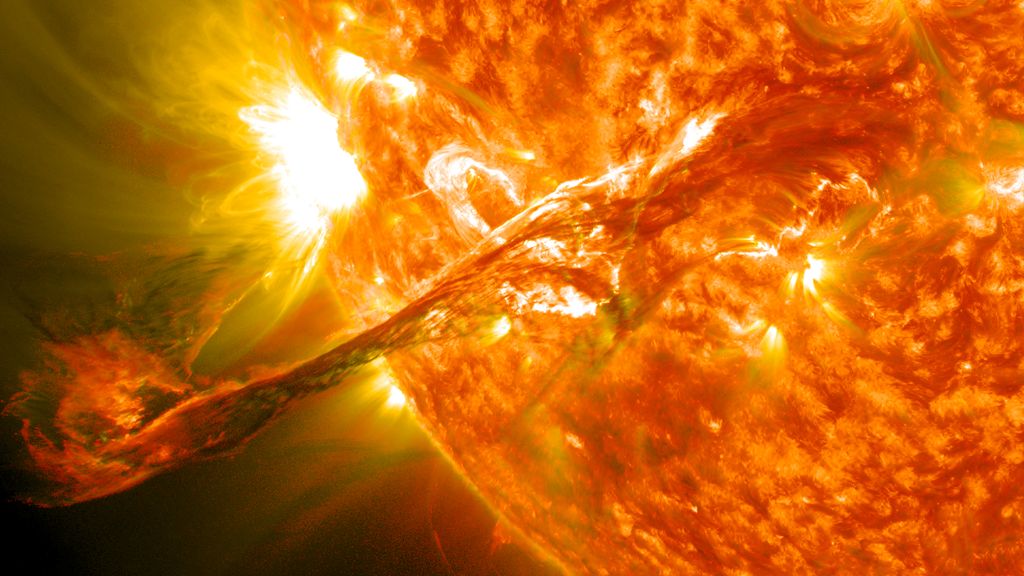
A massive solar flare (or coronal mass ejection) erupts out of the sun in 2017.
An extremely powerful solar storm pummeled our planet 9,200 years ago, leaving permanent scars on the ice buried deep below Greenland and Antarctica.
A new study of those ancient ice samples has found that this previously unknown storm is one of the strongest outbursts of solar weather ever detected and would have crippled modern communications systems if it had hit Earth today.
But perhaps most surprising, the massive storm appears to have hit during a solar minimum, the point during the sun's 11-year cycle when solar outbursts are typically much less common, according to the study, published Jan. 11 in the journal Nature Communications. Because of this unexpected discovery, the study researchers are concerned that devastating solar storms could hit when we least expect them — and that Earth might not be prepared when the next big one arrives.
"These enormous storms are currently not sufficiently included in risk assessments," study co-author Raimund Muscheler, a geology researcher at Lund University in Sweden, said in a statement. "It is of the utmost importance to analyze what these events could mean for today's technology and how we can protect ourselves."
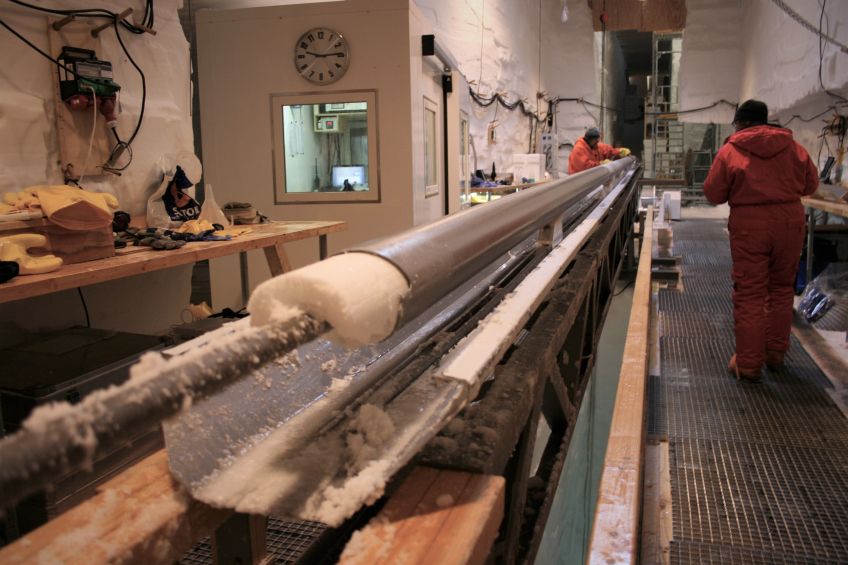
One of the long ice cores examined in the new study.
When stars attack
Solar storms occur when magnetic field lines on the sun's corona (the outermost part of the sun's atmosphere) become tangled up and then violently snap back into place. This sudden magnetic reconnection can release huge gouts of plasma and magnetic field known as coronal mass ejections (CMEs), which surf across space on the sun's ever-gusting solar wind.
More >
https://www.livescience.com/ancient-solar-storm-solar-minimum
Keep your sunscreen handy. I'd go with the SPF 50 just to be on the safe side.

 = new reply since forum marked as read