Environment & Energy
Showing Original Post only (View all)
Three DOE National Labs (ORNL, ANL, INL) Report on the Conversion of Coal Plants to Nuclear Plants. [View all]
The full report is here: Investigating Benefits and Challenges of Converting Retiring Coal Plants into Nuclear Plants. (ORNL, INL, ANL).
The trend in modern nuclear engineering is to treat the nuclear island separate from the islands devoted to producing consumer energy, in all most every case, electrical energy up to now. There is no intrinsic reason for doing so, steam Rankine engines either from the coal plants on which the antinuke rhetoric supports, or current dedicated nuclear plants are low thermodynamic efficiency, around 33%. While one can applaud the basic idea considered in reusing the steam turbines and heat sinks from coal plants for the conversion of nuclear heat to electricity, given that coal plants have a reliability second only to nuclear plants (and ignoring that coal plants kill people during normal operations and nuclear plants, um, don't), we do need to consider that because of climate change, the heat sink systems need adjustment. The ideal solution is to capture waste heat as liquid fuels, raise efficiency by raising reactor temperatures, and reject unused heat directly to the atmosphere rather than water, except in the case where electricity is a side product of desalination.
I discussed a thought experiment about the latter case here:
The Energy Required to Supply California's Water with Zero Discharge Supercritical Desalination.
Nevertheless, the consideration of this case, apparently under discussion in coal heavy Poland using either the Kairos or NuScale technology (cf pp 28-32 in the report) does seem of value. Coal steam turbines are designed to operate continuously, meaning that the materials in those turbines, as well as the attached generators should be considered for further use.
The DOE News Item: DOE Report Finds Hundreds of Retiring Coal Plant Sites Could Convert to Nuclear
An excerpt:
The study investigated the benefits and challenges of converting retiring coal plant sites into nuclear plant sites. After screening recently retired and active coal plant sites, the study team identified 157 retired coal plant sites and 237 operating coal plant sites as potential candidates for a coal-to-nuclear transition. Of these sites, the team found that 80% are good candidates to host advanced reactors smaller than the gigawatt scale.
A coal to nuclear transition could significantly improve air quality in communities around the country. The case study found that greenhouse gas emissions in a region could fall by 86% when nuclear power plants replace large coal plants, which is equivalent to taking more than 500,000 gasoline-powered passenger vehicles off the roads.
It could also increase employment and economic activity within those communities. When a large coal plant is replaced by a nuclear power plant of equivalent size, the study found that jobs in the region could increase by more than 650 permanent positions. Based the case study in the report, long-term job impacts could lead to additional annual economic activity of $275 million, implying an increase of 92% tax revenue for the local county when compared to the operating coal power...
I added the bold; my reason for supporting nuclear energy is not about saving a few bucks for the short term and screwing all future generations. My reason is ethical; it's about saving lives and leaving gifts for future generations, rather than liabilities.
The WNN news item:
US study assesses potential for coal-to-nuclear conversion
An excerpt:
A coal-to-nuclear (C2N) transition - siting a nuclear reactor at the site of a recently retired coal power plant - could help increase US nuclear capacity to more than 350 GWe, Investigating Benefits and Challenges of Converting Retiring Coal Plants into Nuclear Plants found. The USA's current nuclear fleet has a combined capacity of 95 GWe.
The report is underpinned by a study carried out by the Argonne, Idaho and Oak Ridge National Laboratories, sponsored by the DOE Office of Nuclear Energy. It is guided by three overarching questions: where in the USA are retired coal facilities located and what factors make a site feasible for transition; what factors of technology, cost, and project timeline drive investor economics over such a decision; and how will C2N impact local communities?
The team screened recently retired and active coal plant sites to identify 157 retired and 237 operating coal plants sites as potential candidates for a C2N transition, which it further evaluated on parameters including population density, distance from seismic fault lines, flooding potential, and nearby wetlands, to determine if they could safely host a nuclear power plant. It found that 80% of the potential sites are suitable for hosting advanced nuclear power plants of varying size and type, depending on the size of the site being converted.
The team then evaluated a case study of detailed impacts and potential outcomes from a C2N transition at a hypothetical site, considering various nuclear technology types for a range of scenarios including large light-water reactors, small modular reactors, sodium-cooled fast reactors and very high temperature reactors.
Of course, there are trends in some places to replace nuclear energy with coal.
Recently I engaged a rather stupid antinuke in an online conversation for the purpose of letting him, her or they display exactly how stupid he, she, or they is/are. It succeeded. The anti-nuke in question whined about so called "nuclear waste," but refused with childish evasions to answer the question I asked: "How many people in the 70 years of commercial nuclear power operations have been killed by the storage of used nuclear fuel?"
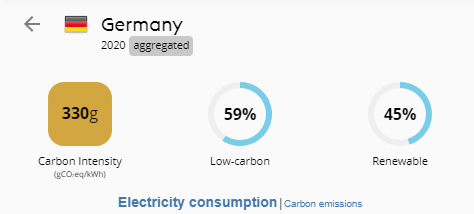
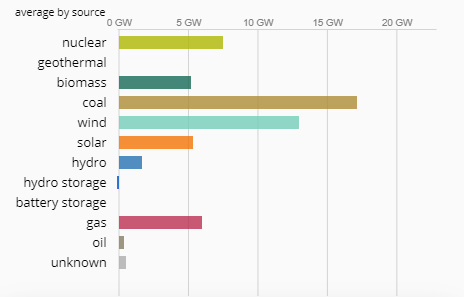
My favorite part in this exposure - the anti-nuke claimed not to be an anti-nuke as they typically do these days, now that they helped to destroy the planet - was showing data reflecting that the officially anti-nuke country Germany has shut its nuclear plants to burn coal. (Our President is clearly wiser than their Chancellors.)
Anti-nukes aren't very bright, so I made sure to use graphic representations; apparently they have low reading comprehension:
Germany's electrical generation sources for the last 5 years:

Germany's electrical generation sources for the last 30 days:
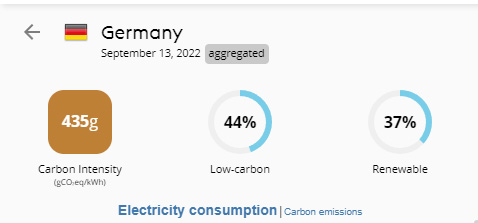
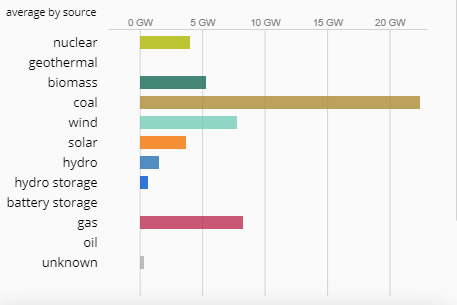

Source: Electricity Map, Germany (Accessed 9/16/22)
For comparison purposes here's France for the last 5 years:
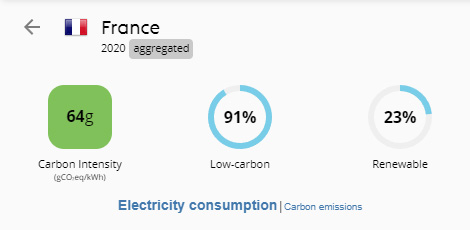
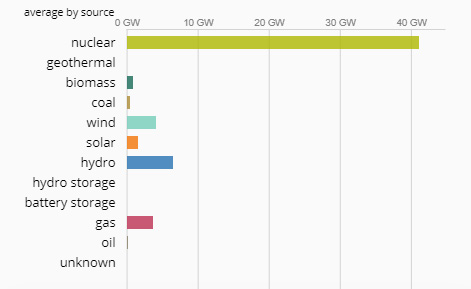

I noted that the type of coal the Germans are burning, their primary domestic coal supply, is lignite.
I then pointed to a rather well cited study in Lancet - one I've referred to a number of times - suggesting the mortality rates associated with primary energy types
Here's table 2:
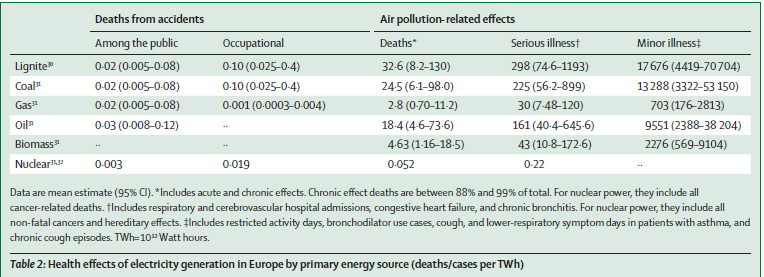
Anil Markandya, Paul Wilkinson, Electricity generation and health, The Lancet, Volume 370, Issue 9591, 2007, Pages 979-990.
When presented with the question, after lots of dumb excuses for not answering it, the anti-nuke rather reminded me of this fun interchange with former Senator Al Franken when he asked a straight up question (in another context) that his rhetorical opponent refused to answer, because the rhetorical opponent was lying:
While Franken's exchange was amusing; I'm actually not amused by anti-nukes. The planet is burning. Rivers have disappeared. Crops and people have been killed by extreme heat. Glaciers on which billions of people depend for their water supply are melting permanently. Vast oceanic ecosystems are being wiped off the face of the planet.
It's not funny, nor is it amusing.
Ignorance kills.
Have a nice weekend.
 = new reply since forum marked as read
Highlight:
NoneDon't highlight anything
5 newestHighlight 5 most recent replies
= new reply since forum marked as read
Highlight:
NoneDon't highlight anything
5 newestHighlight 5 most recent replies