Environment & Energy
Showing Original Post only (View all)
Steel recycling firm considers the use of small nuclear reactors to power its arc furnaces. [View all]
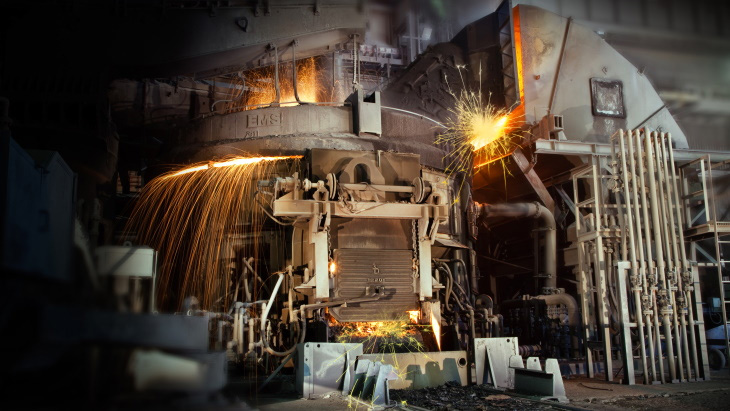
A picture is worth lots and lots of words from the article linked below:
Recently an antinuke here suggested that when I use the term "landfill" to describe the fate of wind turbines that become, um, landfill on average less than 20 years after they are built, I didn't know whether they were recycled.
"Recycling" is the big, big, big exercise in hand waving used by proponents of so called "renewable energy," to pretend that the odious mass intensity of this useless enterprise doesn't matter. In fact the mass intensity makes the whole shebang unsustainable. (When I use the word "useless" in this context, I am referring to the address of climate change, something about which antinukes couldn't care less.)
Most antinukes, with minor exceptions, emphasis on "minor," are unfamiliar with the contents of the scientific literature, about which they care even less than they do about climate change.
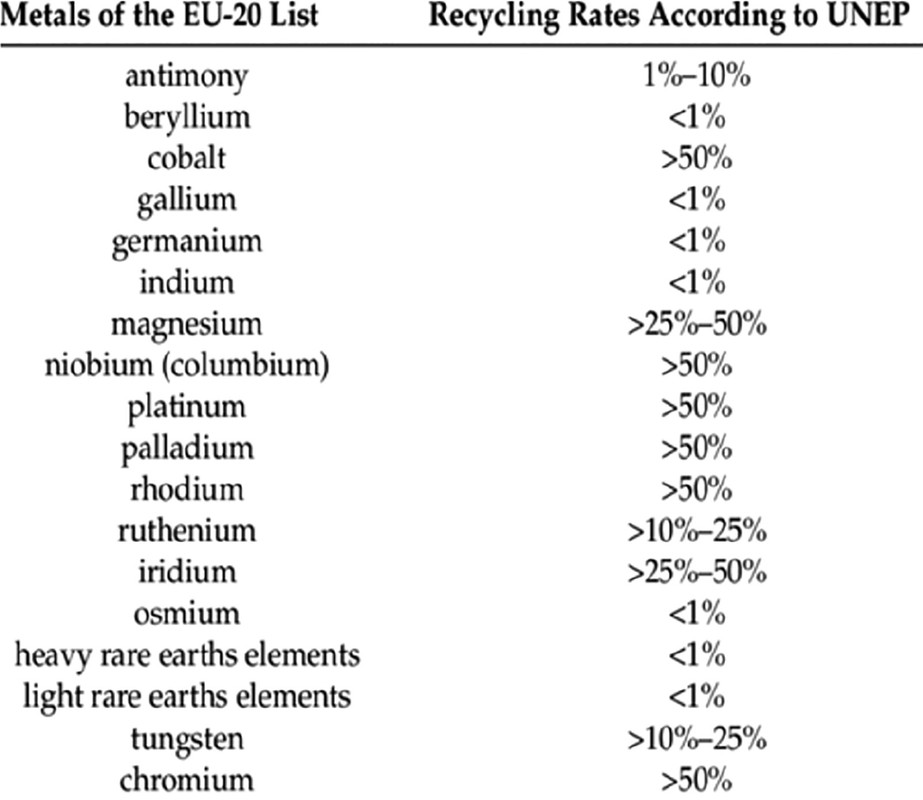
The following table can be found in a recent issue of Chemical Reviews, The Materials Science behind Sustainable Metals and Alloys Dierk Raabe Chemical Reviews 2023 123 (5), 2436-2608:
The caption:
Note the position of both the critical light and heavy lanthanides (so called "rare earths" ), less than 1% recycling. Both a light lanthanide, neodymium, and a heavy lanthanide, dysprosium, are critical components of the magnets in wind turbine generators, as well as the filthy redundant dangerous fossil fuel plants that are required to back them up. (Note the position of indium, a component of CIGS type solar cells which have also proved useless at addressing climate change.)
The scale of metal demand is also in this review, with the following famous graphic.

The caption:
We are not going to mine our way out of climate change, and certainly not with useless wind turbines and useless solar cells.
The point of the above two graphics is that there is no evidence, whatsoever, that all, or even a significant portion of wind turbines are magically recycled. If there was, the amount of neodymium and dysprosium recycled would not be less than 1%. I definitely follow the literature on closed materials cycles and I'm both amused and disgusted with the handwaving magical thinking of antinukes.
(I have written here and elsewhere about lanthanide recycling, something I regard as a critical exercise.)
However, the point of this, graphically shown in the opening picture is that recycling requires energy, not just process energy but other forms of energy as well, transport, information systems, and the embedded energy of the recycling facilities themselves.
Moreover, recycling metals, in this case steel, whether it is powered by thermodynamically degraded electricity or other sources of heat, currently provided by dangerous fossil fuels although nuclear heat would (and should) work.
Unreliable energy doesn't cut it, because all the heat energy required is lost when the power is shut off.
Wind energy is unreliable. It follows that if the prodigious amounts of steel invested in this junk were recycled, this would be yet another way that the wind industry depends on dangerous fossil fuels, the waste of which is killing the planet.
I frequently appeal, and have done so recently, the the now unmaintained (possibly because it shows the wind industry to be as poor performer as it is) the Master Register of Wind Turbines at the Danish Energy Agency, the maintenance of which ceased in March of 2022 and is conveniently located on the same page as the Oil and Gas operations of that offshore drilling hellhole, Denmark.
Using the data as of 2022, one can find data related to 3,444 decommissioned wind turbines and the 6,296 "operating" commissioned wind turbines. Using Excel logic functions and other functions, one can easily discern that there is good reason for putting "operating" in quotation marks.
To wit:
In the period between 2016 and 2021, 24 Danish commissioned wind turbines produced zero electricity.
In the period between 2016 and 2021, 8 Danish commissioned wind turbines produced zero electricity in six of the seven years.
In the period between 2016 and 2021, 9 Danish commissioned wind turbines produced zero electricity in five of the seven years.
In the period between 2016 and 2021, 31 Danish commissioned wind turbines produced zero electricity in four of the seven years.
In the period between 2016 and 2021, 44 Danish commissioned wind turbines produced zero electricity in three of the seven years.
In the period between 2016 and 2021, 51 Danish commissioned wind turbines produced zero electricity in two of the seven years.
In the period between 2016 and 2021, 179 Danish commissioned wind turbines produced zero electricity in one of the seven years.
Note that these figures refer to zero. If one looks at poor performers, the situation is even worse. The average capacity utilization of wind turbines in 2021, the last full year recorded at the Master Register shows that the average capacity utilization for all individual wind turbines - irrespective of size - was 21.70%. Wind turbines that fall below this figure, those that have capacity utilization of less than 10% number 479; they are degrading. Of these, 248 have capacity utilization of less than 5%.
In short they are standing landfill or ocean dumped waste.
They are rotting in place.
Nucor is considering making steel recycling climate change gas free:
Steel maker considers use of NuScale SMRs at its mills
Excerpts from the text which features the picture shown at the outset:
As part of the MoU, the companies will evaluate site suitability, transmission interconnection capabilities and capital costs for potential NuScale plants to be sited near and provide carbon free electricity to Nucor EAF steel mills.
In addition, NuScale will study the feasibility of siting a manufacturing facility for NuScale Power Modules near a Nucor facility.
The companies will also explore an expanded manufacturing partnership through which Nucor - the largest steel producer and recycler of any type of material in North America - would supply Econiq, its net-zero steel products, for NuScale projects.
Nucor describes Econiq as "the world's first net-zero steel at scale". It adds: "Econiq is not a single product; it is a net-zero certification, which can be applied to any product from Nucor's steel mills." The company said it achieves net-zero on Econiq products by using electricity from 100% renewable sources and by purchasing carbon offsets.
In April 2022 Nucor - which manufactures steel and steel products, with operating facilities in the USA, Canada and Mexico - committed to a USD15 million private investment in public equity in NuScale Power.
"NuScale is thrilled to take this step forward with Nucor, a company that shares our commitment to sustainability and deeply understands the role of NuScale's technology in delivering clean, reliable baseload power to support the global energy transition," said NuScale President and CEO John Hopkins. "We look forward to determining how our SMR technology can best serve Nucor's sophisticated steelmaking operations and how our companies can work together to drive a more sustainable future..."
Note that currently Nucor is relying on the cheap dishonest accounting trick, "offsets" to claim that it is climate change gas free.
That's marketing; it has nothing to do with reality. This said I applaud their interest in really becoming climate change gas free.
I note that this approach, using thermodynamically degraded electricity to recycle steel, does not define an optimal thermodynamically efficient use of nuclear energy - an efficient process would use nuclear heat directly - but if followed through it will indeed be climate neutral.
Have a nice weekend.
 = new reply since forum marked as read
Highlight:
NoneDon't highlight anything
5 newestHighlight 5 most recent replies
= new reply since forum marked as read
Highlight:
NoneDon't highlight anything
5 newestHighlight 5 most recent replies