Demand for lion bones offers South African breeders a lucrative return [View all]
http://www.guardian.co.uk/environment/2013/apr/16/south-africa-lion-bones-trade
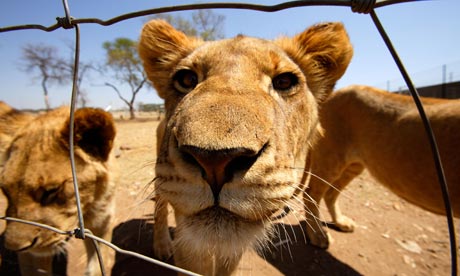
Highly prized ... the growing market for lion bones offers breeders a way of boosting their earnings. Photograph: Alamy
Koos Hermanus would rather not give names to the lions he breeds. So here, behind a 2.4-metre high electric fence, is 1R, a three-and-a-half-year-old male, who consumes 5kg of meat a day and weighs almost 200kg. It will only leave its enclosure once it has been "booked"' by a hunter, most of whom are from the United States. At that point the big cat will be set loose in the wild for the first time in its life, 96 hours before the hunt begins. It usually takes about four days to track down the prey, with the trophy hunter following its trail on foot, accompanied by big-game professionals including Hermanus. He currently has 14 lions at his property near Groot Marico, about two and a half hours by road west of Johannesburg.
After the kill Hermanus will be paid $10,000, but he can boost his earnings further by selling the lion's bones to a Chinese dealer based in Durban. At $165 a kilo (an average figure obtained from several sources) the breeder will pocket something in the region of $5,000.
If his client does not want to keep the lion's head as a trophy, the skull will fetch another $1,100. "If you put your money in the bank you get 8% interest," he explains, "but at present lions show a 30% return."
According to several specialists the new market is soaring. "In the past three months we have issued as many export licences as in a whole year," says an official in Free State, home to most of South Africa's 200 lion breeders. In 2012 more than 600 lions were killed by trophy hunters. The most recent official figures date from 2009, certifying export of 92 carcasses to Laos and Vietnam. At about that time breeders started digging up the lion bones they had buried here and there, for lack of an outlet.

 = new reply since forum marked as read