Welcome to DU!
The truly grassroots left-of-center political community where regular people, not algorithms, drive the discussions and set the standards.
Join the community:
Create a free account
Support DU (and get rid of ads!):
Become a Star Member
Latest Breaking News
Editorials & Other Articles
General Discussion
The DU Lounge
All Forums
Issue Forums
Culture Forums
Alliance Forums
Region Forums
Support Forums
Help & Search
Environment & Energy
In reply to the discussion: Why clean energy is now expanding even when fossil fuels are cheap [View all]
kristopher
(29,798 posts)20. Poor little feller....
Why the modern world is bad for your brain
In an era of email, text messages, Facebook and Twitter, we’re all required to do several things at once. But this constant multitasking is taking its toll. Here neuroscientist Daniel J Levitin explains how our addiction to technology is making us less efficient
Daniel J Levitin
Sunday 18 January 2015
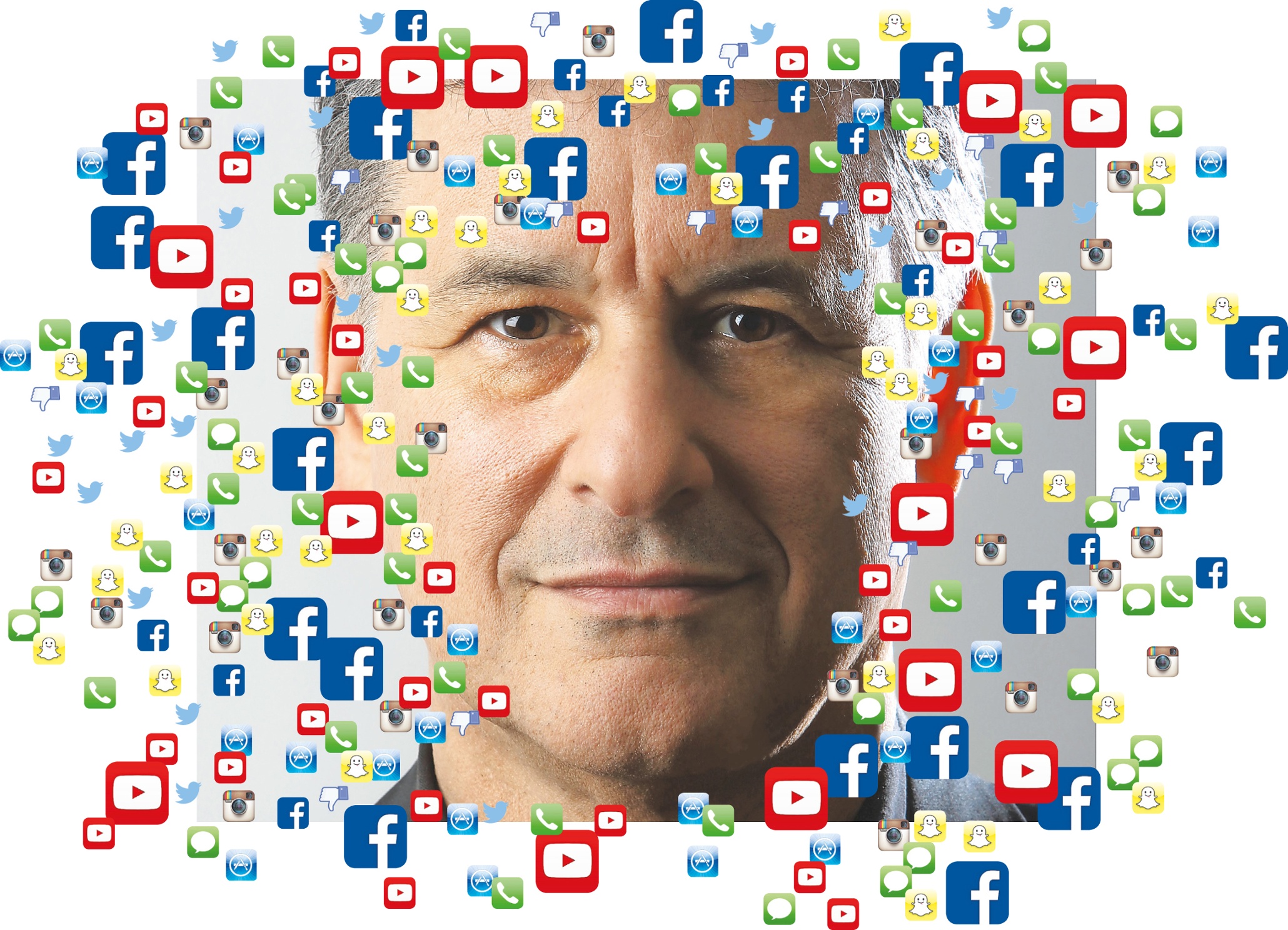
Daniel J Levitan: ‘When trying to concentrate on a task, an unread email in your inbox can reduce your effective IQ by 10 points.
Our brains are busier than ever before. We’re assaulted with facts, pseudo facts, jibber-jabber, and rumour, all posing as information. Trying to figure out what you need to know and what you can ignore is exhausting. At the same time, we are all doing more. Thirty years ago, travel agents made our airline and rail reservations, salespeople helped us find what we were looking for in shops, and professional typists or secretaries helped busy people with their correspondence. Now we do most of those things ourselves. We are doing the jobs of 10 different people while still trying to keep up with our lives, our children and parents, our friends, our careers, our hobbies, and our favourite TV shows.
Our smartphones have become Swiss army knife–like appliances that include a dictionary, calculator, web browser, email, Game Boy, appointment calendar, voice recorder, guitar tuner, weather forecaster, GPS, texter, tweeter, Facebook updater, and flashlight. They’re more powerful and do more things than the most advanced computer at IBM corporate headquarters 30 years ago. And we use them all the time, part of a 21st-century mania for cramming everything we do into every single spare moment of downtime. We text while we’re walking across the street, catch up on email while standing in a queue – and while having lunch with friends, we surreptitiously check to see what our other friends are doing. At the kitchen counter, cosy and secure in our domicile, we write our shopping lists on smartphones while we are listening to that wonderfully informative podcast on urban beekeeping.
But there’s a fly in the ointment. Although we think we’re doing several things at once, multitasking, this is a powerful and diabolical illusion. Earl Miller, a neuroscientist at MIT and one of the world experts on divided attention, says that our brains are “not wired to multitask well… When people think they’re multitasking, they’re actually just switching from one task to another very rapidly. And every time they do, there’s a cognitive cost in doing so.” So we’re not actually keeping a lot of balls in the air like an expert juggler; we’re more like a bad amateur plate spinner, frantically switching from one task to another, ignoring the one that is not right in front of us but worried it will come crashing down any minute. Even though we think we’re getting a lot done, ironically, multitasking makes us demonstrably less efficient.
Multitasking has been found to increase the production of the stress hormone cortisol as well as the fight-or-flight hormone adrenaline, which can overstimulate your brain and cause mental fog or scrambled thinking. Multitasking creates a dopamine-addiction feedback loop, effectively rewarding the brain for losing focus and for constantly searching for external stimulation. To make matters worse, the prefrontal cortex has a novelty bias, meaning that its attention can be easily hijacked by something new – the proverbial shiny objects we use to entice infants, puppies, and kittens. The irony here for those of us who are trying to focus amid competing activities is clear: the very brain region we need to rely on for staying on task is easily distracted. We answer the phone, look up something on the internet, check our email, send an SMS, and each of these things tweaks the novelty- seeking, reward-seeking centres of the brain, causing a burst of endogenous opioids (no wonder it feels so good!), all to the detriment of our staying on task. It is the ultimate empty-caloried brain candy. Instead of reaping the big rewards that come from sustained, focused effort, we instead reap empty rewards from completing a thousand little sugar-coated tasks.
In the old days, if the phone rang and we were busy, we either didn’t answer or we turned the ringer off....
https://www.theguardian.com/science/2015/jan/18/modern-world-bad-for-brain-daniel-j-levitin-organized-mind-information-overloadIn an era of email, text messages, Facebook and Twitter, we’re all required to do several things at once. But this constant multitasking is taking its toll. Here neuroscientist Daniel J Levitin explains how our addiction to technology is making us less efficient
Daniel J Levitin
Sunday 18 January 2015
Daniel J Levitan: ‘When trying to concentrate on a task, an unread email in your inbox can reduce your effective IQ by 10 points.
Our brains are busier than ever before. We’re assaulted with facts, pseudo facts, jibber-jabber, and rumour, all posing as information. Trying to figure out what you need to know and what you can ignore is exhausting. At the same time, we are all doing more. Thirty years ago, travel agents made our airline and rail reservations, salespeople helped us find what we were looking for in shops, and professional typists or secretaries helped busy people with their correspondence. Now we do most of those things ourselves. We are doing the jobs of 10 different people while still trying to keep up with our lives, our children and parents, our friends, our careers, our hobbies, and our favourite TV shows.
Our smartphones have become Swiss army knife–like appliances that include a dictionary, calculator, web browser, email, Game Boy, appointment calendar, voice recorder, guitar tuner, weather forecaster, GPS, texter, tweeter, Facebook updater, and flashlight. They’re more powerful and do more things than the most advanced computer at IBM corporate headquarters 30 years ago. And we use them all the time, part of a 21st-century mania for cramming everything we do into every single spare moment of downtime. We text while we’re walking across the street, catch up on email while standing in a queue – and while having lunch with friends, we surreptitiously check to see what our other friends are doing. At the kitchen counter, cosy and secure in our domicile, we write our shopping lists on smartphones while we are listening to that wonderfully informative podcast on urban beekeeping.
But there’s a fly in the ointment. Although we think we’re doing several things at once, multitasking, this is a powerful and diabolical illusion. Earl Miller, a neuroscientist at MIT and one of the world experts on divided attention, says that our brains are “not wired to multitask well… When people think they’re multitasking, they’re actually just switching from one task to another very rapidly. And every time they do, there’s a cognitive cost in doing so.” So we’re not actually keeping a lot of balls in the air like an expert juggler; we’re more like a bad amateur plate spinner, frantically switching from one task to another, ignoring the one that is not right in front of us but worried it will come crashing down any minute. Even though we think we’re getting a lot done, ironically, multitasking makes us demonstrably less efficient.
Multitasking has been found to increase the production of the stress hormone cortisol as well as the fight-or-flight hormone adrenaline, which can overstimulate your brain and cause mental fog or scrambled thinking. Multitasking creates a dopamine-addiction feedback loop, effectively rewarding the brain for losing focus and for constantly searching for external stimulation. To make matters worse, the prefrontal cortex has a novelty bias, meaning that its attention can be easily hijacked by something new – the proverbial shiny objects we use to entice infants, puppies, and kittens. The irony here for those of us who are trying to focus amid competing activities is clear: the very brain region we need to rely on for staying on task is easily distracted. We answer the phone, look up something on the internet, check our email, send an SMS, and each of these things tweaks the novelty- seeking, reward-seeking centres of the brain, causing a burst of endogenous opioids (no wonder it feels so good!), all to the detriment of our staying on task. It is the ultimate empty-caloried brain candy. Instead of reaping the big rewards that come from sustained, focused effort, we instead reap empty rewards from completing a thousand little sugar-coated tasks.
In the old days, if the phone rang and we were busy, we either didn’t answer or we turned the ringer off....
Edit history
Please sign in to view edit histories.
Recommendations
0 members have recommended this reply (displayed in chronological order):
24 replies
 = new reply since forum marked as read
Highlight:
NoneDon't highlight anything
5 newestHighlight 5 most recent replies
RecommendedHighlight replies with 5 or more recommendations
= new reply since forum marked as read
Highlight:
NoneDon't highlight anything
5 newestHighlight 5 most recent replies
RecommendedHighlight replies with 5 or more recommendations
= new reply since forum marked as read
Highlight:
NoneDon't highlight anything
5 newestHighlight 5 most recent replies
RecommendedHighlight replies with 5 or more recommendations
Why clean energy is now expanding even when fossil fuels are cheap [View all]
kristopher
Jan 2016
OP
We don't for a minute think that cheap petroleum is here to stay. A few months of low prices aren't
Ed Suspicious
Jan 2016
#1
The "investment" they're making is a toxicological nightmare. Only a person who...
NNadir
Jan 2016
#19
Of course, I could cut and paste mindlessly from the 27,400 references to arsenic in solar...
NNadir
Jan 2016
#21
I always enjoy it enormously when anti-nukes openly display their intellectual level.
NNadir
Jan 2016
#24