Welcome to DU!
The truly grassroots left-of-center political community where regular people, not algorithms, drive the discussions and set the standards.
Join the community:
Create a free account
Support DU (and get rid of ads!):
Become a Star Member
Latest Breaking News
Editorials & Other Articles
General Discussion
The DU Lounge
All Forums
Issue Forums
Culture Forums
Alliance Forums
Region Forums
Support Forums
Help & Search
Foreign Affairs
Showing Original Post only (View all)
The Easter Rising, my grandfather and the untold story of Sir Roger Casement [View all]
A politically sophisticated and cosmopolitan Irish nationalist, Sir Roger understood the exploitation of the weak by the strong and of small nations by large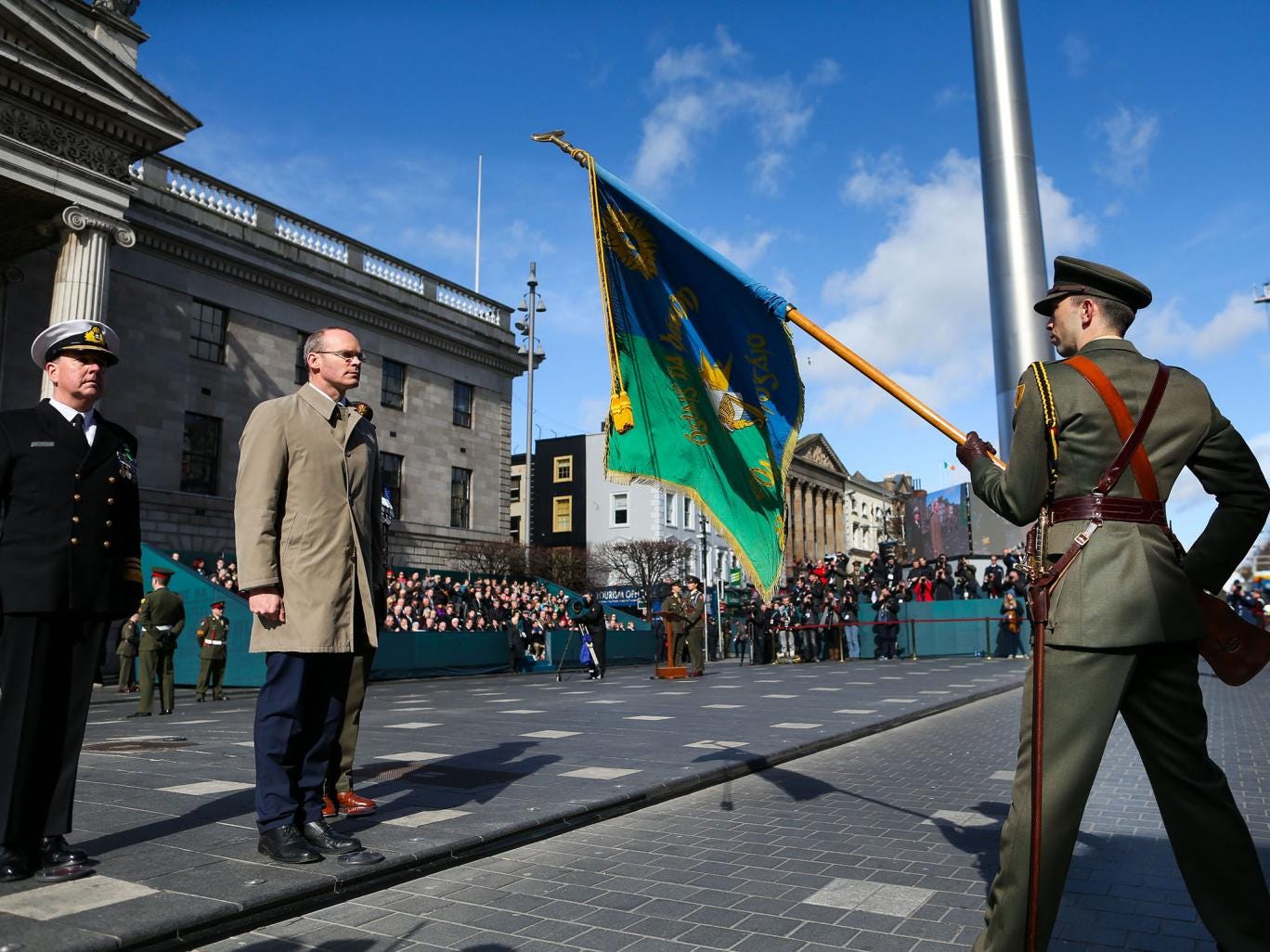
The anniversary of the Easter Rising prompted the telling of untold stories of those labelled traitors in the aftermath. 2016 Getty Images
Patrick Cockburn in Ireland
Friday 1 April 2016
The 100th anniversary of the Easter uprising of 1916 saw the beginnings of a deeper appreciation of the achievements of Sir Roger Casement who was hanged as a traitor in Pentonville prison on 3 August 1916. Over the following century he has never lacked for notoriety, famous as an Irish patriotic martyr, but discussion of his life has frequently focused on his sexuality and revolved around the “Black Diaries” that were covertly used by the British government to blacken Casement’s name and sabotage the campaign against his execution.
The controversy over whether or not the diaries were forged never discredited Casement – in Ireland, if anything, they further sanctified his name as a victim of British machinations – but it did divert attention from his work in exposing the mass murder and enslavement of indigenous peoples in the Congo and Amazon. He detailed how they were not only being mistreated, but actually wiped out by the terror imposed by those seeking to obtain rubber through forced labour.
To understand what Casement was trying to stop, it is best to quote some of the Congolese interviewed by Casement for his report published in 1903 which describes the atrocities being carried out by King Leopold 11 of Belgium and his private army in the Congo. The witnesses are identified only by their initials or are unnamed. R.R. said “I ran away with two old people, but they were caught and killed, and the soldiers made me carry the baskets holding their cut-off hands. They killed my little sister, threw her in a house, and set it on fire.” U.U. gives a similar account of the reign of terror, saying that “as we fled, the soldiers killed ten children, in the water. They killed a lot of adults, cut off their hands, put them in baskets, and took them to the white man, who counted 200 hands…. One day, soldiers struck a child with a gun-butt, cut off its head, and killed my sister and cut off her head, hands and feet because she had on rings.”
A refugee from the rubber producing regions of the Congo interviewed by Casement gave a description of the ghastly mechanism by which people were forced either to collect natural rubber or to die: “We had to go further and further into the forest to find the rubber vines, to go without food, and our women had to give up cultivating the fields and gardens. Then we starved. Wild beasts—leopards—killed some of us when we were working away in the forest, and others got lost or died from exposure and starvation, and we begged the white man to leave us alone, saying that we could get no more rubber, but the white men and their soldiers said: ‘Go! You are only beasts yourselves.’”
in full: http://www.independent.co.uk/voices/the-easter-rising-my-grandfather-and-the-untold-story-of-sir-roger-casement-a6963921.html
23 replies
 = new reply since forum marked as read
Highlight:
NoneDon't highlight anything
5 newestHighlight 5 most recent replies
= new reply since forum marked as read
Highlight:
NoneDon't highlight anything
5 newestHighlight 5 most recent replies
= new reply since forum marked as read
Highlight:
NoneDon't highlight anything
5 newestHighlight 5 most recent replies
The Easter Rising, my grandfather and the untold story of Sir Roger Casement [View all]
Jefferson23
Apr 2016
OP
Oh yes, Twain was. That's not the part of his career they like to talk about now.
bemildred
Apr 2016
#5
I was very interested in him in my youth, he was formative for me, so I know a good deal.
bemildred
Apr 2016
#7
Yea, well if you're not anti-imperialism, you're never going to bring up Twain..true.
Jefferson23
Apr 2016
#8
My wife is a lit major, I had the impression they'd gotten over that somewhat.
bemildred
Apr 2016
#14
They were alll three cynical, Twain, Bierce, Vidal, which has much to do with why I like them.
bemildred
Apr 2016
#16
Good morning, Koko and you're welcome but its Patrick Cockburns family history, not mine.
Jefferson23
Apr 2016
#21