Welcome to DU!
The truly grassroots left-of-center political community where regular people, not algorithms, drive the discussions and set the standards.
Join the community:
Create a free account
Support DU (and get rid of ads!):
Become a Star Member
Latest Breaking News
Editorials & Other Articles
General Discussion
The DU Lounge
All Forums
Issue Forums
Culture Forums
Alliance Forums
Region Forums
Support Forums
Help & Search

Surveying religious belief needs social science not hard science [View all]
http://www.guardian.co.uk/commentisfree/belief/2012/dec/05/nones-on-the-run-religionPeople's responses to surveys about the emotive question of religion are notoriously difficult to pin down
Linda Woodhead
guardian.co.uk, Wednesday 5 December 2012 05.09 EST
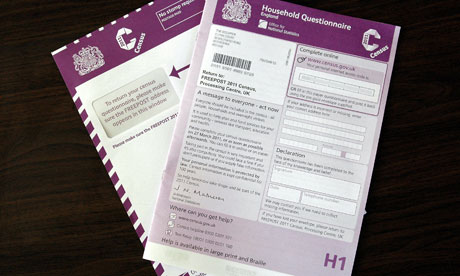
The Centre for Longitudinal Studies suggests that 'a quarter of responses to any question on religion are unreliable'. Photograph: Dean Murray/Rex Features
Surveyitis is a disease that afflicts people who stay indoors too long poring over data. It can be alleviated by fresh air and meeting people. Symptoms include credulity about the accuracy of survey responses and morbid attachment to outdated questions. It is particularly dangerous in relation to religion.
A recent upsurge in interest in "nones" suggests a new outbreak of surveyitis. Nones are those who declare on surveys that they have no religion or belief. The fact that their number has been rising is cited by humanists and other there-is-no-God-botherers as proof of the demise of religion. A new report from the thinktank Theos points out that the "nones" encompass "nevers" who don't participate, "atheists" who don't believe, and the "non-religious" who don't belong to a particular religion, and that a significant percentage retain some religious beliefs and practices. The report concludes that we are dealing with shades of grey rather than black or white religion or secularity. Fair enough. But only surveyitis could have led to the idea that a bald religion question could tell us anything useful in the first place.
When it comes to surveys, the simpler, more concrete and less emotionally freighted a question the better. "Did you eat an egg for breakfast?" is good and "What party did you just vote for?" is OK, so long as it's anonymous. The problem with religion is that there aren't many questions like this. "Did you go to church last Sunday?" might seem fairly straightforward, but when American researchers counted cars in church parking lots they found that conservative Christians massively exaggerated their actual attendance. That's because it mattered to them – and the more an issue means to people, the more difficult it is to get simple and reliable answers.
It's even worse when questions are also vague and contested. Anything with the word "religion" in it falls into this category. No one has ever been able to agree a definition of religion, nor will they. So it's amazing to expect that survey respondents will miraculously understand the word, and mean the same thing. Even the smallest of changes to the wording of a religion question can make a significant difference to the responses. The Office for National Statistics demonstrated this beautifully when it experimented with small changes to the question on religion in preparation for the 2011 census. A new report from the Centre for Longitudinal Studies suggests with some exasperation that "a quarter of responses to any question on religion are unreliable".
more at link
15 replies
 = new reply since forum marked as read
Highlight:
NoneDon't highlight anything
5 newestHighlight 5 most recent replies
= new reply since forum marked as read
Highlight:
NoneDon't highlight anything
5 newestHighlight 5 most recent replies
= new reply since forum marked as read
Highlight:
NoneDon't highlight anything
5 newestHighlight 5 most recent replies
The point of the article, imo, is that answers from both religious and non-religious people
cbayer
Dec 2012
#10
Isn't it a great thing we have believers who are so willing (and able) to tell us what we,
trotsky
Dec 2012
#12
I usually have trouble with the word "religion" and I don't find "spirituality" much better.
patrice
Dec 2012
#3
Would you support removing the religion clause from the US 1st amendment?
muriel_volestrangler
Dec 2012
#13
I don't expect perfection from anything & The Constitution is an excellent example of imperfection,
patrice
Dec 2012
#15
All knowledge is contextual, so knowing includes the precise traits of the relevant context, this is
patrice
Dec 2012
#9
The British Humanist Association asked the census question, and others, in a poll
muriel_volestrangler
Dec 2012
#14