By Laura Geggel, Senior Writer | November 13, 2017 02:28pm ET
Forget about the minuscule odds of spotting Ahab's white whale: Sightings of the frilled shark, a so-called "living fossil" that has elusively swum around Earth's deep waters since the age of the dinosaurs, may been an even rarer find.
Deep-sea fishermen recently spotted the snake-like shark (Chlamydoselachus anguineus) in a pile of fish that unintentionally caught, known as bycatch, while they were fishing off the coast of Portugal. The shark died, but the fishermen handed it over to a research vessel, where scientists could study it, according to Boy Genius Report (BGR), a news site.
The examination gave scientists a close-up look at the shark's roughly 300 three-pointed teeth, which it uses to grab and kill prey, including fish, squid and other sharks. [In Photos: Seeing Sharks Up Close]
Margarida Castro, a fishery science researcher at the University of the Algarve, in Portugal, told Sic Noticias, a Portuguese news outlet, said that these strange teeth, arranged in a frill-like pattern, inspired the shark's name. The teeth look like backward needles, and its jaw can snatch prey more than half its size.
More:
https://www.livescience.com/60925-weird-shark-with-300-teeth-found.html?utm_source=notification
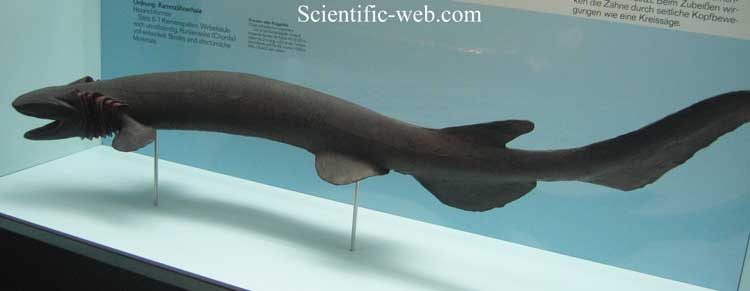
Yippee, Frilled Shark!
More images:
https://images.search.yahoo.com/search/images;_ylt=AwrTcXrZZgpa.5EAZ6.LuLkF;_ylc=X1MDOTYwNTc0ODMEX3IDMgRiY2sDZWFlcjdmOWNnbDI5ZyUyNmIlM0Q0JTI2ZCUzRGZFVE9PSzFyWUgzS3VfNWJGaWk4THF3a19jX3JYc19ya1E2azM1dGQ0N2NwM1EtLSUyNnMlM0RkayUyNmklM0RFMjZMeTNLQ2t5MmdRdWtvSzI5bARmcgMEZ3ByaWQDTzlIRmxJYktRV21sZ252QjRkRkdBQQRtdGVzdGlkA251bGwEbl9zdWdnAzMEb3JpZ2luA2ltYWdlcy5zZWFyY2gueWFob28uY29tBHBvcwMwBHBxc3RyAwRwcXN0cmwDBHFzdHJsAzI2BHF1ZXJ5A0NobGFteWRvc2VsYWNodXMgYW5ndWluZXVzBHRfc3RtcAMxNTEwNjMxMTMxBHZ0ZXN0aWQDQjQyNjE-?gprid=O9HFlIbKQWmlgnvB4dFGAA&pvid=UCVO7zEwLjLlO2d6WQqJMAuhMjYwMgAAAAA341T0&fr2=sb-top-images.search.yahoo.com&p=Chlamydoselachus+anguineus&ei=UTF-8&iscqry=&fr=sfp#id=188&iurl=http%3A%2F%2F
&action=close

 = new reply since forum marked as read