Welcome to DU!
The truly grassroots left-of-center political community where regular people, not algorithms, drive the discussions and set the standards.
Join the community:
Create a free account
Support DU (and get rid of ads!):
Become a Star Member
Latest Breaking News
Editorials & Other Articles
General Discussion
The DU Lounge
All Forums
Issue Forums
Culture Forums
Alliance Forums
Region Forums
Support Forums
Help & Search
2016 Postmortem
In reply to the discussion: Hillary Clinton's policies have killed hundreds of thousands of people. [View all]
polly7
(20,582 posts)7. You're right, they have.
And people are still dying daily because of them.
Probably Americans soon as well now serving on the ground d/t her Libya atrocity.
UglyGreed (7,654 posts)
http://www.democraticunderground.com/12511141852
Now after the death of Gaddafi there maybe 6000 ISIS fighters in Libya
is this the foreign policy expertise we really need in the White House?
Size of ISIS force declining in Iraq and Syria, according to new intel
{snip}
Meanwhile, U.S. intelligence officials believe there are 5,000 to 6,000 ISIS fighters in Libya, up from previous estimates of 2,000 to 3,000.
is this the foreign policy expertise we really need in the White House?
Size of ISIS force declining in Iraq and Syria, according to new intel
{snip}
Meanwhile, U.S. intelligence officials believe there are 5,000 to 6,000 ISIS fighters in Libya, up from previous estimates of 2,000 to 3,000.
http://www.militarytimes.com/story/military/2016/02/04/new-intel-shows-isis-force-declining-iraq-syria/79819744/
Maedhros (9,732 posts)
http://www.democraticunderground.com/?com=view_post&forum=1251&pid=1142266
16. The destruction of Libya led to instability in Mali, which led to a coup in Birkina Faso.
Convenient, because it justified the massive increase in U.S. military presence in Africa:
http://www.thenation.com/article/us-carried-out-674-military-operations-africa-last-year-did-you-hear-about-any-them/
. . .
All this, mind you, is AFRICOM’s own assessment of the situation on the continent on which it has focused its efforts for the better part of a decade as United States missions there soared. In this context, it’s worth reemphasizing that, before the United States ramped up those efforts, Africa was—by Washington’s own estimation—relatively free of transnational Islamic terror groups.
Convenient, because it justified the massive increase in U.S. military presence in Africa:
http://www.thenation.com/article/us-carried-out-674-military-operations-africa-last-year-did-you-hear-about-any-them/
In recent years, the United States has been involved in a variety of multinational interventions in Africa, including one in Libya that involved both a secret war and a conventional campaign of missiles and air strikes, assistance to French forces in the Central African Republic and Mali, and the training and funding of African proxies to do battle against militant groups like Boko Haram as well as Somalia’s al-Shabab and Mali’s Ansar al-Dine. In 2014, the United States carried out 674 military activities across Africa, nearly two missions per day, an almost 300% jump in the number of annual operations, exercises, and military-to-military training activities since US Africa Command (AFRICOM) was established in 2008.
Despite this massive increase in missions and a similar swelling of bases, personnel, and funding, the picture painted last month before the Senate Armed Services Committee by AFRICOM chief General David Rodriguez was startlingly bleak. For all the American efforts across Africa, Rodriguez offered a vision of a continent in crisis, imperiled from East to West by militant groups that have developed, grown in strength, or increased their deadly reach in the face of US counterterrorism efforts.
“Transregional terrorists and criminal networks continue to adapt and expand aggressively,” Rodriguez told committee members. “Al-Shabab has broadened its operations to conduct, or attempt to conduct, asymmetric attacks against Uganda, Ethiopia, Djibouti, and especially Kenya. Libya-based threats are growing rapidly, including an expanding ISIL presence… Boko Haram threatens the ability of the Nigerian government to provide security and basic services in large portions of the northeast.” Despite the grim outcomes since the American military began “pivoting” to Africa after 9/11, the United States recently signed an agreement designed to keep its troops based on the continent until almost midcentury.
Despite this massive increase in missions and a similar swelling of bases, personnel, and funding, the picture painted last month before the Senate Armed Services Committee by AFRICOM chief General David Rodriguez was startlingly bleak. For all the American efforts across Africa, Rodriguez offered a vision of a continent in crisis, imperiled from East to West by militant groups that have developed, grown in strength, or increased their deadly reach in the face of US counterterrorism efforts.
“Transregional terrorists and criminal networks continue to adapt and expand aggressively,” Rodriguez told committee members. “Al-Shabab has broadened its operations to conduct, or attempt to conduct, asymmetric attacks against Uganda, Ethiopia, Djibouti, and especially Kenya. Libya-based threats are growing rapidly, including an expanding ISIL presence… Boko Haram threatens the ability of the Nigerian government to provide security and basic services in large portions of the northeast.” Despite the grim outcomes since the American military began “pivoting” to Africa after 9/11, the United States recently signed an agreement designed to keep its troops based on the continent until almost midcentury.
. . .
All this, mind you, is AFRICOM’s own assessment of the situation on the continent on which it has focused its efforts for the better part of a decade as United States missions there soared. In this context, it’s worth reemphasizing that, before the United States ramped up those efforts, Africa was—by Washington’s own estimation—relatively free of transnational Islamic terror groups.
From Africa’s Wealthiest Democracy Under Gaddafi to Terrorist Haven After US Intervention
Counterpunch
Saturday, Oct 24, 2015
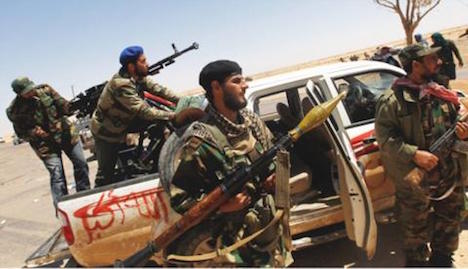
Tuesday marks the four-year anniversary of the US-backed assassination of Libya’s former leader, Muammar Gaddafi, and the decline into chaos of one of Africa’s greatest nations.
In 1967 Colonel Gaddafi inherited one of the poorest nations in Africa; by the time he was assassinated, he had transformed Libya into Africa’s richest nation. Prior to the US-led bombing campaign in 2011, Libya had the highest Human Development Index, the lowest infant mortality and the highest life expectancy in all of Africa.
Today, Libya is a failed state. Western military intervention has caused all of the worst-scenarios: Western embassies have all left, the South of the country has become a haven for ISIS terrorists, and the Northern coast a center of migrant trafficking. Egypt, Algeria and Tunisia have all closed their borders with Libya. This all occurs amidst a backdrop of widespread rape, assassinations and torture that complete the picture of a state that is failed to the bone.
Far from control being in the hands of one man, Libya was highly decentralized and divided into several small communities that were essentially “mini-autonomous States” within a State. These autonomous States had control over their districts and could make a range of decisions including how to allocate oil revenue and budgetary funds. Within these mini autonomous States, the three main bodies of Libya’s democracy were Local Committees, Basic People’s Congresses and Executive Revolutionary Councils.
The Basic People’s Congress (BPC), or Mu’tamar shaʿbi asāsi was essentially Libya’s functional equivalent of the House of Commons in the United Kingdom or the House of Representatives in the United States. However, Libya’s People’s Congress was not comprised merely of elected representatives who discussed and proposed legislation on behalf of the people; rather, the Congress allowed all Libyans to directly participate in this process. Eight hundred People’s Congresses were set up across the country and all Libyans were free to attend and shape national policy and make decisions over all major issues including budgets, education, industry, and the economy.
In 2009, Mr. Gaddafi invited the New York Times to Libya to spend two weeks observing the nation’s direct democracy. The New York Times, that has traditionally been highly critical of Colonel Gaddafi’s democratic experiment, conceded that in Libya, the intention was that “everyone is involved in every decision…Tens of thousands of people take part in local committee meetings to discuss issues and vote on everything from foreign treaties to building schools.”
The fundamental difference between western democratic systems and the Libyan Jamahiriya’s direct democracy is that in Libya all citizens were allowed to voice their views directly – not in one parliament of only a few hundred wealthy politicians – but in hundreds of committees attended by tens of thousands of ordinary citizens. Far from being a military dictatorship, Libya under Mr. Gaddafi was Africa’s most prosperous democracy.
Under Gaddafi, Islamic terrorism was virtually non existent and in 2009 the US State Department called Libya “an important ally in the war on terrorism”.
Today, after US intervention, Libya is home to the world’s largest loose arms cache, and its porous borders are routinely transited by a host of heavily armed non-state actors including Tuareg separatists, jihadists who forced Mali’s national military from Timbuktu and increasingly ISIS militiamen led by former US ally Abdelhakim Belhadj.
In 1967 Colonel Gaddafi inherited one of the poorest nations in Africa; by the time he was assassinated, he had transformed Libya into Africa’s richest nation. Prior to the US-led bombing campaign in 2011, Libya had the highest Human Development Index, the lowest infant mortality and the highest life expectancy in all of Africa.
Today, Libya is a failed state. Western military intervention has caused all of the worst-scenarios: Western embassies have all left, the South of the country has become a haven for ISIS terrorists, and the Northern coast a center of migrant trafficking. Egypt, Algeria and Tunisia have all closed their borders with Libya. This all occurs amidst a backdrop of widespread rape, assassinations and torture that complete the picture of a state that is failed to the bone.
Far from control being in the hands of one man, Libya was highly decentralized and divided into several small communities that were essentially “mini-autonomous States” within a State. These autonomous States had control over their districts and could make a range of decisions including how to allocate oil revenue and budgetary funds. Within these mini autonomous States, the three main bodies of Libya’s democracy were Local Committees, Basic People’s Congresses and Executive Revolutionary Councils.
The Basic People’s Congress (BPC), or Mu’tamar shaʿbi asāsi was essentially Libya’s functional equivalent of the House of Commons in the United Kingdom or the House of Representatives in the United States. However, Libya’s People’s Congress was not comprised merely of elected representatives who discussed and proposed legislation on behalf of the people; rather, the Congress allowed all Libyans to directly participate in this process. Eight hundred People’s Congresses were set up across the country and all Libyans were free to attend and shape national policy and make decisions over all major issues including budgets, education, industry, and the economy.
In 2009, Mr. Gaddafi invited the New York Times to Libya to spend two weeks observing the nation’s direct democracy. The New York Times, that has traditionally been highly critical of Colonel Gaddafi’s democratic experiment, conceded that in Libya, the intention was that “everyone is involved in every decision…Tens of thousands of people take part in local committee meetings to discuss issues and vote on everything from foreign treaties to building schools.”
The fundamental difference between western democratic systems and the Libyan Jamahiriya’s direct democracy is that in Libya all citizens were allowed to voice their views directly – not in one parliament of only a few hundred wealthy politicians – but in hundreds of committees attended by tens of thousands of ordinary citizens. Far from being a military dictatorship, Libya under Mr. Gaddafi was Africa’s most prosperous democracy.
Under Gaddafi, Islamic terrorism was virtually non existent and in 2009 the US State Department called Libya “an important ally in the war on terrorism”.
Today, after US intervention, Libya is home to the world’s largest loose arms cache, and its porous borders are routinely transited by a host of heavily armed non-state actors including Tuareg separatists, jihadists who forced Mali’s national military from Timbuktu and increasingly ISIS militiamen led by former US ally Abdelhakim Belhadj.
http://axisoflogic.com/artman/publish/Article_71969.shtml
Deadliest Terror in the World: The West’s Latest Gift to Africa
by Dan Glazebrook / November 30th, 2015
Nigeria’s Boko Haram are now officially the deadliest terror group in the world. That they have reached this position is a direct consequence of Cameron and Co’s war on Libya – and one that was perhaps not entirely unintended.
In 2009, the year they took up arms, Boko Haram had nothing like the capacity to mount such operations, and their equipment remained primitive; but by 2011, that had begun to change. As Peter Weber noted in The Week, their weapons “shifted from relatively cheap AK-47s in the early days of its post-2009 embrace of violence to desert-ready combat vehicles and anti-aircraft/ anti-tank guns”. This dramatic turnaround in the group’s access to materiel was the direct result of NATO’s war on Libya. A UN report published in early 2012 warned that “large quantities of weapons and ammunition from Libyan stockpiles were smuggled into the Sahel region”, including “rocket-propelled grenades, machine guns with anti-aircraft visors, automatic rifles, ammunition, grenades, explosives (Semtex), and light anti-aircraft artillery (light caliber bi-tubes) mounted on vehicles”, and probably also more advanced weapons such as surface-to-air missiles and MANPADS (man-portable air-defence systems). NATO had effectively turned over the entire armoury of an advanced industrial state to the region’s most sectarian militias: groups such as the Libyan Islamic Fighting Group, Al Qaeda in the Islamic Maghreb and Boko Haram.
The earliest casualty of NATO’s war outside Libya was Mali. Taureg fighters who had worked in Gaddafi’s security forces fled Libya soon after Gaddafi’s government was overthrown, and mounted an insurgency in Northern Mali. They, in turn, were overthrown, however, by Al Qaeda’s regional affiliates – flush with Libyan weaponry – who then turned Northern Mali into another base from which to train and launch attacks. Boko Haram was a key beneficiary. As Brendan O’ Neill wrote in an excellent 2014 article worth quoting at length:
Boko Haram benefited enormously from the vacuum created in once-peaceful northern Mali following the West’s ousting of Gaddafi. In two ways: first, it honed its guerrilla skills by fighting alongside more practised Islamists in Mali, such as AQIM; and second, it accumulated some of the estimated 15,000 pieces of Libyan military hardware and weaponry that leaked across the country’s borders following the sweeping aside of Gaddafi. In April 2012, Agence France France Presse reported that ‘dozens of Boko Haram fighters’ were assisting AQIM and others in northern Mali. This had a devastating knock-on effect in Nigeria. As the Washington Post reported in early 2013, ‘The Islamist insurgency in northern Nigeria has entered a more violent phase as militants return to the fight with sophisticated weaponry and tactics learned on the battlefields of nearby Mali’. A Nigerian analyst said ‘Boko Haram’s level of audacity was high ’, immediately following the movement of some of its militants to the Mali region.
That NATO’s Libya war would have such consequences was both thoroughly predictable, and widely predicted. As early as June 2011, African Union Chairman Jean Ping warned NATO that “Africa’s concern is that weapons that are delivered to one side or another…are already in the desert and will arm terrorists and fuel trafficking”. And both Mali and Algeria strongly opposed NATO’s destruction of Libya precisely because of the massive destabilisation it would bring to the region. They argued, wrote O’Neill, “that such a violent upheaval in a region like north Africa could have potentially catastrophic consequences. The fallout from the bombing is ‘a real source of concern’, said the rulers of Mali in October 2011. In fact, as the BBC reported, they had been arguing since ‘the start of the conflict in Libya’ – that is, since the civil conflict between Benghazi-based militants and Gaddafi began – that ‘the fall of Gaddafi would have a destabilising effect in the region’.” In an op-ed following the collapse of Northern Mali, a former Chief of Staff of UK land forces, Major-General Jonathan Shaw, wrote that Colonel Gaddafi was a “lynchpin” of the “informal Sahel security plan”, whose removal therefore led to a foreseeable collapse of security across the entire region. The rise of Boko Haram has been but one result – and not without strategic benefits for the West.
In 2009, the year they took up arms, Boko Haram had nothing like the capacity to mount such operations, and their equipment remained primitive; but by 2011, that had begun to change. As Peter Weber noted in The Week, their weapons “shifted from relatively cheap AK-47s in the early days of its post-2009 embrace of violence to desert-ready combat vehicles and anti-aircraft/ anti-tank guns”. This dramatic turnaround in the group’s access to materiel was the direct result of NATO’s war on Libya. A UN report published in early 2012 warned that “large quantities of weapons and ammunition from Libyan stockpiles were smuggled into the Sahel region”, including “rocket-propelled grenades, machine guns with anti-aircraft visors, automatic rifles, ammunition, grenades, explosives (Semtex), and light anti-aircraft artillery (light caliber bi-tubes) mounted on vehicles”, and probably also more advanced weapons such as surface-to-air missiles and MANPADS (man-portable air-defence systems). NATO had effectively turned over the entire armoury of an advanced industrial state to the region’s most sectarian militias: groups such as the Libyan Islamic Fighting Group, Al Qaeda in the Islamic Maghreb and Boko Haram.
The earliest casualty of NATO’s war outside Libya was Mali. Taureg fighters who had worked in Gaddafi’s security forces fled Libya soon after Gaddafi’s government was overthrown, and mounted an insurgency in Northern Mali. They, in turn, were overthrown, however, by Al Qaeda’s regional affiliates – flush with Libyan weaponry – who then turned Northern Mali into another base from which to train and launch attacks. Boko Haram was a key beneficiary. As Brendan O’ Neill wrote in an excellent 2014 article worth quoting at length:
Boko Haram benefited enormously from the vacuum created in once-peaceful northern Mali following the West’s ousting of Gaddafi. In two ways: first, it honed its guerrilla skills by fighting alongside more practised Islamists in Mali, such as AQIM; and second, it accumulated some of the estimated 15,000 pieces of Libyan military hardware and weaponry that leaked across the country’s borders following the sweeping aside of Gaddafi. In April 2012, Agence France France Presse reported that ‘dozens of Boko Haram fighters’ were assisting AQIM and others in northern Mali. This had a devastating knock-on effect in Nigeria. As the Washington Post reported in early 2013, ‘The Islamist insurgency in northern Nigeria has entered a more violent phase as militants return to the fight with sophisticated weaponry and tactics learned on the battlefields of nearby Mali’. A Nigerian analyst said ‘Boko Haram’s level of audacity was high ’, immediately following the movement of some of its militants to the Mali region.
That NATO’s Libya war would have such consequences was both thoroughly predictable, and widely predicted. As early as June 2011, African Union Chairman Jean Ping warned NATO that “Africa’s concern is that weapons that are delivered to one side or another…are already in the desert and will arm terrorists and fuel trafficking”. And both Mali and Algeria strongly opposed NATO’s destruction of Libya precisely because of the massive destabilisation it would bring to the region. They argued, wrote O’Neill, “that such a violent upheaval in a region like north Africa could have potentially catastrophic consequences. The fallout from the bombing is ‘a real source of concern’, said the rulers of Mali in October 2011. In fact, as the BBC reported, they had been arguing since ‘the start of the conflict in Libya’ – that is, since the civil conflict between Benghazi-based militants and Gaddafi began – that ‘the fall of Gaddafi would have a destabilising effect in the region’.” In an op-ed following the collapse of Northern Mali, a former Chief of Staff of UK land forces, Major-General Jonathan Shaw, wrote that Colonel Gaddafi was a “lynchpin” of the “informal Sahel security plan”, whose removal therefore led to a foreseeable collapse of security across the entire region. The rise of Boko Haram has been but one result – and not without strategic benefits for the West.
Full article: http://dissidentvoice.org/2015/11/deadliest-terror-in-the-world-the-wests-latest-gift-to-africa/
http://www.theatlantic.com/politics/archive/2015/05/the-problem-with-hillarys-friends/393635/
“Much of the Libya intelligence that Mr. Blumenthal passed on to Mrs. Clinton appears to have come from a group of business associates he was advising as they sought to win contracts from the Libyan transitional government,” a later Times report noted. “The venture, which was ultimately unsuccessful, involved other Clinton friends, a private military contractor and one former C.I.A. spy seeking to get in on the ground floor of the new Libyan economy.”
The memos covered everything from warnings about possible terrorist attacks and the rise of the Muslim Brotherhood within Libya to the potential training of Libyan rebels and the hiring of new economic advisers by the Libyan premier. As the National Journal reports, the House Benghazi Committee is already seeking Blumenthal’s testimony.
The memos covered everything from warnings about possible terrorist attacks and the rise of the Muslim Brotherhood within Libya to the potential training of Libyan rebels and the hiring of new economic advisers by the Libyan premier. As the National Journal reports, the House Benghazi Committee is already seeking Blumenthal’s testimony.
UglyGreed (7,654 posts)
http://www.democraticunderground.com/?com=view_post&forum=1251&pid=1142533
18. New Hillary Clinton Emails Show She Wanted Credit for Libya Intervention in 2011. Now She Doesn’t.
Now that Libya has descended into chaos, Democratic presidential front-runner Hillary Clinton is at pains to dispel the notion that, as secretary of state, she led the U.S. intervention that toppled dictator Muammar Gaddafi in 2011.
Yet the latest tranche of emails from Clinton’s private server, released by the State Department on October 30, shows there’s one individual who would strongly object to those efforts: the Hillary Clinton of 2011 and 2012.
A report in June by the New York Times revealed that in August 2011, Clinton’s advisors had urged her to take credit for what was then seen as a military success in Libya. Now, the newly released emails show that the former secretary of state was herself intent on emphasizing her key role in the affair—and that her team used cozy relationships with the media to help her do so.
In one exchange, on April 4, 2012, a frustrated Clinton complains to her staffers that they’d omitted a number of key details in a timeline titled “Secretary Clinton’s leadership on Libya.” The timeline, which aims to show that Clinton “was instrumental in securing the authorization, building the coalition and tightening the noose around Qadhafi and his regime,” would later be provided to media.
“Did I meet in Paris w Jabril (brought to hotel by BHL) on 3/14? It's not on timeline,” she writes in the April 4 email, referring to Mahmoud Jibril, the prime minister for Libya’s National Transitional Council during the country’s civil war, and Bernard-Henri Lévy (BHL), the French philosopher who helped drive France’s own involvement in the conflict. In fact, Clinton’s meeting with Jibril was listed on the original timeline produced by advisor Jacob Sullivan, suggesting Clinton was either referring to a different version of the timeline or, more likely, failed to see it on the document.
“This timeline is totally inadequate (which bothers me about our recordkeeping),” Clinton writes three minutes later. “For example, I was in Paris on 3/19 when attack started. That's not on timeline. What else is missing? Pls go over it asap.” Twenty-three minutes later, Sullivan sent Clinton an updated version of the timeline with the March 19 incident added in.
Clinton emailed her advisors twice more within six minutes, saying, “What bothers me is that S/P prepared the timeline but it doesn't include much of what I did.” Among the items that were left out, she notes phone calls and meetings with Arab officials, as well as her role in securing a March 12 Arab League resolution, which called for a U.N.-imposed no-fly zone over Libya.
Now that Libya has descended into chaos, Democratic presidential front-runner Hillary Clinton is at pains to dispel the notion that, as secretary of state, she led the U.S. intervention that toppled dictator Muammar Gaddafi in 2011.
Yet the latest tranche of emails from Clinton’s private server, released by the State Department on October 30, shows there’s one individual who would strongly object to those efforts: the Hillary Clinton of 2011 and 2012.
A report in June by the New York Times revealed that in August 2011, Clinton’s advisors had urged her to take credit for what was then seen as a military success in Libya. Now, the newly released emails show that the former secretary of state was herself intent on emphasizing her key role in the affair—and that her team used cozy relationships with the media to help her do so.
In one exchange, on April 4, 2012, a frustrated Clinton complains to her staffers that they’d omitted a number of key details in a timeline titled “Secretary Clinton’s leadership on Libya.” The timeline, which aims to show that Clinton “was instrumental in securing the authorization, building the coalition and tightening the noose around Qadhafi and his regime,” would later be provided to media.
“Did I meet in Paris w Jabril (brought to hotel by BHL) on 3/14? It's not on timeline,” she writes in the April 4 email, referring to Mahmoud Jibril, the prime minister for Libya’s National Transitional Council during the country’s civil war, and Bernard-Henri Lévy (BHL), the French philosopher who helped drive France’s own involvement in the conflict. In fact, Clinton’s meeting with Jibril was listed on the original timeline produced by advisor Jacob Sullivan, suggesting Clinton was either referring to a different version of the timeline or, more likely, failed to see it on the document.
“This timeline is totally inadequate (which bothers me about our recordkeeping),” Clinton writes three minutes later. “For example, I was in Paris on 3/19 when attack started. That's not on timeline. What else is missing? Pls go over it asap.” Twenty-three minutes later, Sullivan sent Clinton an updated version of the timeline with the March 19 incident added in.
Clinton emailed her advisors twice more within six minutes, saying, “What bothers me is that S/P prepared the timeline but it doesn't include much of what I did.” Among the items that were left out, she notes phone calls and meetings with Arab officials, as well as her role in securing a March 12 Arab League resolution, which called for a U.N.-imposed no-fly zone over Libya.
http://inthesetimes.com/article/18592/new-clinton-emails-expose-collaboration-with-media-on-benghazi-coverag1
And this is just Libya ..............
Edit history
Please sign in to view edit histories.
Recommendations
0 members have recommended this reply (displayed in chronological order):
48 replies
 = new reply since forum marked as read
Highlight:
NoneDon't highlight anything
5 newestHighlight 5 most recent replies
RecommendedHighlight replies with 5 or more recommendations
= new reply since forum marked as read
Highlight:
NoneDon't highlight anything
5 newestHighlight 5 most recent replies
RecommendedHighlight replies with 5 or more recommendations
= new reply since forum marked as read
Highlight:
NoneDon't highlight anything
5 newestHighlight 5 most recent replies
RecommendedHighlight replies with 5 or more recommendations
Hillary Clinton's policies have killed hundreds of thousands of people. [View all]
Cheese Sandwich
May 2016
OP
This is the kind of crap BS cheerleaders have lowered themselves to posting? n/t
SFnomad
May 2016
#5
It's true. It's an ongoing thing that we'll never really see the end of.
Cheese Sandwich
May 2016
#46
Yes. When the first reports of Boko Haram burning people alive came out it was horrifying,
polly7
May 2016
#47
She fucking openly admits her role and follows it up with maniacal, villainous laughter!
ChisolmTrailDem
May 2016
#35
Iraq war and advocating for the Libya invasion. 100,000s of thousands killed outright
Luminous Animal
May 2016
#18
A person cannot tout their experience and yet reject that experience as only
Luminous Animal
May 2016
#30
So we have ZERO measure what she would do as president. Just Obama's lackey.
Luminous Animal
May 2016
#39
Then, why does she tout her experience as SoS when she was merely a puppet?
Luminous Animal
May 2016
#41
She took positions inside the Obama administration, encouraging him follow certain policies,
Cheese Sandwich
May 2016
#19
Sanders argued forcefully against invading Iraq, predicting the dire consequences of the invasion.
Vattel
May 2016
#45