Last edited Tue Jun 11, 2019, 05:08 PM - Edit history (1)
First, thanks for responding, I appreciate actual discussions.
I asked, why not Delaware? I am contending it was because it had too large a black population back in the day for the power that be back in the day and inertia is perpetuating this latent racism.
Let me address your answers in order:
1. New Hampshire has 50% larger population.
New Hampshire's population is 1.356 million, Delaware's is 0.967, that means Delaware's population is 71.31% that of NH, to be accurate as possible.
Ok, so what? Those are both teensy tiny populations compared to the vast majority of states. New Hampshire is ranked 41st in population, Delaware is ranked 45th.
And besides, I thought one selling point FOR New Hampshire being exalted as an early primary state was that it WAS small and HAD a small population, making it easier to campaign in for upstart candidates.
2. New Hampshire encouraged voting and political candidates. Delaware did not.
Ok, this actually makes my point that the white power structure back in the day didn't want states with significant minority and immigrant populations to be the first primary states.
Of course Jim Crow Delaware did not encourage voting, especially by its 20% African American population. That makes my point.
Delaware is a "border state" and was a slave state, even though it stayed in the Union, during the civil war. It has been dealing with that legacy ever since.
That's no excuse to not select it as an early primary state NOW.
3. [Delaware] Didn't have a Primary until 1976.
Ok... But I posed 2 questions, I am not sure if your answer addresses both.
First, as for historical reasons why Delaware wasn't an early primary state, I can see how it might apply.
So Delaware used some more indirect method until 1976? OK. I won't even try to quibble that Delaware's power structure might have been doing so for undemocratic/racial reasons.
Second, so what? 1976 was 43 years ago. Why can't Delaware be a first primary state NOW to more accurately represent the national average demographics.
Delaware/New Hampshire or Delaware/Iowa would average out to ~10% African American representation, which is right in line with the national average.
Ok, let me thank you for the discussion and the opportunity to make my points about the, in my opinion, too overwhelmingly white first caucus/primary states.
I purposely went florid rhetorically at the start to stake out a contrarian position, but I think my underlying contention remains valid:
There is no valid reason to keep the status quo, and the status quo might very well have racial/anti-immigrant roots.
Reasonable people can disagree with my view, so, thank you for the discussion and the exchange of opinions.
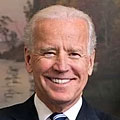 Congratulations to our presumptive Democratic nominee, Joe Biden!

 = new reply since forum marked as read