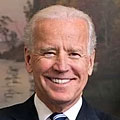
 Congratulations to our presumptive Democratic nominee, Joe Biden!
Democratic Primaries
In reply to the discussion: I just found this out about Michael Bloomberg: He is a "self made billionare" [View all]PETRUS
(3,678 posts)First, you haven't "destroyed" anything about my claims, nor am I re-framing the landscape. It's clear you and I see the world very differently. I make a remark, and you interpret it through your own lens (as to be expected). So far, you have either misinterpreted the thrust of what I'm saying, or understood it only partially, and I'm forced to clarify or elaborate. I don't think this reflects poorly on either one of us; it's what happens in a discussion of a complex issue when the participants don't share a common understanding or a common vocabulary. Add to that the general challenges of communication. I remember years a linguists book years ago, and there was a quote in it about the difficulty of putting one's thoughts into words that other people will understand correct, that went something like "whatever it is I mean to say, I probably didn't say exactly that." This can make certain conversations frustrating, but I think it's worth persisting anyway.
Also, I suspect the misunderstandings go both ways - I don't get at all how what you just wrote has much of anything to do with what I'm trying to talk about. It's like we're having two different conversations. (Perhaps you'd like to clarify?)
That said, I'll respond to some of what you wrote:
I think you underestimate the impact of sales tax. Respected economists agree with me. From Dean Baker of the CEPR writing in 2014: "Not having to collect sales tax is a huge subsidy to Amazon. (Yes, it is a subsidy. States and cities collect revenue -- if Bezos gets out of paying it, then everyone else pays more. It is the same thing as if the governments sent Jeff Bezos a big fat welfare check every year.) And it mattered a huge amount to Amazon's growth and survival. If it thought it could have raised prices by 4-8 percent (the amount of state sales tax) without hitting its market share, it would have done so. The fact that the company has generally operated with near zero profits indicates that collecting sales tax would have been a very big hit." Consider also that The size of the sales tax in many cases is close to standard profit margins.
I did not claim that finance companies do not tolerate losses. I said pretty much the opposite, noting that Amazon was funded at a loss (with the expectations of future profits, naturally). My point was that capital markets chose not to make the same gamble with established brick-and-mortar competitors. Both this and the sales tax issue are irrelevant to the larger discussion. I only mentioned them because this is a case study I've spent time on and happen to know a little bit about, and I thought it was interesting. But it was just an aside, and not important with respect to the main issues I'm addressing.
I brought up the background and connections of Jeff Bezos not because I'm comparing him to other executives and claiming he had some kind of personal advantage over the CEOs of Walmart or Waldenbooks or whatever, but because it made it much easier for him to secure financing vs. someone who has as much intelligence, insight, and discipline but with a more humble pedigree and social network. You seem to agree with this observation ("I don't dispute the role of fate, a person working in a cotton field versus Einstein" , so there's no need to belabor the point.
In your final paragraph, you write: "There are plenty of ideas in the world ... but a select few people have the patience, foresight and creativity to make those ideas a reality." I don't entirely agree. It's certainly true that talent, intelligence, and wherewithal vary from person to person, but I think the opportunity for that to flourish in any given person depends a great deal on circumstances outside of an individual's control. I also think that it's true that not everyone has "the patience, foresight and creativity to make those ideas a reality," but that it's far more than "a select few." It's my opinion that the market, as currently constructed, only allows room for a "select few," and the results we see have to do with the legal framework in place, rather than native individual ability or effort. It's worth noting that just a few decades ago, when the tax code was much more progressive, antitrust enforcement was more vigorous, intellectual property was handled differently, the financial sector was more tightly regulated, and a number of other aspects of our property institutions were structured along more egalitarian lines, there was innovation, robust economic growth, and much more broadly shared prosperity. Jeff Bezos and Bill Gates and people like that aren't obscenely wealthy because their individual contributions are that much more valuable that those of others, they're obscenely wealthy because we've structured the economy to reward a few people extraordinarily well (and others very poorly), and I find that impossible to justify on moral or utilitarian or any other grounds.
 If I were to vote in a presidential
primary today, I would vote for: Undecided
Edit history
Recommendations
0 members have recommended this reply (displayed in chronological order): = new reply since forum marked as read
Highlight:
NoneDon't highlight anything
5 newestHighlight 5 most recent replies
RecommendedHighlight replies with 5 or more recommendations
= new reply since forum marked as read
Highlight:
NoneDon't highlight anything
5 newestHighlight 5 most recent replies
RecommendedHighlight replies with 5 or more recommendations