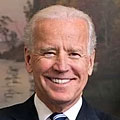
 Congratulations to our presumptive Democratic nominee, Joe Biden!
Democratic Primaries
In reply to the discussion: Bernie Sanders lavishes praise on Communist Russia / Jonathan Alter comment [View all]PufPuf23
(10,047 posts)and in the glasnost period where the USSR was failing and the starting of a new and hopeful era between Russia and the USA.
The sliming of Sanders in this forum is way out of hand and counterproductive to removing Trump from office and for a Democratic party that is coherent. My recommendation is that folks would post about positive aspects of the candidates. I say this as a life long Democrat that does not favor Sanders, Biden, nor Bloomberg as the 2020 Democratic candidate for POTUS.
From wiki:
Gorbachev
In 1986, aware of the term's historical and more recent resonance, Mikhail Gorbachev and his advisers adopted "glasnost" as a political slogan, together with the obscure "perestroika".
Glasnost was taken to mean increased openness and transparency in government institutions and activities in the Soviet Union (USSR).[4] Glasnost apparently reflected a commitment to getting Soviet citizens to discuss publicly the problems of their system and seek solutions.[5] Gorbachev encouraged popular scrutiny and criticism of leaders, as well as a certain level of exposure by the mass media.[6] Some critics, especially among legal reformers and dissidents, regarded the Soviet authorities' new slogans as vague and limited alternatives to more basic liberties.
Alexei Simonov, president of the Glasnost Defense Foundation, would define the term as follows: "Glasnost is a tortoise crawling towards Freedom of Speech".[7]
Various meanings
Between 1986 and 1991, during an era of reforms in the USSR, glasnost was frequently linked with other generalized concepts such as perestroika (literally: restructuring or regrouping) and demokratizatsiya (democratization). Gorbachev often appealed to glasnost when promoting policies aimed at reducing corruption at the top of the Communist Party and the Soviet government, and moderating the abuse of administrative power in the Central Committee.
The ambiguity of "glasnost" defines the distinctive five-year period (1986–1991) at the end of the USSR's existence. There was decreasing pre-publication and pre-broadcast censorship and greater freedom of information.
The "Era of Glasnost" saw greater contact between Soviet citizens and the Western world, particularly the United States: restrictions on travel were loosened for many, allowing increased business and cultural interchange.[8]
International relations
Gorbachev's interpretation of "glasnost" can best be summarized, translated, and explained in English as "openness". While associated with freedom of speech, the main goal of this policy was to make the country's management transparent, and circumvent the narrow circle of bureaucrats who previously exercised complete control of the economy.
During Glasnost, Soviet history under Stalin was re-examined; censored literature in the libraries was made more widely available;[9][10] and there was a greater freedom of speech for citizens and openness in the media.
Propaganda about the supposedly higher quality of consumer goods and quality of life in the United States and Western Europe began to be transmitted to the Soviet population,[11] along with western popular culture.[12]
 If I were to vote in a presidential
primary today, I would vote for: Undecided
Edit history
Recommendations
0 members have recommended this reply (displayed in chronological order): = new reply since forum marked as read
Highlight:
NoneDon't highlight anything
5 newestHighlight 5 most recent replies
RecommendedHighlight replies with 5 or more recommendations
= new reply since forum marked as read
Highlight:
NoneDon't highlight anything
5 newestHighlight 5 most recent replies
RecommendedHighlight replies with 5 or more recommendations