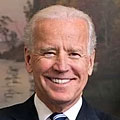
 Congratulations to our presumptive Democratic nominee, Joe Biden!
Democratic Primaries
In reply to the discussion: Cuba Has Not Been A Bad Neighbor Or a Threat To the US -- Ever. There Is No Cuban Taint. [View all]ancianita
(43,451 posts)You can hate Cuba and Castro all you want. Ain't no freedom fighter who hasn't had to fight both the exploiters of their people and the proxies that support them.
I heard our first guide tell about Fidel's requiring Guevara to kill a betrayer of the revolution to test Guevara's loyalty. Our tour guide wasn't happy to tell it.
I do know that Cuban citizens did not shit in rivers like the Ganges or Indus, as Indian do today.
Cubans got infrastructure. I do know about that.
Seriously, you have your Cuban relatives' stories. Great. Believe what you want.
Here are some facts about what led to the CMC.
Before the CMC, Eisenhower attempted to assassinate Castro 38 times.
The United States imposed an arms embargo on Cuba on March 14, 1958, during the armed conflict of 1953-1958 between rebels led by Fidel Castro and the Fulgencio Batista régime. Arms sales violated U.S. policy which had permitted the sale of weapons to Latin-American countries which had signed the 1947 Inter-American Treaty of Reciprocal Assistance (Rio Treaty) as long as the weapons were not used for hostile purposes.[17] The arms embargo had more of an impact on Batista than on the rebels. After the Castro socialist government came to power on January 1, 1959, Castro made overtures to the United States but was rebuffed by the Dwight D. Eisenhower administration, which by March began making plans to help overthrow him. Congress did not want to lift the embargo.
In May 1960 the Cuban government began regularly and openly purchasing armaments from the Soviet Union, citing the US arms embargo. In July 1960 the United States reduced the import quota of brown sugar from Cuba to 700,000 tons under the Sugar Act of 1948;[18] and the Soviet Union responded by agreeing to purchase the sugar instead.
In October 1960 a key incident occurred: Eisenhower's government refused to export oil to the island, leaving Cuba reliant on Soviet crude oil, which the American companies in Cuba refused to refine. This led the Cuban government to nationalize all three American-owned oil refineries in Cuba in response. The refinery owners were not compensated for the nationalization of their property. The refineries became part of the state-run company, Unión Cuba-Petróleo.[19][20]
This prompted the Eisenhower administration to launch the first trade embargo—a prohibition against selling all products to Cuba except food and medicine. The Cuban regime responded with nationalization of all American businesses and most American privately-owned properties on the island. No compensation was given for the seizures, and a number of diplomats were expelled from Cuba.
The second wave of nationalizations prompted the Eisenhower administration, in one of its last actions, to sever all diplomatic relations with Cuba in January 1961. The U.S. partial trade embargo with Cuba continued under the Trading with the Enemy Act 1917...
Under JFK. On August 3, 1962, the Foreign Assistance Act was amended to prohibit aid to any country that provides assistance to Cuba.
On September 7, 1962, Kennedy formally expanded the Cuban embargo to include all Cuban trade, except for the non-subsidized sale of food and medicines
Before and after the CMC JFK attempted to assassinate Castro 42 times.
I don't claim to know everything, but I trust what I've learned from my past experience with Cuban friends, Cuban travels, reading books on Cuba, and Wikipedia.
I'm done. Have a good night.
If I were to vote in a presidentialprimary today, I would vote for: Joe Biden
Edit history
Recommendations
0 members have recommended this reply (displayed in chronological order): = new reply since forum marked as read
Highlight:
NoneDon't highlight anything
5 newestHighlight 5 most recent replies
RecommendedHighlight replies with 5 or more recommendations
= new reply since forum marked as read
Highlight:
NoneDon't highlight anything
5 newestHighlight 5 most recent replies
RecommendedHighlight replies with 5 or more recommendations