COVID-19 has not surged in cities with big protests, but it has in states that reopened early. Here are some possible reasons.
by Marie McCullough, Posted: June 27, 2020
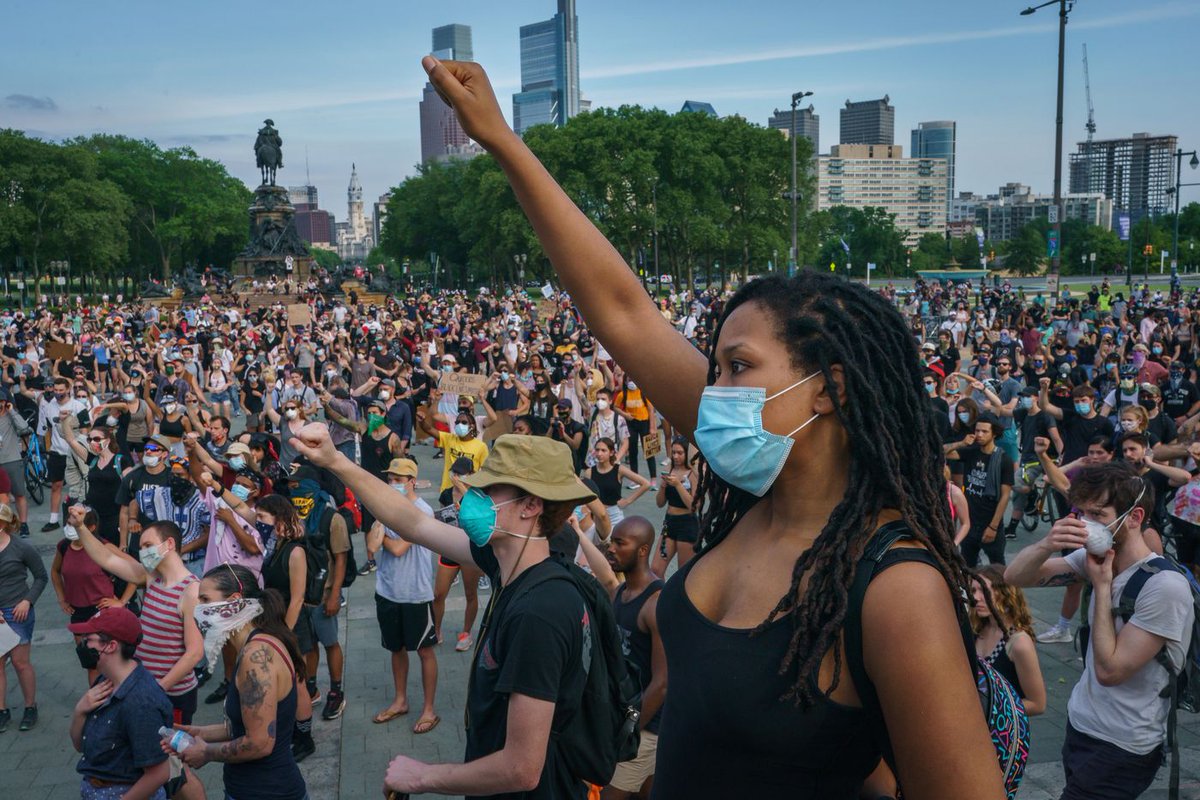
The United States may be seeing the most compelling evidence yet that the best way to stop the coronavirus is also the most disruptive and difficult: Stay home and avoid other people. At first glance, the evidence seems conflicting. States in the South and West that reopened their economies early and with few precautions are now grappling with huge surges in daily case counts, hospitalizations, and deaths.
Yet Philadelphia, Pittsburgh, and other cities across the country have not seen the sharp, sustained spikes that were expected after hundreds of thousands of people gathered for protests against police brutality. Daily demonstrations, some capped by riots, began about a week after George Floyd was killed by Minneapolis police on May 25. The maximum incubation period for COVID-19 — the time between getting infected and showing symptoms — is believed to be two weeks, so any fallout should be clear by now.
The leading theory to explain this paradox is that being outdoors is safer than indoors. Numerous studies support this. Japanese researchers, for example, found the odds of indoor transmission of the coronavirus were about 19 times greater than in the open air. But a new study funded by the National Bureau of Economic Research offers another explanation: The protests prompted an overall increase in people staying home, which mostly offset any impact of transmission among protesters.
/snip
“It’s entirely possible that protesters have gotten COVID-19” while demonstrating, Friedson said. “That’s a question for contact tracers. But other things — going to bars, seeing friends, not wearing masks — also increase the spread.” Those “other things” are the main driver of the renewed outbreaks in states including Arizona, Nevada, Oklahoma, Texas, Mississippi and Florida — states that had largely reopened. While expanded testing accounts for some of the soaring case numbers, the proportion of positive tests suggests increased transmission. In Arizona, 23% of tests over the last week came back positive. Several governors have suspended further reopenings or reimposed some restrictions.
More: https://www.inquirer.com/health/coronavirus/coronavirus-no-spike-cities-despite-protests-big-surge-in-states-that-reopened-20200627.html

 = new reply since forum marked as read