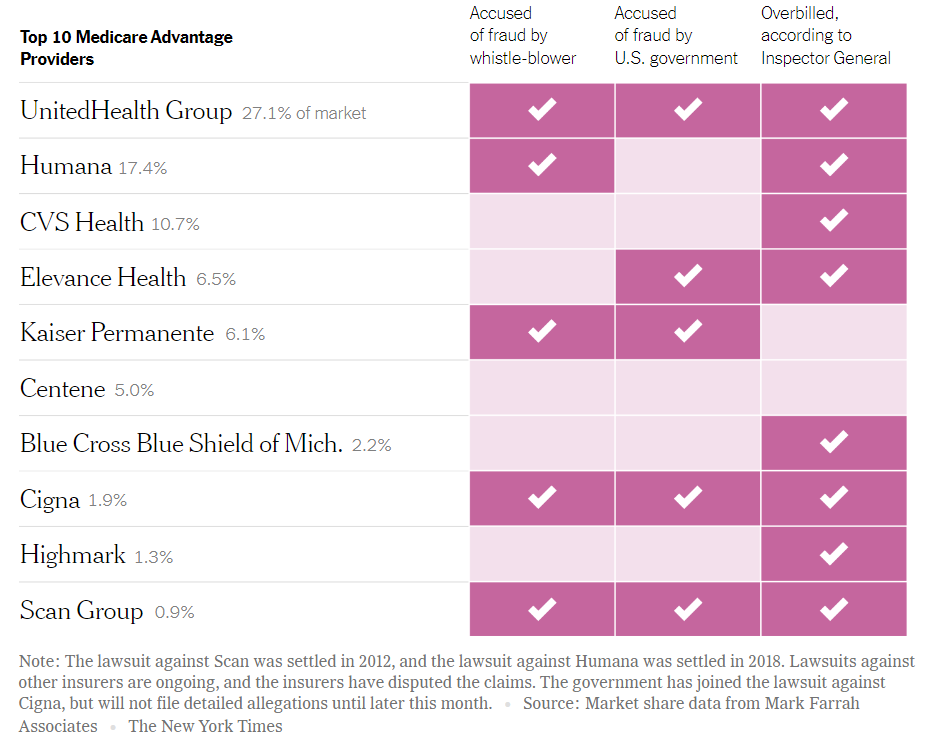
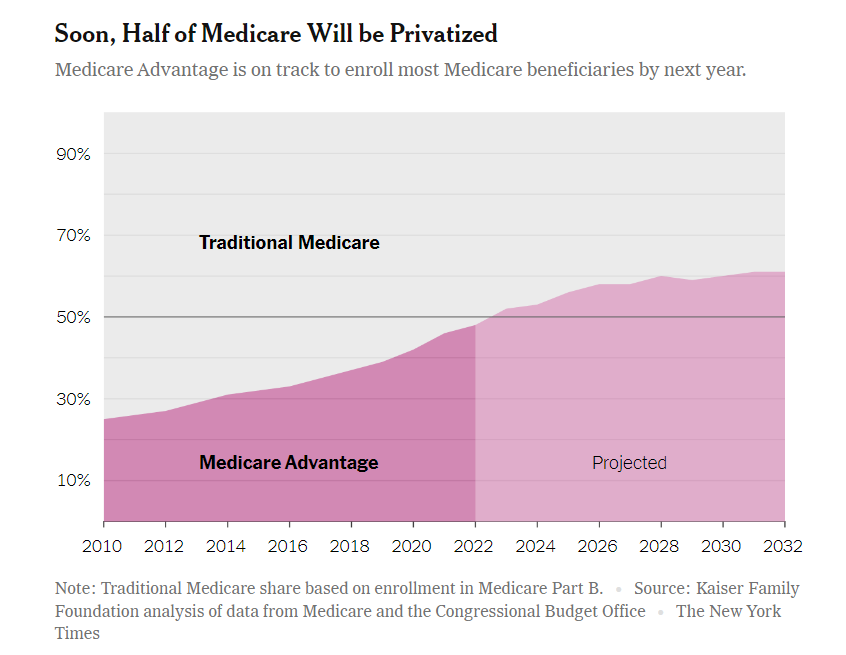
By next year, half of Medicare beneficiaries will have a private Medicare Advantage plan. Most large insurers in the program have been accused in court of fraud.
https://www.nytimes.com/2022/10/08/upshot/medicare-advantage-fraud-allegations.html
https://archive.ph/ME5pN
The health system Kaiser Permanente called doctors in during lunch and after work and urged them to add additional illnesses to the medical records of patients they hadnt seen in weeks. Doctors who found enough new diagnoses could earn bottles of Champagne, or a bonus in their paycheck.
Anthem, a large insurer now called Elevance Health, paid more to doctors who said their patients were sicker. And executives at UnitedHealth Group, the countrys largest insurer, told their workers to mine old medical records for more illnesses and when they couldnt find enough, sent them back to try again.
Each of the strategies which were described by the Justice Department in lawsuits against the companies led to diagnoses of serious diseases that might have never existed. But the diagnoses had a lucrative side effect: They let the insurers collect more money from the federal governments Medicare Advantage program.
Medicare Advantage, a private-sector alternative to traditional Medicare, was designed by Congress two decades ago to encourage health insurers to find innovative ways to provide better care at lower cost. If trends hold, by next year,
more than half of Medicare recipients will be in a private plan.

snip