Latin America
Showing Original Post only (View all)
Storm causes structure over Aztec ruins to collapse in Mexico City [View all]
April 29, 2021
1:15 PM CDT
Americas
Reuters
2 minute read
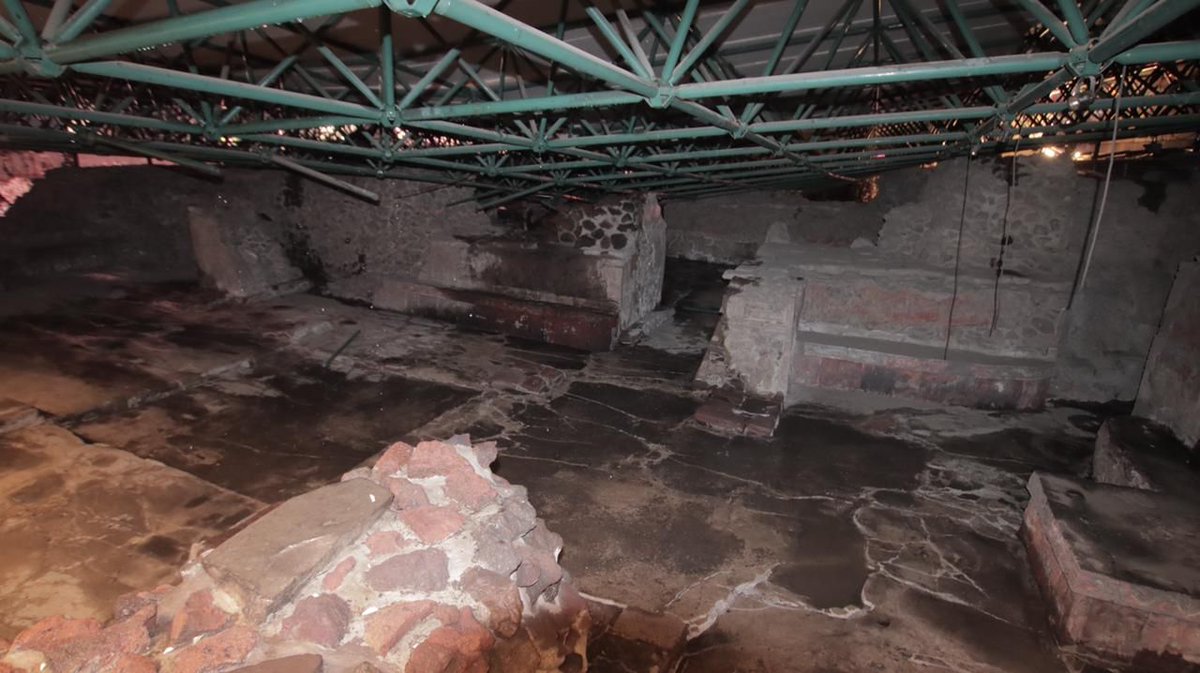
A roof that partly protected one of Mexico's most important ancient sites collapsed under the weight of a major rain and hail storm late on Wednesday, causing minor damage to the ornate temple complex that once hosted the Aztec empire's elite warriors.
President Andres Manuel Lopez Obrador pledged on Thursday to repair any damages to the House of Eagles, which was covered by a large metal roof of modern construction that was toppled by the storm. The structure is adjacent to the ruins of the Aztecs' holiest shrine, known as the Templo Mayor.
Mexico's culture ministry described damage to the ruins as "minor, recoverable and restorable" in a statement on Thursday, adding that removal of the collapsed roof will begin immediately.
The House of Eagles features elaborately-carved relief sculptures along its walls and benches, depicting warriors in procession and blood-letting rituals. Remnants of its painted murals have remained visible five centuries after the 1521 Spanish conquest of the Aztec capital and subsequent razing of the city.
More:
https://www.reuters.com/world/americas/storm-causes-structure-over-aztec-ruins-collapse-mexico-city-2021-04-29/
~ ~ ~
Google translation:
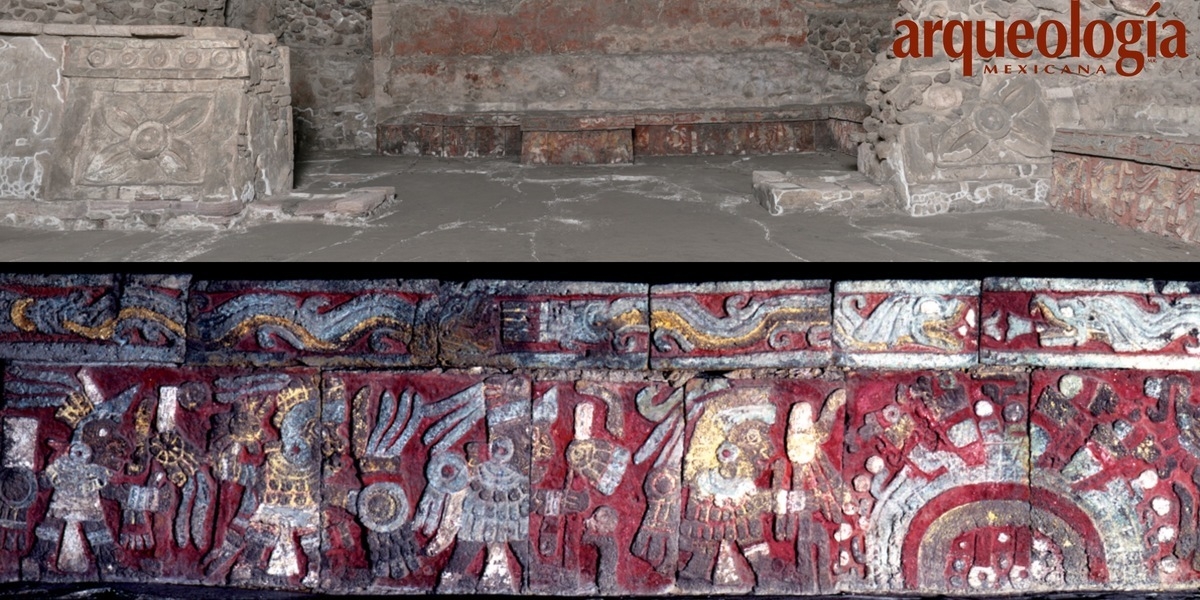
Above : Four Petals Flowers and a Sidewalk with Reliefs of Warriors. Main temple. Below : Detail of a bench with reliefs of warriors. Main temple. Photos: Oliver Santana / Raíces; Jorge Pérez de Lara / Roots
ENCLOSURE OF THE EAGLES OR HOUSE OF THE EAGLES, GREAT TEMPLE OF TENOCHTITLAN
The building was built towards stage V of the Templo Mayor (1480 AD) and a new construction stage was placed on it, from which we see the basement and two stairs that allowed us to reach its interior. The previous stage could be excavated and consists of an L-shaped vestibule with remains of pillars. One of the two entrances shows polychrome benches with representations of warriors in procession. On the sidewalks and on either side of the door were the two formidable clay figures of almost life-size eagle warriors. The access leads to a long room that also has the aforementioned sidewalks. A narrow corridor leads us to another patio, where we see the four pillars that supported the roof and a small interior patio. At the north and south ends there are two rooms. The decoration found on the external wall of the north room is striking, consisting of a flower with four petals carved in stone. Already inside this room we can see the warriors' benches that end in a projecting altar that shows azacatapayoli or ball of hay, where the thorns were embedded for self-sacrifice. Colors such as red, yellow, white, etc. have been preserved. Two ceramic braziers were found in front of the altar, as in other parts of the rooms. The room on the south side was affected by the construction of a colonial oven that was built on the site.
The entrance hall that we referred to earlier has another door to the north, which also leads to other rooms. On the bench and flanking the entrance were two figures, also made of clay, of the god Mictlantecuhtli, lord of the underworld. They represent the half-disembodied god with raised arms. The head has small holes, probably to place natural hair in them, as this god is seen in some codices. Between the ribs a piece painted pink was found that represents the liver, an organ that is related to the world of the dead. The figures are truly impressive and can be seen, like the eagle warriors, in the site museum.
Studies on the House of the Eagles seem to indicate that it is a set destined for certain ceremonies, since inside it they have been detected, by means of archeometric techniques and others, accumulation in certain areas of remains of blood components, as in the large clay sculptures, and the presence of products containing vegetable and animal fats, as well as carbohydrates from a substance rich in sugars and starches, possibly pulque.
Apparently, the tlatoani or ruler carried out a ritual in which he went out through the door that faces the west - where the eagle warriors were found - to follow the path of the Sun towards the west. The hall would lead you to the door that faces north, where the figures of Mictlantecuhtli are, to the place of the dead or Mictlan. It must be remembered that the north was considered the path of the dead, the mictlampa . Thus, the route was made from the birth of the Sun to its sunset.
More:
https://arqueologiamexicana.mx/mexico-antiguo/recinto-de-las-aguilas-o-casa-de-las-aguilas-templo-mayor-de-tenochtitlan
~ ~ ~
Click for image:
👇
https://1.bp.blogspot.com/-6gpdOy_0ujc/UJgvHS_CObI/AAAAAAAAJcs/q0omGYPJm2Y/s640/GT+Eagle+House+&+plaza.jpg
The House of Eagles is protected from the elements by a large metal awning. In the foreground you can see the various levels of the North Patio that were built up over the centuries as Lake Texcoco periodically flooded the ancient island city. Also known as the Palace of Eagle Warriors, the House of Eagles was destroyed during the Spanish assault on Tenochtitlán, which may also have caused the damage you can see on the eagle in the previous photo. The Eagle House was one of the most important structures in the Sacred Precinct of the city. This was where the Mexica elite, which included the Eagle Warriors, conducted ceremonies, meditated, prayed, and rendered offerings. It was a large complex, spread out over a broad platform with columns, meeting rooms, and patios. The initial House of Eagles was built in 1430 AD and then was enlarged in 1470 by the Emperor Axayócatl. The third and final structure was finished in 1500. After the Spanish conquered Tenochtitlán in 1521, they built the Church of Santiago Apóstol on top of the ruins of the Eagle House. Since this had been one of the key centers of power in the Mexica Empire, the Spanish wanted to obliterate any memory it. They were successful until the 1980s when it was rediscovered during the excavation of the Templo Mayor area. (Photo taken at the Templo Mayor archaeological site)
Click for image:
👇
https://3.bp.blogspot.com/-wmB_TyEddlM/UJgs_4gBoLI/AAAAAAAAJcE/zpQbXw1n41w/s640/Anth+eagle+warrior+stone+head.jpg
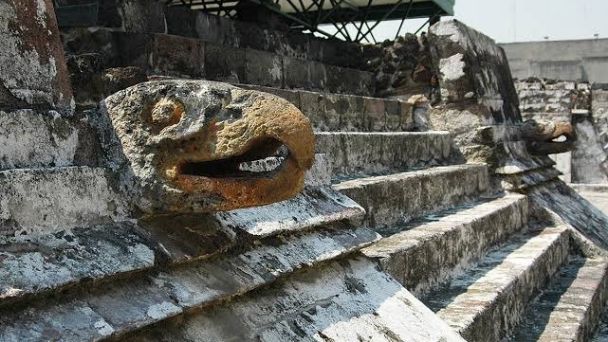
Eagle heads bracket the broad staircase leading up to the main platform. The L-shaped platform was discovered in 1981. Inside the platform is an older substructure built in 1469 AD. Only part of the House of Eagles has been fully excavated because the rest lies under an adjacent street. Tunnels have been built into that section, revealing rooms with wall murals and long benches with carved friezes of warriors. (Photo taken at the Templo Mayor archaeological site)
. . .
Click for image:
👇
https://4.bp.blogspot.com/-iwS-auBk7bQ/UJgtPN2h_YI/AAAAAAAAJcM/VvycBXiO7Zk/s640/GT+eagle+house+head2.jpg
More images, and descriptions of places in the "House of Eagles."
https://cookjmex.blogspot.com/2012/11/mexico-city-part-3-aztec-house-of.html

 = new reply since forum marked as read
Highlight:
NoneDon't highlight anything
5 newestHighlight 5 most recent replies
= new reply since forum marked as read
Highlight:
NoneDon't highlight anything
5 newestHighlight 5 most recent replies