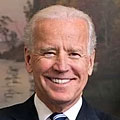
 Congratulations to our presumptive Democratic nominee, Joe Biden!
Democratic Primaries
In reply to the discussion: Should I be kicked out of the Club For Progressives? [View all]JonLP24
(30,120 posts)The ACLU points out the same thing.
Look at what the Republicans are doing.
https://www.prisonersofthecensus.org
Many countries fully recognize the right of incarcerated citizens to vote. Today, 26 European nations at least partially protect their incarcerated citizens’ right to vote, while 18 countries grant prisoners the vote regardless of the offense. In Germany, Norway, and Portugal, only crimes that specifically target the “integrity of the state” or “constitutionally protected democratic order” result in disenfranchisement. The European Court of Human Rights has forcefully defended the voter franchise, going so far as to condemn in 2005 Britain’s blanket ban on voting rights for prisoners, calling it a violation of human rights. In December of last year, after 12 years of resistance to the ECHR’s decision, the UK partially relented by allowing prisoners on temporary release and at home under curfew to cast their ballots.
Even our Canadian neighbors acknowledge the right of people in prison to have their voices heard at election time. In South Africa, meanwhile, prisoners have participated in the democratic process since 1999, when their Constitutional Court declared that “The universality of the franchise is important not only for nationhood and democracy. The vote of each and every citizen is a badge of dignity and of personhood.”
Despite this growing international consensus, however, the United States—the self-proclaimed lighthouse of democracy—significantly abridges the voter franchise. Only in Maine and Vermont can prisoners participate in elections; for the vast majority of the 1.5 million people in federal and state prisons, democracy remains a spectator sport. All told, less than 4,000 prisoners have the right to vote. It is time for this to change.
(Snip)
Prisoner disenfranchisement in the US is as old as the American prison. In 1792, Kentucky’s State Constitution became the first to disenfranchise people convicted of a crime, declaring that “Laws shall be made to exclude from office and from suffrage those who shall thereafter be convicted of bribery, perjury, forgery, or other high crimes or misdemeanors.” A flurry of other states would follow. As prisons emerged in the US during the 1820s, a system was already in place to deny representation to those who found themselves within those walls.
Formal racial disenfranchisement soon followed. Legal Fellow Scott Novakowski of the New Jersey Institute for Social Justice points out that a number of Northern states used their constitutions to block black participation in civic engagement. In 1844, almost twenty years before the Civil War began, New Jersey excluded free blacks from the electoral realm in its state constitution.
The Reconstruction Era brought a temporary respite when the Fifteenth Amendment endowed the right to vote regardless of “race, color, or previous condition of servitude.” Soon, however, policies that restricted the franchise based on felony conviction emerged, giving birth to laws designed to criminalize blackness and uphold white supremacy. In 1898’s Williams vs. The State of Mississippi, the Mississippi Supreme Court Court found it “within the field of permissible action under the limitations imposed by the federal constitution” that “Restrained by the federal constitution from discriminating against the negro race” the state could still “discriminate against its characteristics, and the offenses to which its criminal members are prone.” Three years later the 1901 Alabama Constitutional Convention, in addressing “White Supremacy By Law,” brought forward perhaps the most explicit mention of the racialization of felony disenfranchisement: “The justification for whatever manipulation of the ballot that has occurred in this State has been the menace of negro domination.” This strategy would continue through the Jim Crow era, and laid the foundation for the current situation in the era of mass incarceration. A 500% increase in the prison population over the past 40 years, has also meant a 500% increase in incarcerated voter disenfranchisement over the same period of time.
https://www.peoplespolicyproject.org/projects/prisoner-voting/
I supported Vermont's policy for 10 years at least especially when Tim Wise anti racist activist educated me on the history of felony disenfrinchisement.
I have been getting into arguments with conservatives progressives and moderates all over the internet so I strongly support Vermont's policy.
 If I were to vote in a presidential
primary today, I would vote for: Undecided
Edit history
Recommendations
0 members have recommended this reply (displayed in chronological order): = new reply since forum marked as read
Highlight:
NoneDon't highlight anything
5 newestHighlight 5 most recent replies
RecommendedHighlight replies with 5 or more recommendations
= new reply since forum marked as read
Highlight:
NoneDon't highlight anything
5 newestHighlight 5 most recent replies
RecommendedHighlight replies with 5 or more recommendations