Latin America
Showing Original Post only (View all)
Why Cuban cigars are so expensive [View all]
Andy Ash Jul 12, 2020, 5:00 AM
- see video at link -
Below is a transcript of the video:
Narrator: Cuban cigars hold a reputation as the world's most opulent tobacco product. A box of good-quality Habanos can cost thousands of dollars. Every hand-rolled Cuban cigar goes through about 500 manual tasks from seed to cigar. But over the last 25 years, cigars made in other countries in the Caribbean and Central America have become comparable in quality, consistency, and cost. Worse still for American smokers, your Cuban cigar could be fake. Some experts suggest that up to 95% of all Cuban cigars in the US are actually counterfeit. So why are Cuban cigars so desirable? And is that why they're so expensive? For more than 200 years, the culture of cigar making in Cuba hasn't changed. In a process that takes about a year, tobacco leaves are grown, harvested, and hung in drying houses called secaderos before a slow fermentation occurs, which enhances flavor, aroma, and burning characteristics. Each leaf is inspected for its type, appearance, and quality and handed to a torcedor, a highly skilled cigar roller, greatly respected in Cuban society.
José Castelar Cairo: "My name is José Castelar Cairo. I work here in La Triada. I have been a cigar maker for 61 years. To make cigars here in Cuba, we depend on five types of leaves: a leaf that is called ligero, which is the one that gives strength in the cigar; another leaf that is called seco, the one with the aroma; another leaf is called volado, which is in charge of the combustion inside the cigar. It is followed by the binder that wraps the ligero, seco, and volado. And the last leaf is the wrapper, which is what I am doing, is the one that dresses the cigar, and the wrapper gives presence to the cigar."
Narrator: The heartland of Cuban cigar production is in Pinar del Río, the westernmost province of the island, where 70% of premium cigar tobacco used by state-run cigar companies is grown. Cuban tobacco growers claim that the fundamental influence on quality is the region's terroir, the unique environmental factors that affect a crop.
Richey Morin Rico: "The first thing to be considered as the best cigar in the world is that four factors make it unique. It is the soil where it is grown, the climate of the region where it is grown, the manual labor, and the variety of black tobacco used. I know that they have tried to take the strain many times, have tried to take the seed, and have tried to take the workmanship. Still, in all the places where they have put it with similar conditions, it has not been achieved in the same way."
More:
https://www.businessinsider.com/why-are-cuban-cigars-so-expensive-2020-7
~ ~ ~
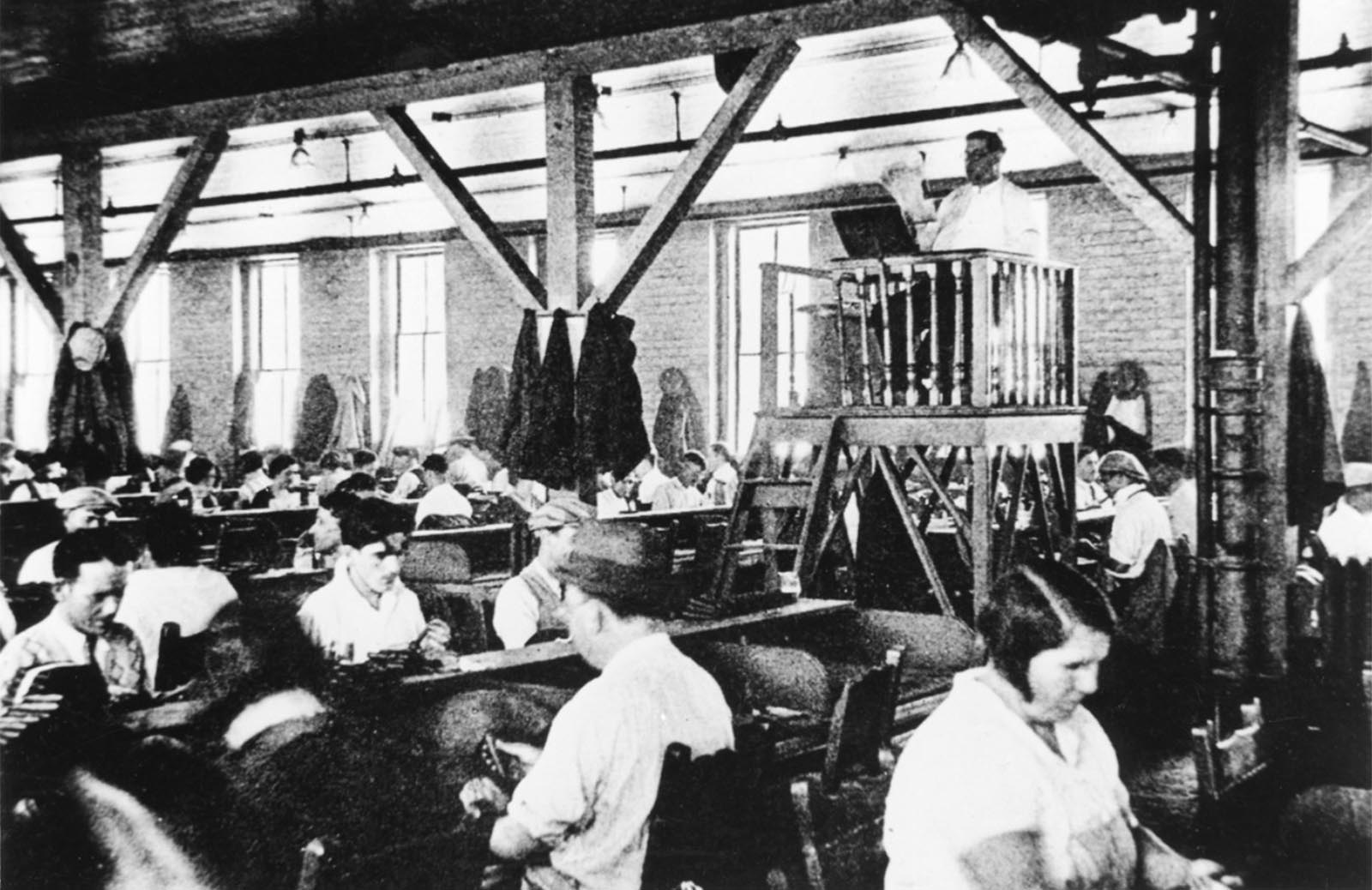
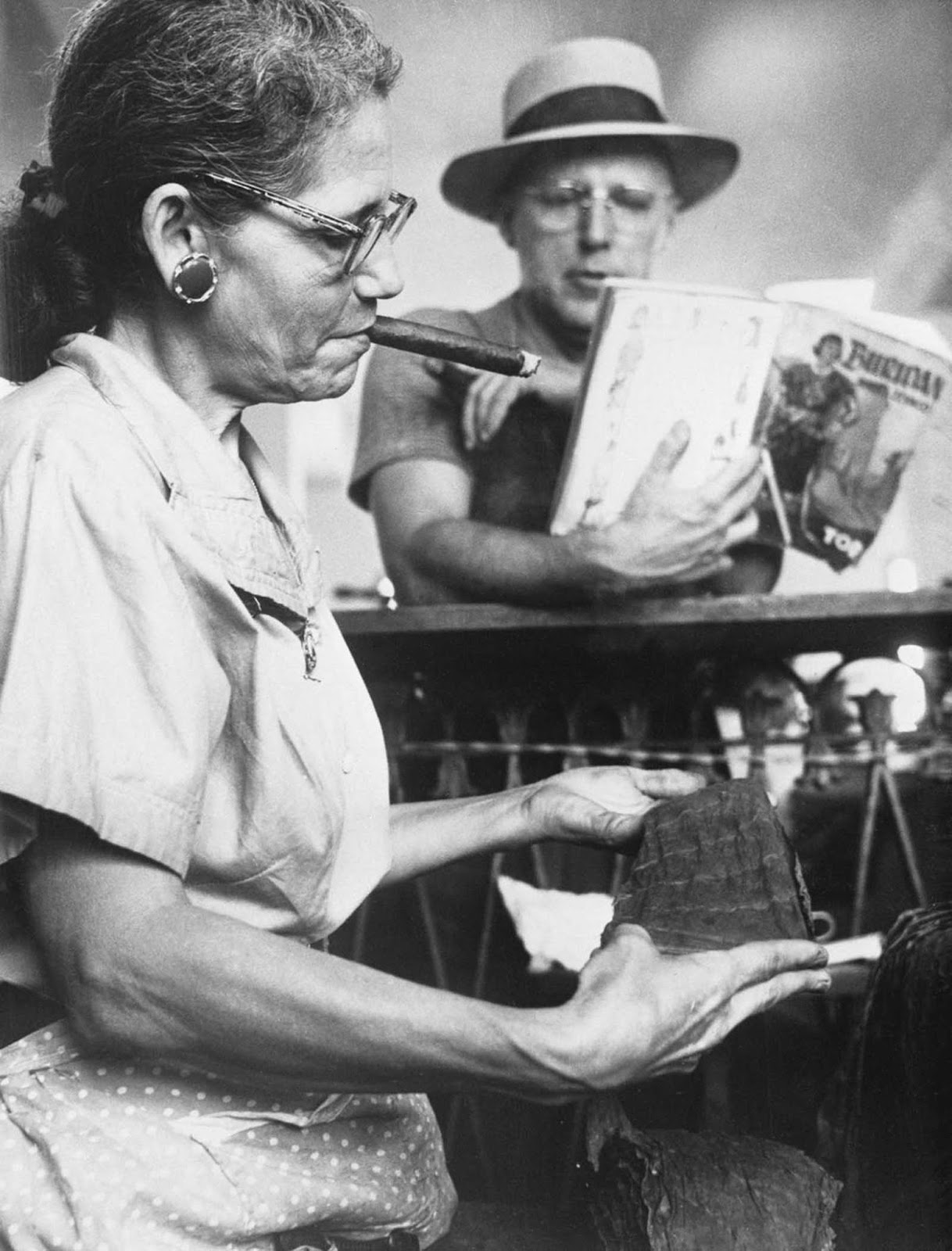
It was charming learning about this habit which has evolved in Cuba in the places which make cigars. I had to go find an article on the readers to add to this article:
Page last updated at 17:57 GMT, Thursday, 10 December 2009
Reading while rolling Cuba's famous cigars
How cigars are produced in Cuba
Despite a slump in sales due to the recession, Cuba continues to be the world's largest producer of cigars. Could its success be due to cigar factory readers? BBC correspondent in Havana, Michael Voss, finds out.
The air in H Upmann's cigar factory in Havana's Vedado district is thick with the sweet pungent smell of tobacco.
It's hot and humid. There is no air conditioning because that would dry out the precious leaves.
In the long main galley, row upon row of workers sit side by side on long wooden benches - dozens of men and women all rolling cigar after cigar.
Producing Cuba's famous handmade cigars is a highly skilled but monotonous job which demands concentration.
There's no time for chatting to workmates - quotas must be met.
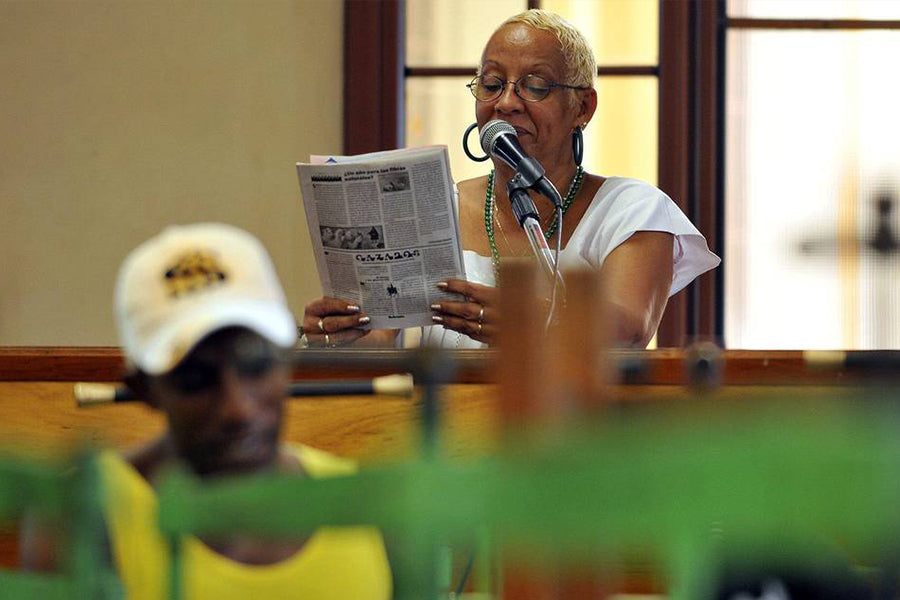
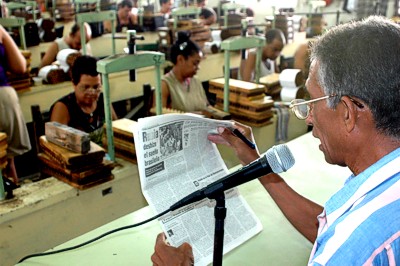
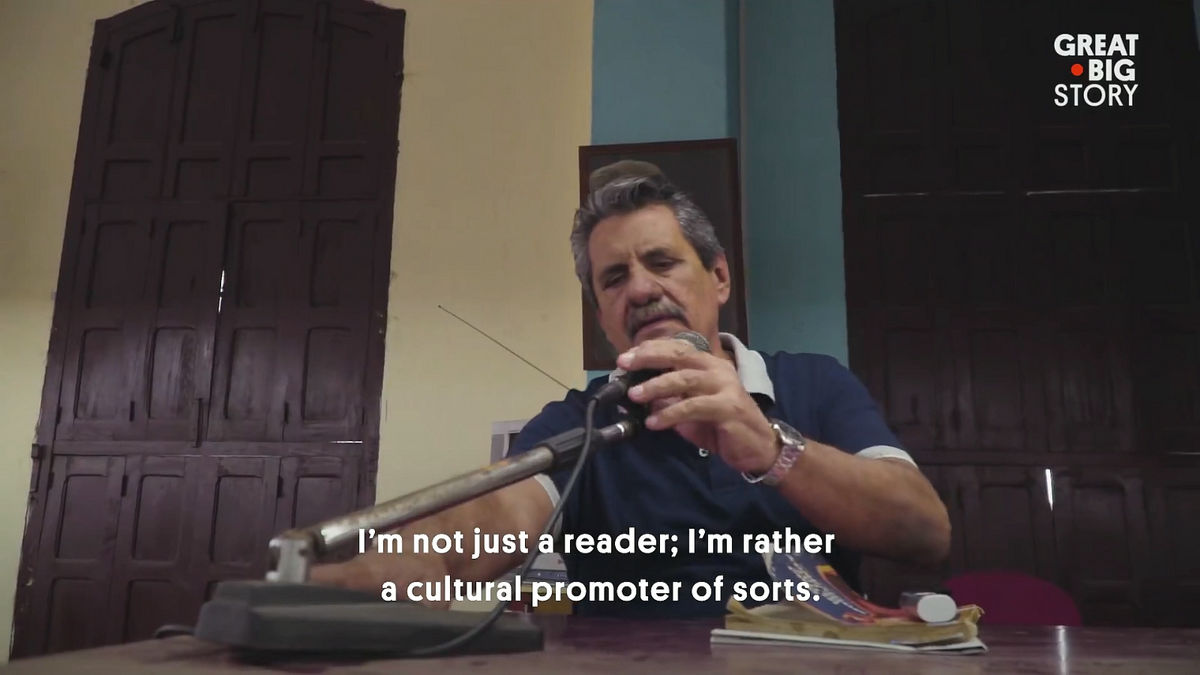
At the front of the room there's a raised platform where a lone figure sits in front of a microphone, reading out loud the official state newspaper Granma.
Instead of canned music, many cigar factories in Cuba still rely on the ancient tradition of employing a reader to help workers pass away the day.
Gricel Valdes-Lombillo, a matronly former school teacher, has been this factory's official reader for the past 20 years.
In the morning she goes through the state-run newspaper Granma cover to cover.
Later in the day she returns to the platform to read a book.
More:
http://news.bbc.co.uk/2/hi/8406641.stm

Photos of readers, from google images:


https://images2.minutemediacdn.com/image/upload/c_fill,g_auto,h_1248,w_2220/f_auto,q_auto,w_1100/v1555375852/shape/mentalfloss/pretexts.jpg


 = new reply since forum marked as read
Highlight:
NoneDon't highlight anything
5 newestHighlight 5 most recent replies
= new reply since forum marked as read
Highlight:
NoneDon't highlight anything
5 newestHighlight 5 most recent replies